 ultimate-guide
Electrical Safety Tips for Homeowners: A 2026 Guide
Table of Contents
- Why Electrical Safety Matters in Your Home
- Signs of Faulty Electrical Wiring You Should Never Ignore
- How Often Should Electrical Wiring Be Checked
- Electrical Installation Condition Reports: What You Need to Know
- Daily Habits and Checks to Prevent Electrical Hazards
- Recognising When to Call a Licensed Electrician
- Smart Home Devices and Modern Electrical Safety
- Frequently Asked Questions
Last Updated: October 2, 2026
Why Electrical Safety Matters in Your Home
Electrical safety tips for homeowners protect lives and property. Faulty wiring, overloaded circuits, and poor maintenance create fire hazards and risk of electrical shock.
Most electrical incidents are preventable. When you understand what to look for and when to call a licensed electrician, you eliminate the vast majority of risk. This guide walks you through essential electrical safety checks every homeowner should know, from recognising warning signs to establishing maintenance routines that keep your home safe.
Poor electrical practices accumulate over time. A loose connection becomes a fire hazard in months. A power strip daisy-chained with extension cords creates dangerous amperage loads. Water near outlets invites electrical shock. Small, consistent actions prevent these scenarios entirely.
Signs of Faulty Electrical Wiring You Should Never Ignore
Faulty wiring is one of the most serious electrical hazards in homes. Learning to spot warning signs means you can address problems before they escalate to fire risk or electrical shock.
Visual and physical warning signs
Look for scorch marks around outlets, switches, or along walls, these indicate electrical arcing or short circuits. Discoloured outlets or switch plates, especially brown or black marks, suggest overheating from excessive current or poor connections.
Melted or cracked outlet covers, crumbling insulation on older wiring, and exposed copper wires all require professional assessment. Check cables and cords regularly for frayed insulation, kinks, or visible damage.
Electrical behaviour that indicates problems
Flickering lights, particularly when appliances switch on, suggest voltage fluctuations or inadequate grounding. Outlets that feel warm to the touch are overheating and pose danger. Outlets that won't hold plugs securely have worn contacts and pose shock risk.
Frequently tripped circuit breakers or blown fuses mean your circuits are protecting themselves from overload, but repeated trips indicate a deeper problem. Buzzing or crackling sounds from outlets, switches, or the electrical panel suggest loose connections or arcing inside walls. These are warning signs of fire risk and warrant a call to a licensed electrician.
How Often Should Electrical Wiring Be Checked
Regular electrical inspections catch problems early, before they become dangerous.
For homes built after 2000 with modern wiring, a professional inspection every 10 years is reasonable. Homes built between 1970 and 2000 should be inspected every 5-7 years.
Check your own electrical system monthly. Look for burnt smells, warm outlets, scorch marks, and flickering lights. Test your GFCI outlets (ground fault circuit interrupter outlets, commonly found in bathrooms and kitchens) monthly by pressing the test button; they should cut power immediately.
Schedule an inspection sooner if you've experienced electrical problems, had water damage, or recently had electrical work done. New appliances or major changes in electrical load, like adding an EV charger or heat pump, may require assessment of whether your current wiring and consumer unit can handle the demand.
Electrical Installation Condition Reports: What You Need to Know
An Electrical Installation Condition Report (EICR) is a formal inspection and test of your home's entire electrical system. A qualified electrician tests grounding, checks insulation resistance, verifies that circuit breakers and safety switches operate correctly, and inspects every outlet and switch.
Landlords are legally required to obtain an EICR every five years (Electrical safety standards in the private and social rented sectors: guidance). Homeowners aren't legally required, but an EICR is invaluable for identifying hidden problems. If you're buying a home, selling a property, or planning major electrical work, an EICR provides peace of mind and a clear record of your system's condition.
The cost of an EICR is far less expensive than repairing damage from an electrical fire. Knox Power & Data can arrange EICR testing that meets all regulatory requirements and provides a detailed report you can act on immediately.
Daily Habits and Checks to Prevent Electrical Hazards
Preventing electrical hazards requires consistent awareness and sensible practices. Small daily habits protect your home and family far more effectively than waiting for problems to surface.
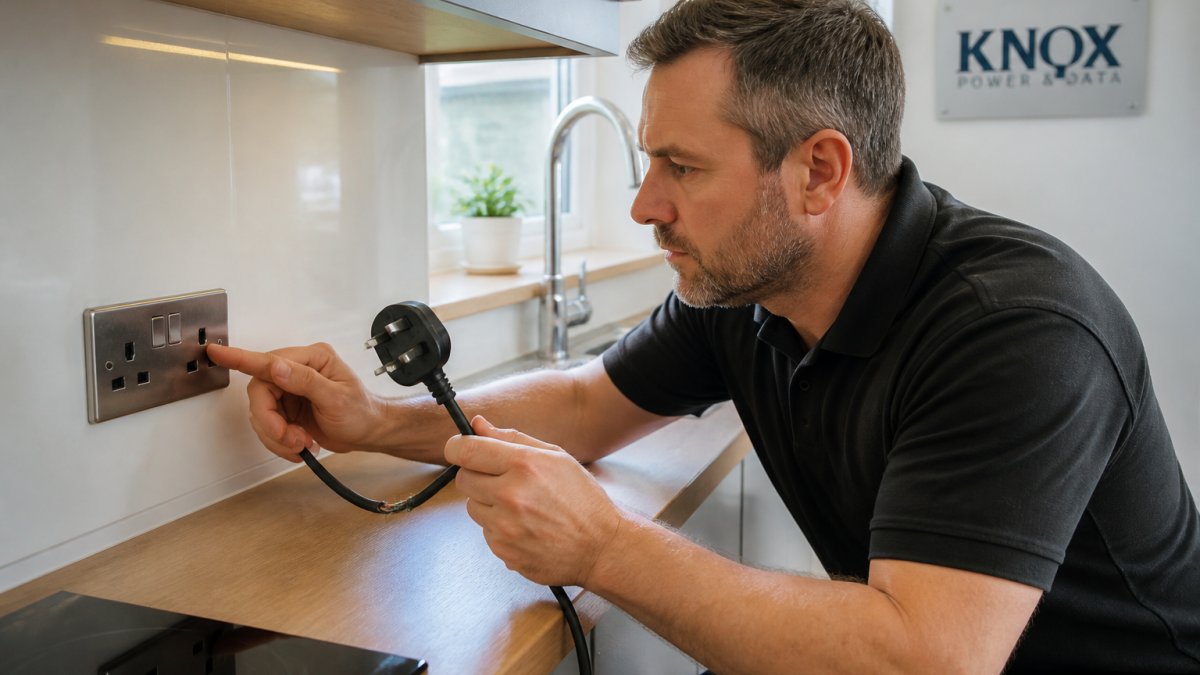
Managing power strips and extension cords safely
Never daisy-chain power strips by plugging one into another; this creates dangerous amperage loads.
Understand the amperage limits of your equipment. Most household circuits deliver 15 or 20 amps.
Extension cords are temporary solutions, not permanent wiring. Don't run them under carpets, where heat builds up and insulation degrades.
High-draw appliances like kettles, toasters, and hair dryers should plug directly into wall outlets, never into power strips.
Protecting outlets and appliances
Outlets near sinks, bathrooms, and anywhere water is present should be GFCI-protected (ground fault circuit interrupter). If your home doesn't have GFCI outlets in these areas, have them installed; they cut power in milliseconds if they detect moisture, preventing electrocution.
Keep water away from all electrical outlets and appliances. Never use electrical devices with wet hands. Don't place water glasses near outlets. If water contacts an outlet, switch off power at the consumer unit immediately before investigating.
Older appliances should be checked regularly for frayed cords, cracks in plugs, or signs of overheating. If an appliance repeatedly trips a circuit breaker or GFCI outlet, it's faulty; don't keep using it.
Emergency response: what to do during an electrical incident
Knowing how to respond in the moment can prevent serious injury or death.
If someone is in contact with a live electrical source: Do not touch them directly.
If there's an electrical fire: Do not use water on an electrical fire; water conducts electricity.
If someone is electrocuted and loses consciousness: Call 999 immediately.
Keep a Class C fire extinguisher in your kitchen and know how to use it.
Recognising When to Call a Licensed Electrician
You can spot problems and perform basic maintenance, but some situations demand professional expertise.
Call a licensed electrician immediately if you notice burning smells, warm outlets, frequent circuit breaker trips, flickering lights, buzzing or crackling sounds from outlets or the panel, outlets that won't hold plugs, or visible damage to wiring or insulation. Also call before attempting to install new circuits, upgrade your consumer unit, add new outlets or switches, install an EV charger, or replace a faulty appliance that keeps tripping breakers.
If you're unsure whether something is safe, err on the side of caution and call. Knox Power & Data offers same-day availability for emergency services, so you're never left guessing about whether a problem is urgent.
Smart Home Devices and Modern Electrical Safety
Modern smart home devices add convenience but also add electrical load to your home. If your home's wiring and consumer unit were designed decades ago, these devices may strain your system, especially when combined with high-demand appliances.
Understanding electrical load and capacity
Smart devices themselves are generally low-risk, as they draw minimal power individually. A smart speaker uses roughly 2-5 watts; a smart thermostat uses 1-3 watts.
Your home's total electrical capacity is determined by your consumer unit. Most modern homes have a 100-amp service; older homes may have 60 or 80 amps.
If you're planning to add smart devices, an EV charger, a heat pump, or other major electrical upgrades, have a licensed electrician assess your consumer unit and main wiring before installation.
Smart device installation and safety
Use dedicated circuits for high-demand devices. If you're installing an EV charger or heat pump, these should have their own circuit to prevent overload.
Ensure proper grounding. Smart devices should plug into properly grounded outlets (three-pin sockets with a grounding pin). Older homes with two-pin outlets may lack proper grounding; have a licensed electrician assess whether grounding upgrades are needed.
Cybersecurity and electrical safety
Smart devices introduce cybersecurity considerations that can indirectly affect electrical safety. To minimise risk: buy from reputable manufacturers, keep firmware updated, use strong unique passwords, enable two-factor authentication where available, disable features you don't use, and isolate smart devices on a separate network if your router supports it.
If you suspect a smart device has been compromised (erratic behaviour, unusual power consumption, or frequent circuit breaker trips), unplug it immediately and contact the manufacturer or a licensed electrician for assessment.
Planning for future electrical demand
If you're building or renovating, plan for future electrical demand. Install additional circuits and outlets now, even if you don't need them immediately. Consider installing a larger consumer unit (e.g., 100 amps instead of 60) if you anticipate adding an EV charger, heat pump, or other high-demand devices in the future. A licensed electrician can advise on future-proofing your electrical system as part of a renovation plan.
Frequently Asked Questions
What are the most important electrical safety tips for homeowners?
The most critical electrical safety tips include: never overload outlets or use damaged cords, install GFCI outlets in wet areas, keep water away from electrical appliances, have your wiring inspected regularly, and call a licensed electrician for any signs of faulty wiring such as burning smells or flickering lights. Child safety covers on unused outlets and proper grounding also protect your family from electrical shock and fire hazards.
How often should electrical wiring be checked in a home?
Homes should have a professional electrical inspection every 10 years at minimum, or every 5 years if the property is older than 40 years. Landlords must arrange an Electrical Installation Condition Report (EICR) at least every 5 years for rental properties. If you notice signs of faulty wiring such as discoloured outlets, burning smells, or frequent circuit breaker trips, have the system inspected immediately rather than waiting for the scheduled date.
What is an Electrical Installation Condition Report (EICR) and do I need one?
An EICR is a professional inspection and test of your home's electrical installation to identify safety risks and ensure compliance with wiring regulations. Landlords are legally required to obtain an EICR every 5 years for rental properties. Homeowners benefit from an EICR when buying an older property, after major renovations, or if they suspect faulty wiring. The report identifies issues like inadequate grounding, insulation damage, and overloaded circuits before they become fire hazards or cause electrical shock.
Can I perform my own electrical repairs at home?
Most electrical repairs should only be done by a licensed electrician to comply with wiring regulations and prevent fire hazards or electrical shock. You can safely perform basic tasks like replacing outlet covers or installing child safety covers, but work involving live wires, circuit breakers, or the electrical panel must be left to professionals. Attempting DIY electrical work on faulty wiring or damaged insulation can create serious safety risks and may invalidate your home insurance.
Electrical safety isn't a one-time project, it's an ongoing responsibility. Regular inspections, awareness of warning signs, and sensible daily practices keep your home safe. When problems arise or you're uncertain about your electrical system's condition, Knox Power & Data provides professional assessment and repair with full certification to current standards. Get a quote today to arrange an inspection or discuss electrical upgrades that protect your home and family.