 how-to
Emergency Electrical Services West Yorkshire: A 2026 Guide
Table of Contents
- What Counts as an Electrical Emergency?
- Immediate DIY Safety Steps Before Help Arrives
- Common RCD Tripping Causes and What They Mean
- How Electrical Fault Finding Works During an Emergency Call-Out
- What to Expect from Emergency Electrical Services in West Yorkshire
- Qualifications and Certification to Look For
- How Much Does an Emergency Electrician Call-Out Cost?
- Frequently Asked Questions
Last Updated: September 17, 2026
What Counts as an Electrical Emergency?
An electrical emergency is any fault that presents an immediate risk of fire, shock, or total loss of power to a property. For homeowners across the region, knowing when to call for emergency electrical services west yorkshire residents can rely on is the difference between a nuisance trip and a serious hazard.
At Knox Power & Data, we treat the following as genuine emergencies:
- Burning smells or visible scorch marks around sockets or a consumer unit
- Sparks when plugging in appliances
- A tripped circuit breaker or RCD that will not reset
- Complete power failure affecting the whole property
- Exposed or damaged wiring
- Water contacting electrical fittings
A single tripped circuit breaker that resets cleanly is usually not an emergency. Repeated tripping, buzzing, or heat at the fuse board is.
Based on Electrical Safety First guidance on electrical dangers, faults involving heat, smoke, or water are the ones that warrant immediate professional attention rather than a wait-and-see approach.
Immediate DIY Safety Steps Before Help Arrives
What you do in the first few minutes matters more than anything else. The priority is isolating the danger and keeping people away from it, not diagnosing the fault yourself.
Take these steps while you wait:
- Cut the power at the consumer unit if it is safe to reach. Switch off the main isolator.
- Do not touch anything wet or metallic near the affected area.
- Move children and pets away from the fault zone.
- If you smell burning, evacuate and call the fire service before calling an electrician.
- If someone has received a shock, call 999 first. Do not approach them until the supply is isolated.
For smoke, heat, or a shock casualty, the emergency services come first. For everything else, a qualified electrician is the right call. NHS advice on treating electrical burns recommends seeking medical attention for any burn that is larger than a small coin, even if it looks minor.
Once the power is off and everyone is safe, you have bought yourself time. That is when you pick up the phone.
Common RCD Tripping Causes and What They Mean
An RCD trips when it detects current leaking to earth, which usually points to a fault rather than a simple overload. Understanding the common RCD tripping causes helps you describe the problem clearly when you call.
The most frequent culprits:
- Water ingress in outdoor sockets, garden lighting, or a damp consumer unit
- Damaged appliance leads or a faulty heating element in a washing machine or kettle
- Nicked or degraded wiring behind plaster, often in older properties
- Moisture in a shower pull cord or bathroom fitting
- A failing RCD itself, which is less common but possible
Here is how the symptoms map to likely causes:
| Symptom | Likely Cause | Urgency |
|---|---|---|
| RCD trips when a specific appliance runs | Faulty appliance | Medium - isolate the appliance |
| RCD trips at random, no appliance running | Wiring fault or moisture | High - call an electrician |
| RCD will not reset at all | Persistent earth leakage | High - call an electrician |
| Breaker trips under load only | Circuit overload | Medium - redistribute load |
How Electrical Fault Finding Works During an Emergency Call-Out
Electrical fault finding is the systematic process of isolating a circuit fault using test instruments, working from the consumer unit outward until the source is identified. It is methodical work, not guesswork, and a good electrician will explain what they are testing as they go.
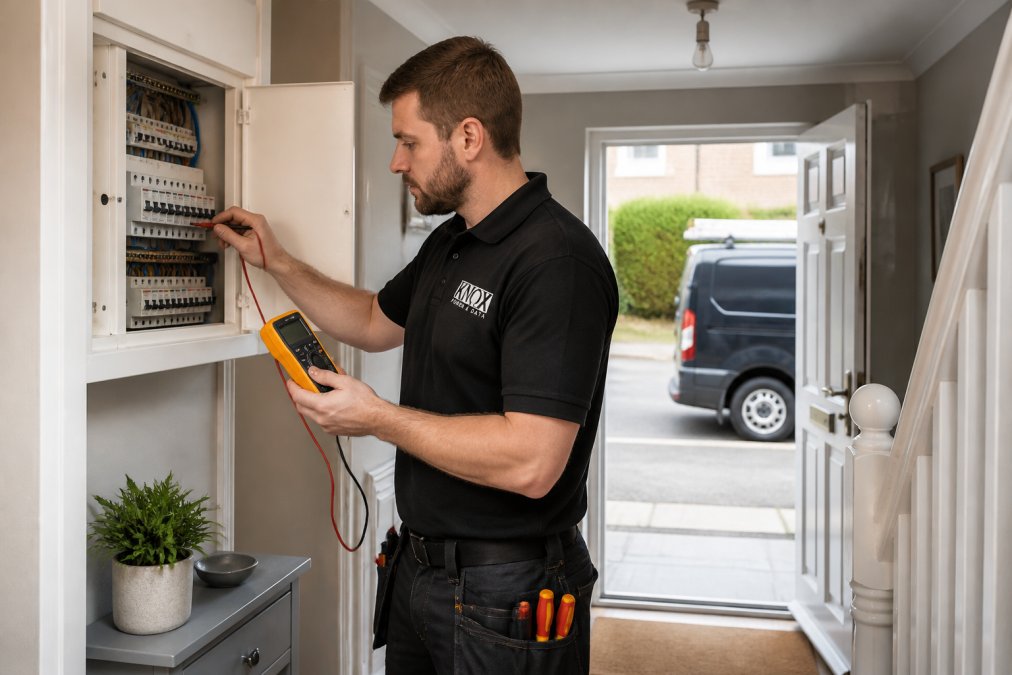
On arrival, the process typically follows this order:
- Visual inspection of the consumer unit, sockets, and any obvious damage
- Isolation testing with an insulation resistance tester to find earth leakage
- RCD testing to confirm whether the device itself has failed
- Circuit-by-circuit testing to narrow the fault to a single leg
- Repair or temporary isolation, then re-test before restoring power
A common mistake is assuming the fault is where the symptom appears. A tripping RCD in the kitchen can trace back to a damaged cable in a bedroom on the same circuit. This is why proper fault finding takes time even on an emergency call-out. Institution of Engineering and Technology guidance on BS 7671 sets out the testing sequence qualified electricians follow.
What to Expect from Emergency Electrical Services in West Yorkshire
A genuine emergency call-out has a predictable shape, and knowing that shape is how you tell a professional operation from someone who will leave you waiting. Here is what a properly run service should deliver, step by step.
1. A real person answers, first time. Not a voicemail, not a web form promising a callback within 24 hours. For a genuine emergency, burning smell, no power, a shock, you need to speak to someone who can dispatch an electrician and give you immediate safety advice while you wait.
2. A clear arrival window, not a vague promise. "Someone will be with you soon" is not good enough. You should be told an estimated arrival time and given a number to call if it slips. Most reputable providers aim to be on site within a couple of hours for genuine emergencies, and will tell you honestly if they cannot meet that.
3. Telephone safety guidance before arrival. While the electrician is en route, the person on the phone should be able to talk you through isolating the affected circuit, keeping people clear, and when to call the fire service instead. This is the difference between a call handler and a dispatcher.
4. A diagnosis before a repair. On arrival, the electrician should test and identify the fault, not start swapping parts on a hunch. You should be told what has failed, why, and what the options are.
5. A price agreed before work starts. No work should begin until you have agreed the scope and the cost.
6. A tested, certified repair. Once the fault is fixed, the circuit should be re-tested and the results recorded.
Qualifications and Certification to Look For
The single most important thing to check is registration with a government-approved competent person scheme. In England and Wales, that means the electrician should be registered with a scheme such as NAPIT or NICEIC, which allows them to self-certify notifiable work and issue the correct paperwork.
Ask for:
- Scheme registration number you can verify online
- BS 7671 18th Edition qualification, the current wiring standard
- Inspection and testing qualification (often the 2391), which is separate from installation
- Public liability insurance covering domestic and commercial sites
- Part P compliance for any work in a dwelling
How Much Does an Emergency Electrician Call-Out Cost?
A professional provider should be able to explain how the charge is built before anyone sets foot in your property.
- Call-out or attendance fee, a charge for getting a qualified electrician to your door, covering travel and the first block of time on site.
- Labour, either an hourly rate or a fixed price for a defined job.
- Parts and materials, components required for the repair.
What you should insist on before work begins:
- A clear breakdown of how costs are structured.
- A diagnosis and a price for the repair before the electrician starts, not after.
- Written confirmation of the scope, what is included and what would be charged extra.
Frequently Asked Questions
How do I know if I have an electrical emergency?
An electrical emergency involves immediate danger or total loss of power. Signs include a burning smell from sockets or the consumer unit, visible sparks, a buzzing fuse board, or exposed live wiring. A partial power failure affecting one circuit is urgent but less critical. If you see smoke or flames, call the fire service first, then a qualified electrician. Any situation where you feel unsafe warrants an emergency call-out.
What should I do if my RCD keeps tripping?
If your RCD trips repeatedly, unplug all appliances on that circuit and reset the device. If it holds, plug items back one at a time to identify the faulty appliance. If it trips with nothing connected, the fault is in the wiring itself. Do not keep resetting a tripping RCD. This indicates a genuine fault that needs professional electrical fault finding to prevent shock or fire risk.
Are emergency electricians available 24/7 in West Yorkshire?
Many electrical contractors across West Yorkshire offer 24/7 call-out, including evenings, weekends, and bank holidays. Availability depends on the provider. When you call, confirm the response time and whether an after-hours rate applies. Knox Power & Data offers same-day availability for emergency services. Always ask for a clear arrival window so you know when to expect someone.
What qualifications should my emergency electrician have?
Look for registration with a government-approved scheme such as NAPIT or NICEIC. These bodies ensure the electrician works to BS 7671 18th Edition standards. Ask if they are fully insured for domestic and commercial work. A qualified electrician will provide certification for any work carried out, which matters for insurance and future property sales. Knox Power & Data is NAPIT registered under member number 69848.