 how-to
Why EV Charging Can Increase Your Home Insurance
Last Updated: November 4, 2026
Quick Summary
EV charging can increase home insurance because a charger adds a fixed high-value asset, raises electrical fire exposure, and creates third-party liability if someone is injured on your drive. Some insurers apply a small adjustment, others leave the premium alone, and some may exclude the charger unless it is declared.
- Tell your insurer about a home charging point, as most policies require disclosure of material changes.
- Failing to disclose a charger can void a claim, even if the charger had nothing to do with the loss.
- A professionally installed, certified and documented charger often means no premium change at all.
- Charger faults commonly relate to the connection, such as loose terminals or undersized cable.
- Keep the EIC, building regulations notification and installer registration details for your insurer.
Table of Contents
- Why EV Charging Can Increase Home Insurance Premiums
- Do I Need to Tell Home Insurance About an EV Charger?
- Home Insurance Cover for EV Charging Equipment
- EV Charger Fire Risk and Home Insurance
- Documentation and Compliance Your Insurer Will Want to See
- Renters, Landlords and Shared Parking: Who Tells the Insurer?
- Getting Your EV Charger Installation Certified and Insurer-Ready
- Frequently Asked Questions
Why EV Charging Can Increase Home Insurance Premiums
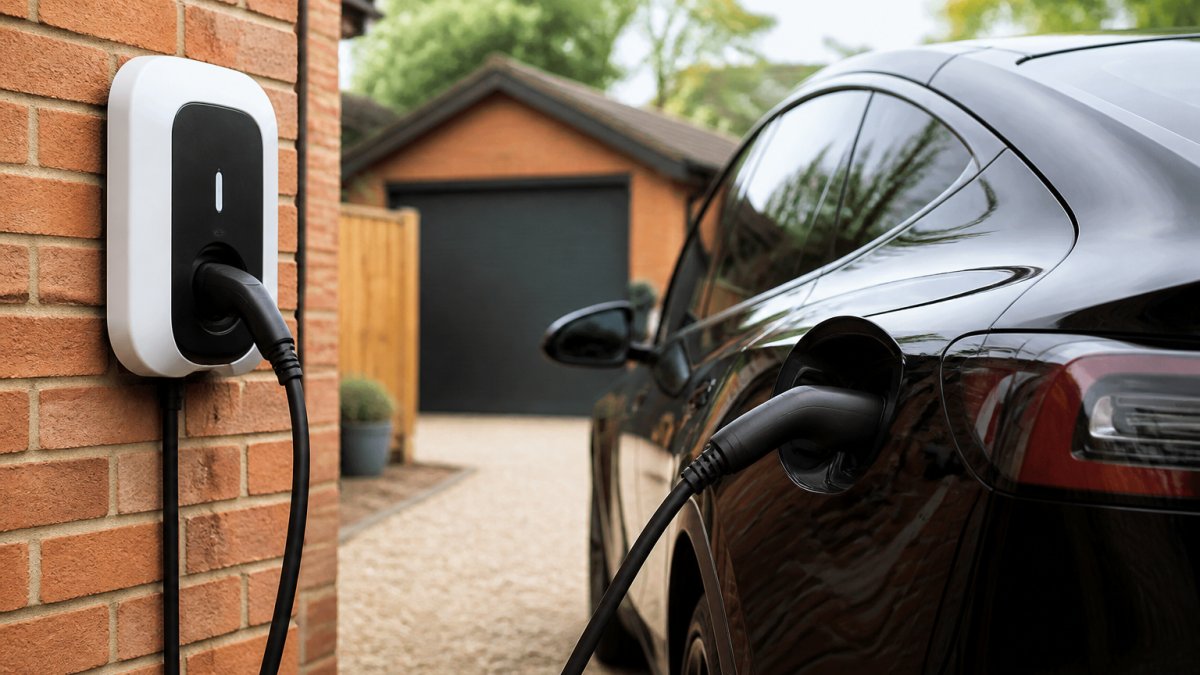
Most homeowners assume a home charger is just another appliance. Insurers see it differently.
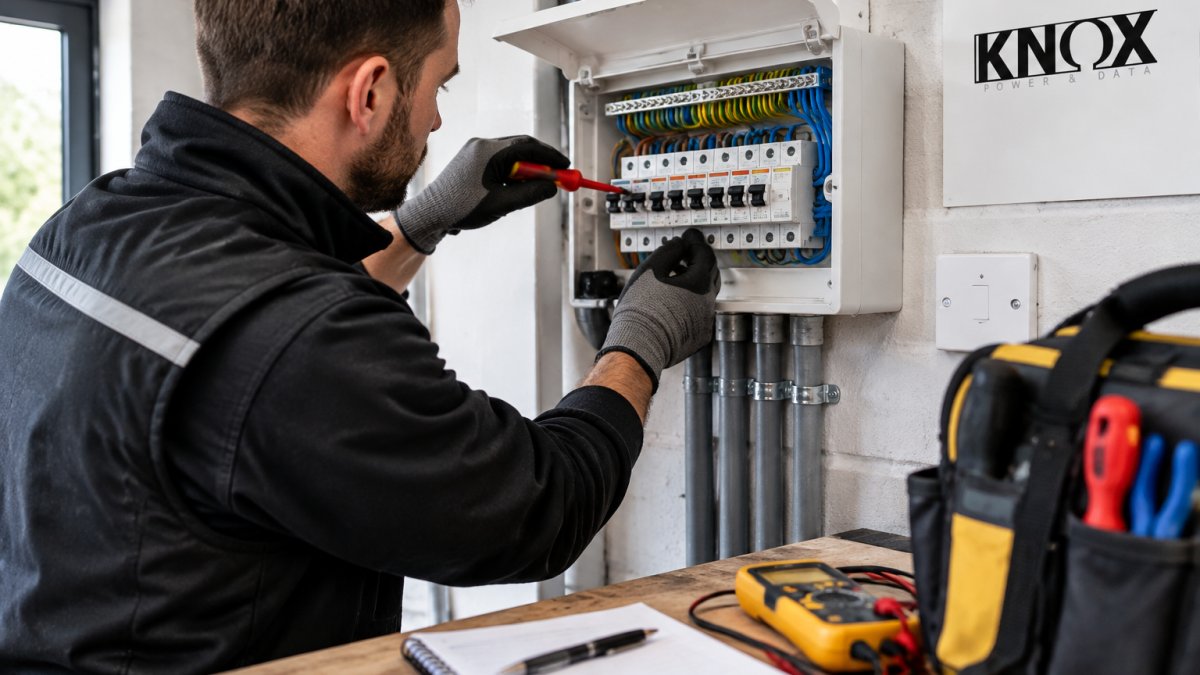
The paperwork issued with an installation matters as much as the wiring. Insurers often ask for it.
A charger can raise premiums because it adds a fixed, high-value asset to the home, increases electrical fire exposure, and creates third-party liability if someone is injured on your drive. UK government guidance on electric vehicle charging equipment sets out the safety expectations installers work to.
Not every policy reacts the same way, though. Some insurers apply a small adjustment, others leave the premium alone, and some may exclude the charger unless it is declared.
The risks insurers are pricing in
Underwriters look at four things when a charger appears on a policy.
- Fire load. A charging point draws sustained current. A loose termination or undersized cable can overheat.
- Circuit capacity. Older consumer units may not carry the extra demand safely. If your electrics are marginal, read our guide on whether your home electrics can support an EV charger.
- Liability. Cables trailing across a pavement or a charger mounted where a visitor could trip on it create injury claims.
- Asset value. A charger and its wiring add to rebuild costs.
A consumer unit upgrade is often part of the fix, and our walkthrough of electrical panel upgrades for EV charging explains what that involves.
When premiums stay the same
Plenty of policies absorb a charger with no premium change at all. That usually happens when:
- The charger is professionally installed and certified
- The installation is documented and disclosed
- The property's wiring is already modern
- The charger is a low-power unit with load management
Do I Need to Tell Home Insurance About an EV Charger?
Yes. You should tell your insurer about a home charging point. Most home insurance policies require you to disclose material changes to the property, and a fixed high-current installation counts as one.
Failing to disclose can void a claim, even if the charger had nothing to do with the loss. That is the part homeowners miss.
A step-by-step notification checklist
Work through this before and after installation.
- Check your policy wording for clauses on fixed installations, electrical alterations, and disclosure.
- Call your insurer before booking the install and ask what they need.
- Confirm the installer's registration and ask for the certificate type they will issue.
- Get the installation certificate and the building regulations notification.
- Send copies to your insurer and ask for written confirmation the charger is noted.
- Record the date and reference of that confirmation.
- Review at renewal and re-check the sum insured.
- Tell them if you add a second charger or change the set-up.
Home Insurance Cover for EV Charging Equipment
Home insurance cover for EV charging equipment usually follows the same rules as other fixed installations, such as a fitted boiler or a built-in kitchen.
That distinction matters. If the charger is permanently wired and mounted, a buildings policy normally picks it up. If you rent, or the charger is a portable unit plugged into a socket, the picture changes.
What is typically covered and what is excluded
| Item | Usually covered | Usually excluded |
|---|---|---|
| Wall-mounted charging point | Fire, flood, storm damage as part of buildings | Wear and tear, faulty workmanship |
| Charging cable | Theft or accidental damage, if declared | Damage from leaving it across a path |
| Cable holster and mount | Accidental damage | Cosmetic wear |
| Surge damage | Sometimes, if specified | Often excluded by default |
| Vehicle damage | Not covered by home policy | Goes to car insurance |
Watch out: a cable left coiled across a driveway is a common cause of damage and injury claims, and some insurers treat it as negligence rather than accidental damage.
EV Charger Fire Risk and Home Insurance
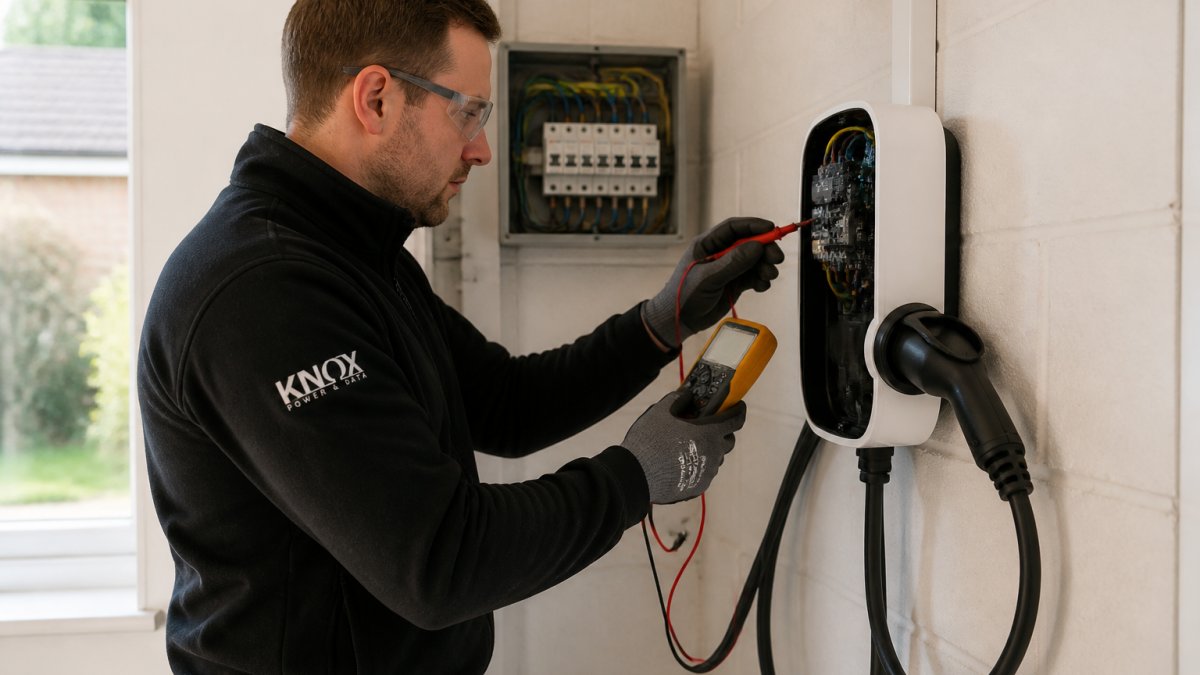
Charger faults commonly relate to the connection rather than the unit itself, such as loose terminals, undersized cable, or a circuit pushed beyond its rating. Insurers price this in through conditions rather than exclusions. Common requirements include:
- Installation by a competent, registered electrician
- A dedicated circuit with its own protection
- RCD protection suitable for DC fault currents
- An installation certificate on file
The IET wiring regulations guidance underpins how a compliant circuit is designed and tested.
Reducing fire risk through compliant installation
A properly designed circuit with correct protective devices removes most of the failure modes insurers worry about. Our guide on how to install an EV charger at home safely covers the practical steps, from cable routing to final testing.
- Use a registered installer, not a general handyman
- Insist on a dedicated supply, not a spur from a socket circuit
- Ask for load management if your supply is limited
- Get the certificate and keep it
Practical steps to reduce charging risk at home
Beyond the installation itself, how you use and maintain the charger affects the risk your insurer is pricing.
- Check the cable and plug regularly. Look for frayed insulation, discoloured pins, or a plug that feels warm after charging. Stop using the cable if you see any of these and have it replaced.
- Keep the charging point dry and clear. Mount it under cover where possible, and keep the area free of leaves, standing water, and stored items that could obstruct ventilation.
- Do not exceed the circuit rating. If you add a second EV or a higher-power charger, have the circuit reassessed rather than assuming it will cope.
- Respond to faults promptly. If the charger trips the RCD repeatedly, smells hot, or shows a fault code, isolate the circuit and call a registered electrician. Repeated tripping is a symptom, not a nuisance.
If your property has older wiring, the fire risk is higher regardless of the charger. Our guide on whether your home electrics can support an EV charger explains when a consumer unit upgrade is needed, and our walkthrough of electrical panel upgrades for EV charging covers what that involves.
Documentation and Compliance Your Insurer Will Want to See
Paperwork is what separates a smooth claim from a disputed one. Insurers want proof the work was done to standard, by someone accountable. The documents that matter, and how to get them, are set out below.
- Electrical Installation Certificate (EIC). Your installer issues this for the new circuit. It records test results, protective device ratings, and the installer's registration details. Ask for it before the installer leaves site.
- Building regulations compliance notification. Notifiable electrical work in England and Wales is usually notified through a competent person scheme. Your installer should provide the notification or a certificate of compliance. If they cannot, ask why.
- Installer registration details. Note the competent person scheme name and the installer's registration number. Insurers may check this against the scheme's public register.
- Test results. The EIC includes insulation resistance, loop impedance, and RCD trip times. Keep the full schedule of test results, not just the certificate summary.
- Equipment details. Record the make, model, serial number, and date of installation. A photograph of the label on the unit is useful.
How to present your documentation to your insurer
When you notify your insurer:
- Send a PDF or clear scan of the EIC and the building regulations notification.
- Include the installer's scheme name and registration number in the email or letter.
- Ask for written confirmation that the charger has been noted on the policy, and keep that confirmation with the certificate.
- Record the date, the name of the person you spoke to, and any reference number.
Watch out: if you move house, the next owner's insurer may ask for the same documents. Keep digital copies in a folder you can access after the sale, and consider passing a copy to the buyer.
What insurers actually check
Insurers generally rely on documentation and on the installer's registration. Our guide on whether NAPIT registration is legally required explains what the scheme covers and why insurers ask for it.
At Knox Power & Data, our NAPIT-registered team installs and certifies chargers under BS 7671 18th Edition, issues full test documentation, and is fully insured for domestic and commercial sites.
Renters, Landlords and Shared Parking: Who Tells the Insurer?
The person with the insurable interest tells the insurer. That is usually the landlord for the building and the tenant for contents.
For rented property, the split looks like this:
- Landlord: discloses the installation to the buildings insurer and holds the certificate
- Tenant: checks whether their contents policy covers the cable and any portable equipment
- Shared parking or communal areas: the freeholder or management company owns the risk and needs to approve the install
Detached garages and outbuildings deserve a mention too. Cover for these is often capped, and a charger in a detached garage may sit outside the main buildings limit.
Getting Your EV Charger Installation Certified and Insurer-Ready
Certification is the whole game. An insurer-ready install has three parts: a registered installer, a compliant circuit, and a complete paper trail.
Competent person registration is one way to demonstrate that work meets the required standard.
At Knox Power & Data, our NAPIT-registered team installs and certifies chargers under BS 7671 18th Edition, issues full test documentation, and is fully insured for domestic and commercial sites.
If you are ready to get it done properly, get a quote from Knox Power & Data.
Frequently Asked Questions
Does installing an EV charger increase home insurance?
It can, but not automatically. Insurers assess EV charging against fire risk, third-party liability and the value of the installed equipment. A professionally installed, certified charging point on a suitable circuit is generally easier to evidence to an insurer than a DIY or uncertified installation. Some policies see no change at all, while others may apply a small increase. The decisive factor is usually whether you disclosed the installation and can evidence compliant work.
Do I need to tell my home insurer if I install an EV charger?
Yes, in most cases you should. Home policies are priced on the property as described at inception, and a fixed charging point is a material change. Failing to disclose can give an insurer grounds to reduce a payout or decline a claim linked to the charger. Contact your insurer before or immediately after installation, confirm whether it counts as a fixed improvement, and ask for the disclosure to be noted on your file in writing.
Does home insurance cover damage caused by an EV charger?
Buildings cover often extends to fixed electrical installations, which can include a wall-mounted charging point, but wording varies. Damage to the charger itself may fall under buildings or contents depending on how it is fitted and whether it is removable. Third-party injury or property damage from a faulty unit is a liability matter and needs explicit confirmation. Charging cables left outdoors are frequently treated as personal possessions with lower limits, so check the small print.
Is an electric car covered by home insurance while it is charging?
No. The vehicle itself is covered by motor insurance, not home insurance, even while plugged in on your drive. Home cover may respond to fire damage to the property caused by the charging process, and motor cover handles the car. Because the two policies can overlap on liability, tell both insurers about the charging point so you avoid gaps or duplicated cover you cannot claim on twice.
The real question is not whether a charger raises your premium. It is whether your paperwork would survive a claim. Get the installation certified, disclose it in writing, and keep the documents safe. Get started with Knox Power & Data and have your charger installed, tested and certified to a standard your insurer will accept.