 how-to
Can You Live in a House During a Rewire? What to Expect
Last Updated: November 2, 2026
Quick Summary
Yes, you can usually live in house during rewire work, but it will not feel like normal life. Power goes off in stages, dust settles on everything, and your electrician needs room to move. Staying is possible, though it slows the job and tests your patience.
- Most occupied rewires run roughly 8am to 4:30pm, with circuits isolated section by section.
- A 3-bed occupied house typically takes 7-10 working days, while vacant it takes 4-6.
- Keep at least one bedroom clear of work for the whole project to avoid rotating rooms.
- Ask your electrician to set up temporary power for the fridge, kettle and phone charger at the start.
- Households with young children, elderly or unwell occupants should plan to move out.
Table of Contents
- Can You Live in House During a Rewire?
- What a Rewire Actually Involves Day to Day
- Is It Safe to Stay in a House During Rewiring?
- How Long Does a Full House Rewire Take?
- Rewiring a House in Stages: Room-by-Room Work
- Preparing for a House Rewire While You Stay Put
- Staying, Moving Out or Phasing the Work: Which Fits Your Household?
- Book a Rewire Survey With a NAPIT-Registered Electrician
- Frequently Asked Questions
Can You Live in House During a Rewire?
Yes, you can usually live in house during rewire work, but it will not feel like normal life.
A house rewire is the full replacement of old cables, socket outlets, light fittings and the consumer unit with new wiring that meets current standards. It is not a quick fix.
Most homeowners ask us one question first: will I have to move out? Rarely. But you need a plan.
Below, we explain exactly what each day looks like, how long a full rewire takes, and how to decide whether to stay, move out, or phase the work.
What a Rewire Actually Involves Day to Day
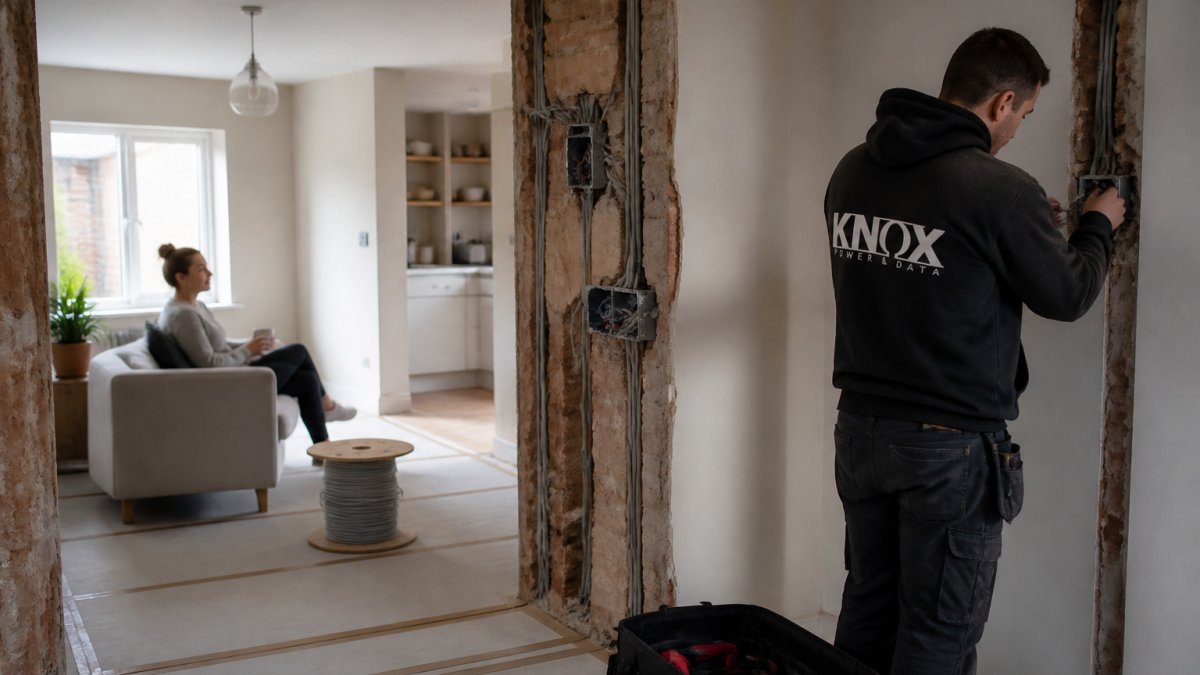
A rewire is messy, physical work that moves through your home room by room. Expect early noise, lifted floorboards, and cables pulled through walls and ceilings.
Before work starts (day zero)
Your electrician should confirm the order of rooms, daily start and finish times, and how temporary power will be arranged.
A typical working day
Most occupied rewires run roughly 8am to 4:30pm. On arrival, the electrician isolates the circuits being worked on and confirms which rooms are out of bounds.
End of the day
A good contractor restores temporary power to essential circuits before leaving, sweeps up the worst dust, and secures open areas.
What this means for your routine
- Cooking: the oven and hob may be unavailable some days; set up a microwave or air fryer in a live room.
- Washing: the shower and washing machine may be off when their circuits are replaced; plan around family, a gym or a neighbour.
- Heating and hot water: know how your boiler is wired and whether it will be affected; in winter this is the biggest disruption.
- Working from home: agree a room untouched until late in the schedule, or work elsewhere on heavy days.
- Sleeping: keep at least one bedroom clear of work for the whole project; rotating bedrooms mid-rewire is stressful.
The Electrical Safety First guidance on home wiring is clear that ageing wiring should be checked regularly, and a rewire is the point where that check turns into action.
Is It Safe to Stay in a House During Rewiring?
Staying is generally safe provided you respect work zones and follow your electrician's instructions. The electrician isolates circuits before work begins; your role is to keep out of restricted areas and raise concerns early.
Restricted areas and practical precautions
- Exposed wiring: never touch cables, even if they look dead. Treat every exposed conductor as live until the electrician confirms otherwise.
- Open floorboards and ceilings: keep to agreed walkways; a fall through a joist gap is the most common occupant injury on site.
- Consumer unit and testing: stay clear when circuits are tested or the board is open.
- Dust: chasing walls creates fine silica dust. Seal rooms with dust sheets and tape, keep doors closed, and consider a P2 mask if you have asthma or allergies.
- Children and pets: a stair gate across the work zone is worth the cost. Keep pets in a separate room or outside when floorboards are up.
- Older adults and mobility needs: agree a clear, lit route to the bathroom and bedroom that avoids work areas.
Household-specific safety planning
- Families with young children: brief daily on which rooms are out of bounds, and keep matches, tools and cable ends out of reach.
- Remote workers: relocate your office before day one rather than negotiating access mid-job.
- Pets: cats and dogs investigate open voids; a closed door is safer than a warning.
- People with respiratory conditions: ask for dust extraction or extra sheeting, and plan to be out on the dustiest days.
What the electrician controls
Isolation, lock-off and testing are the electrician's responsibility. A competent contractor isolates and locks off circuits before testing, tells occupants which rooms are off limits each morning, and restores temporary power to essential circuits before leaving.
When staying is not safe
If the property has only one circuit, no way to keep a bathroom or kitchen live, or an occupant with significant health needs, moving out for the core days is safer.
How Long Does a Full House Rewire Take?
Duration depends on the size of the property, access and how much furniture stays in place. A vacant property generally moves faster. Ask for a site survey and a written schedule for your home.
The NAPIT guidance for homeowners recommends using a registered electrician, and registration matters here because a rewire is notifiable work that needs proper certification at the end.
Here is a rough guide to project duration:
| Property Size | Occupied Home | Vacant Property |
|---|---|---|
| 2-bed house | 5-8 working days | 3-5 working days |
| 3-bed house | 7-10 working days | 4-6 working days |
| 4-bed house | 10-15 working days | 6-9 working days |
Staying put adds time: furniture in the way slows access to floorboards and wall cavities, and we may need to work around your routine.
A full rewire with testing and certification takes several days, so be cautious of any promise of a single-day completion.
Rewiring a House in Stages: Room-by-Room Work
Rewiring a house in stages means splitting the job into phases so you keep some rooms usable throughout. It can reduce disruption but usually stretches the project duration.

Phased work suits homeowners who cannot move out. You keep a working kitchen and one bedroom while other areas are done.
How a room-by-room rewire usually runs:
- Survey and plan the order of rooms with your electrician
- Start with the least-used rooms first
- Keep a temporary supply to the kitchen and one living space
- Move through the house in a set sequence
- Test and certify each circuit as it is completed
- Finish at the consumer unit and commission the full installation
The trade-off is usually cost and time, because the electrician may return several times. Before committing to phased work, it helps to understand full house rewire vs partial rewire options.
Preparing for a House Rewire While You Stay Put
Preparing for a house rewire is mostly about clearing access and protecting belongings. Better preparation means a faster job and less mess.
Do these before day one:
- Clear lofts, cupboards and under-stair spaces
- Move furniture to the centre of rooms or into storage
- Take pictures off walls in work areas
- Cover furniture with dust sheets
- Pack fragile items and valuables away
- Clear a path to the consumer unit
- Agree parking for the van and skip
- Set up a temporary kitchen in one room
Watch out: leaving furniture in place to "save time" usually backfires, electricians work around it, slowing access to floorboards and adding days to the job.
Temporary Power, Cooking and Washing Arrangements
Temporary power keeps one or two circuits live so you can run a fridge, kettle and phone charger. Ask your electrician to set this up at the start.
Plan for the basics:
- Cooking: use a microwave, air fryer or camping stove in a safe spot
- Washing: expect the shower and washing machine to be off on some days
- Heating: know how your boiler is wired and whether it will be affected
- Sanitation: keep one bathroom on a live circuit where possible
- Lighting: battery lamps and torches for evening work areas
If your boiler or shower runs off the circuit being replaced, plan those days around family or a gym. Small arrangements make a big difference.
Staying, Moving Out or Phasing the Work: Which Fits Your Household?
The right choice depends on your household, not the size of the house. Use this decision framework to pick your path.
| Situation | Best Option | Why |
|---|---|---|
| Young children or a baby | Move out | Safety and sleep routines |
| Working from home daily | Phase the work | Keep one office space live |
| Elderly or unwell occupant | Move out | Dust and power loss are hard to manage |
| Flexible household, no pets | Stay put | Cheapest and fastest overall |
| Rental with tenants in place | Phase the work | Keeps the property habitable |
| Empty property between sales | Vacant rewire | Fastest project duration |
Moving out is not a failure. A vacant property is generally easier to work in and can be finished sooner.
If cost is the deciding factor, ask for a quote so you can compare staying against alternative accommodation. Our full house rewire cost guide breaks down what drives the price.
Book a Rewire Survey With a NAPIT-Registered Electrician
A proper survey tells you what your existing wiring actually needs before you commit to staying or moving out.
Knox Power & Data is NAPIT registered (Member No. 69848) and qualified to BS 7671 18th Edition and Inspection standards. If you are unsure what that means, read our guide to what NAPIT registration means for homeowners.
Questions to ask any electrician before you book:
-
Are you NAPIT or NICEIC registered, and what is your membership number?
-
How will you manage temporary power while we stay in the property?
-
Which rooms will be out of use, and for how long?
-
What is the daily start and finish time?
-
Who do we call if something goes wrong?
Ready to plan? See our house rewiring in Wakefield service to book a free survey. You can also check house rewire costs in Wakefield for local pricing and free fixed-price quotes.
Living through a rewire is manageable with the right plan, but not comfortable.
Knox Power & Data provides full house rewires across West Yorkshire, and our NAPIT-registered team is committed to safety and fully tested, certified installations.
Get started with Knox Power & Data and request a quote for your rewire before you decide whether to stay or move out.
Frequently Asked Questions
Can you live in a house while it is being rewired?
In most cases yes, but with conditions. You can usually live in house during rewire work if your electrician works room by room and keeps at least one usable circuit running. Expect power interruptions while circuits are swapped, plus dust, noise and furniture moved out of the way. Work generally moves faster in an empty property because electricians can lift floorboards and chase walls without working around occupants. Agree the schedule and switching-off times in writing before work starts.
Will the electricity be switched off during rewiring?
Yes, power will be off in sections as circuits are isolated and reconnected, and the consumer unit may be off for part of a day when it is replaced. Ask your electrician to confirm which circuits go down and when, so you can plan fridge use, working from home and charging devices. Some firms can run a temporary supply to keep essentials going. Never reconnect anything yourself; all testing and certification must be done by a competent, registered electrician.
How disruptive is a full house rewire?
A full rewire touches most rooms: cables run under floorboards, socket outlets and light fittings are replaced, and walls may be chased. That means dust, noise and rooms temporarily out of use. Disruption drops sharply if you clear lofts, cupboards and floors in advance and agree a room-by-room order. Rewiring a house in stages spreads the mess over several visits but stretches the project duration. Discuss both options with your electrician before committing.
When should I move out during a house rewire?
Consider moving out if anyone in the household is very young, elderly or unwell, if the property has only one bathroom or kitchen that will be affected, or if the electrician needs full access to floors and walls. It is also worth moving out if your work depends on reliable power. Staying is often workable for straightforward rewires. Weigh the cost of alternative accommodation against a faster, simpler project, and confirm access requirements with your electrician first.