 how-to
Cost of Replacing Old Fuse Box in 2026: 7 Key Prices
Last Updated: November 5, 2026
Quick Summary
The cost of replacing old fuse box units typically ranges from £350 to £850 installed, depending on board type and circuit count. A basic dual RCD 10-way board costs £350-£550, while a 14-16-way RCBO board runs £550-£850. Remedial wiring work is often quoted separately.
- Dual RCD boards split circuits across two RCDs, so a fault knocks out half the board.
- RCBO boards isolate faults to a single circuit, which is why they cost more.
- Every consumer unit replacement must be certified and is notifiable under Part P.
- Ask each installer to confirm in writing whether the price is fixed or provisional.
- A quote omitting VAT or certification can cost more than a higher fixed-price quote.
Table of Contents
- What Drives the Cost of Replacing an Old Fuse Box
- Consumer Unit Replacement Cost: What Each Board Type Costs
- How Long Does It Take to Replace a Fuse Box?
- The Consumer Unit Replacement Certificate and Part P Sign-Off
- Electrical Safety Inspection Cost Before You Replace
- How to Compare Fuse Box Replacement Quotes Line by Line
- When Replacement Fails Testing: What Happens Next
- Book a Fuse Box Assessment with Knox Power & Data
- Frequently Asked Questions
What Drives the Cost of Replacing an Old Fuse Box
The cost of replacing old fuse box setups depends on three things: the type of consumer unit you choose, how many circuits your property needs, and how much remedial work the existing wiring demands. A straight swap costs far less than a full board upgrade with circuit corrections. Most quotes vary widely because installers price these three factors very differently.
Before you price anything, confirm the unit actually needs replacing. Our guide to the signs your consumer unit needs replacing covers the warning signs that justify the spend.
Unit Type and Number of Circuits
Board type is the single biggest cost driver. A basic dual RCD board generally costs less than an RCBO board because RCBO units use one device per circuit. More circuits mean more devices, more enclosure space and more labour. For a quote on your property, ask Knox Power & Data for a fixed price based on your circuit count.
Labour, Access and Remedial Work
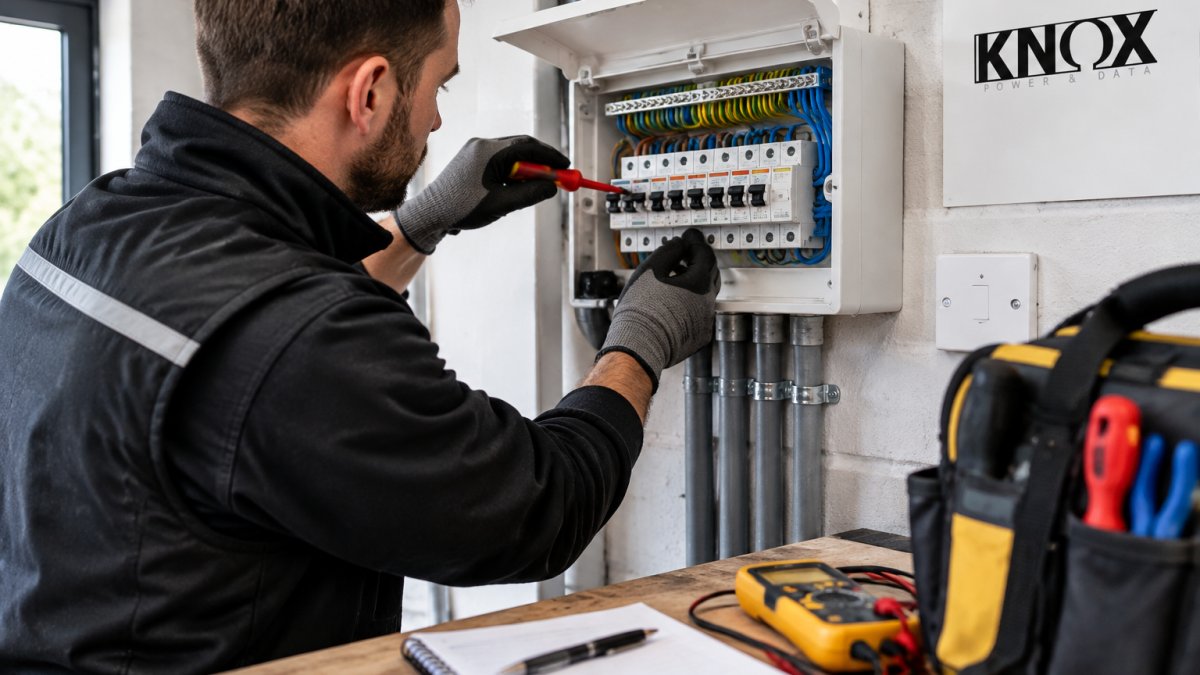
Labour covers the electrician's time, testing and certification. Access matters too: a board tucked into a tight cupboard under the stairs takes longer than one on an open utility wall. Remedial work is the wildcard. Old rubber or fabric wiring, missing earths, or a board with no spare ways can all add cost once the cover comes off.
Consumer Unit Replacement Cost: What Each Board Type Costs
Board type sets the baseline price, but the cost of replacing old fuse box units still varies widely within each type because device count, enclosure size and labour differ. The final cost depends on property size, circuit count and the board specified. A quote for your property should itemise the board, the devices, labour, testing and certification separately, and Knox Power & Data can provide current prices on request. For the full local price breakdown, see consumer unit replacement cost in Wakefield.
Dual RCD, RCBO and 10-Way Boards Compared
| Board Type | Typical Installed Cost (GBP) | Best For | Key Trade-off |
|---|---|---|---|
| Dual RCD, 10-way | £350-£550 | Budget-conscious homes with standard circuits | Two circuits trip together on a fault; limited spare ways |
| Dual RCD, 14-16-way | £450-£700 | Larger homes with outbuildings or future plans | Higher device count; still splits faults across two RCDs |
| RCBO, 10-way | £450-£650 | Maximum circuit separation in a typical home | Higher unit cost per device |
| RCBO, 14-16-way | £550-£850 | Larger properties wanting single-circuit isolation | Highest device and enclosure cost |
| High-integrity dual RCD | £500-£750 | Homes wanting surge protection and separate isolation | More complex enclosure and wiring |
Dual RCD boards split circuits across two RCDs, so a fault knocks out half the board. RCBO boards isolate faults to a single circuit, which is why they cost more. A 10-way board suits most standard homes but leaves little room for an EV charger or garden supply later. High-integrity boards add a surge protection device and a separate main switch, which is increasingly specified where sensitive electronics or EV charging are present.
Costs for Flats, Older Wiring and Difficult Installations
Standard-house pricing does not transfer cleanly to every property. A flat with a communal intake cupboard may need the meter tails extended or a new isolator, which is quoted as an extra. A board in a tight under-stairs cupboard or a high-level position takes longer to access and test. Older properties with rubber or fabric wiring, missing earths or no spare ways often need remedial work quoted separately. Outbuildings and sheds supplied from the main board may need a separate small unit or a dedicated circuit, which is priced separately.
How Long Does It Take to Replace a Fuse Box?
The time a consumer unit replacement takes depends on the property, access and whether remedial wiring is needed. Knox Power & Data can confirm the expected timescale when you request a quote.
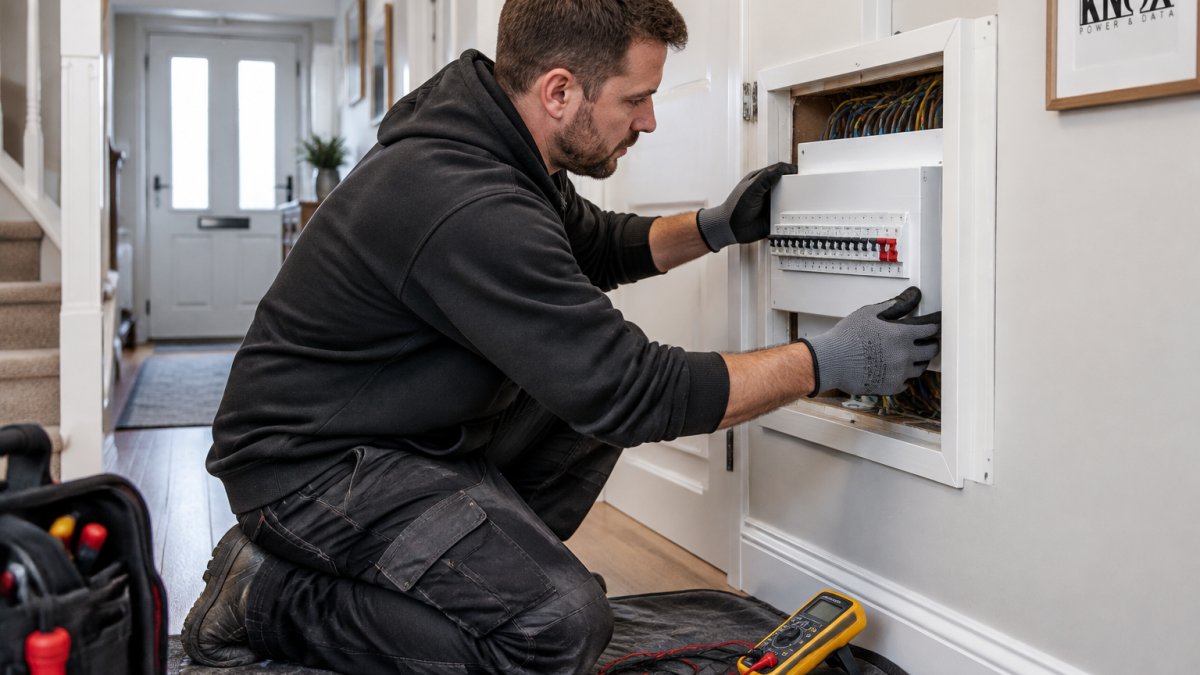
Removal and disposal of the old unit should be listed as a separate line on your quote, so check whether it is included.
The Consumer Unit Replacement Certificate and Part P Sign-Off
Every consumer unit replacement must be certified. The installer issues an Electrical Installation Certificate confirming the new board meets BS 7671, the wiring regulations. Domestic work is also notifiable under Part P of the Building Regulations. A registered electrician self-certifies; anyone else must notify building control.
Knox Power & Data is NAPIT registered (Member No. 69848). If you want to understand what that registration actually guarantees, read what a NAPIT registered electrician means.
Electrical Safety Inspection Cost Before You Replace
An electrical safety inspection, or EICR, usually comes before a replacement decision. The inspection tests circuits, insulation resistance and earthing, and flags anything unsafe. Ask whether the inspection fee is offset if you proceed with the replacement before booking.
An EICR is not optional for landlords, who need one on a fixed cycle (Electrical safety standards in the private and social rented sectors: guidance). For homeowners, it is the honest way to find out whether a board genuinely needs replacing or just needs a minor fix.
How to Compare Fuse Box Replacement Quotes Line by Line
Quotes are rarely like-for-like, and the cheapest headline figure often excludes the items that decide the final bill. A useful comparison starts by asking every installer to quote on the same specification: board type and way count, device type (RCBO or dual RCD), whether surge protection is included, removal and disposal of the old unit, testing and commissioning, the certificate, and Part P notification. Without that common specification, you are comparing different jobs.
Use this checklist when reading each quote:
- Does the quote include the Electrical Installation Certificate and Part P notification, or are they extra?
- Is old unit removal and disposal included, and is the disposal cost stated?
- How many ways does the new board have, and how many are spare after the existing circuits are connected?
- Are RCBOs or dual RCD specified, and is the device brand and model named?
- Is remedial wiring included, listed as a provisional sum, or excluded entirely?
- Is testing and commissioning in the price, and is the time allowed for it stated?
- Is VAT included or added on top, and at what rate?
- Is the quote fixed-price or subject to change once the existing wiring is inspected?
A cheap quote that excludes certification or remedial work is not cheaper. It just moves the cost. Ask each installer to confirm in writing whether the price is fixed or provisional, and what triggers an extra charge. A quote may pair a fixed price for the board swap with a provisional sum for remedial work, provided the sum and its trigger are explained. Where a quote simply says "remedial work extra" with no figure, treat the headline price as a starting point rather than a final cost.
Watch out: a quote that omits VAT or lists certification as an extra can end up costing more than a higher fixed-price quote that includes both, so compare the total including VAT and certification before deciding.
When Replacement Fails Testing: What Happens Next
Sometimes a replacement reveals deeper problems. Circuits may fail insulation resistance testing, or the earthing may not meet BS 7671 requirements. When that happens, the electrician cannot certify the installation until the faults are corrected.
This is where early quotes can change. Remedial work may be quoted separately, so the final bill can differ from the original figure. If testing exposes an unsafe board, our guide to the signs your fuse board is unsafe explains what to do next.
Book a Fuse Box Assessment with Knox Power & Data
The honest answer to "how much will this cost" starts with an assessment, not a number. We inspect the existing unit, test the circuits and give you a fixed-price quote that lists what is included.
Our NAPIT-registered team handles consumer unit replacement in Wakefield, fully tested and certified. We are BS 7671 18th Edition and Inspection qualified, and fully insured for domestic and commercial sites.
Get started with Knox Power & Data and replace your old fuse box with a certified, compliant installation.
Frequently Asked Questions
How much does it cost to replace an old fuse box?
Your final fuse box replacement price depends on the number of circuits, board type, cable condition and access, so ask for a written quote that lists every item. Knox Power & Data can provide current prices on request.
What factors affect the cost of replacing a fuse box?
The unit type is usually a major driver, and circuit count matters too. Other factors include whether old wiring needs remedial work, earthing and bonding upgrades, access to the board, and whether an electrical safety inspection is needed first. Each one should appear as a separate line on your quote.
Do I need an electrical inspection before replacing an old fuse box?
Not always, but an EICR is sensible on older properties. It identifies degraded insulation, borrowed neutrals and inadequate earthing that would otherwise surface mid-installation and add cost. An inspection can help the electrician understand the property before quoting, rather than pricing in unknowns.
Can I replace a fuse box myself?
No. Consumer unit replacement is notifiable work under Part P of the Building Regulations and must be carried out by a competent, registered electrician. The new board has to be tested and certified to BS 7671, and you need the consumer unit replacement certificate for any future sale, let or insurance claim. Doing it yourself leaves you without valid certification and creates a genuine fire and shock risk.
Replacing an old fuse box is not a job to price on guesswork. Get a fixed-price assessment from a NAPIT-registered electrician and know exactly what you are paying for before any work begins.