 blog
LP Electrical Alternatives for Landlords
Table of Contents
- Why Landlords Need Reliable Electrical Contractors
- EICR for Landlords: Legal Inspection Requirements
- Landlord Electrical Compliance Requirements in 2026
- Choosing the Right Electrical Contractors for Landlords
- Electrical Upgrades for Rental Properties
- Knox Power & Data vs Other Providers
- Frequently Asked Questions
Last Updated: October 10, 2026
Why Landlords Need Reliable Electrical Contractors
Landlords face a critical responsibility: ensuring rental properties meet electrical safety standards. This isn't optional compliance, it's a legal obligation that protects tenants and shields you from liability.
The challenge is choosing between providers. LP Electrical alternatives for landlords exist, but not all contractors deliver the same standard of service, certification, or reliability. You need someone who understands rental property regulations, responds quickly to emergencies, and provides transparent pricing before work begins.
At Knox Power & Data, we work with landlords across West Yorkshire to simplify electrical compliance. Our NAPIT-registered team handles everything from inspections to upgrades, ensuring your properties stay compliant and your tenants stay safe.
EICR for Landlords: Legal Inspection Requirements
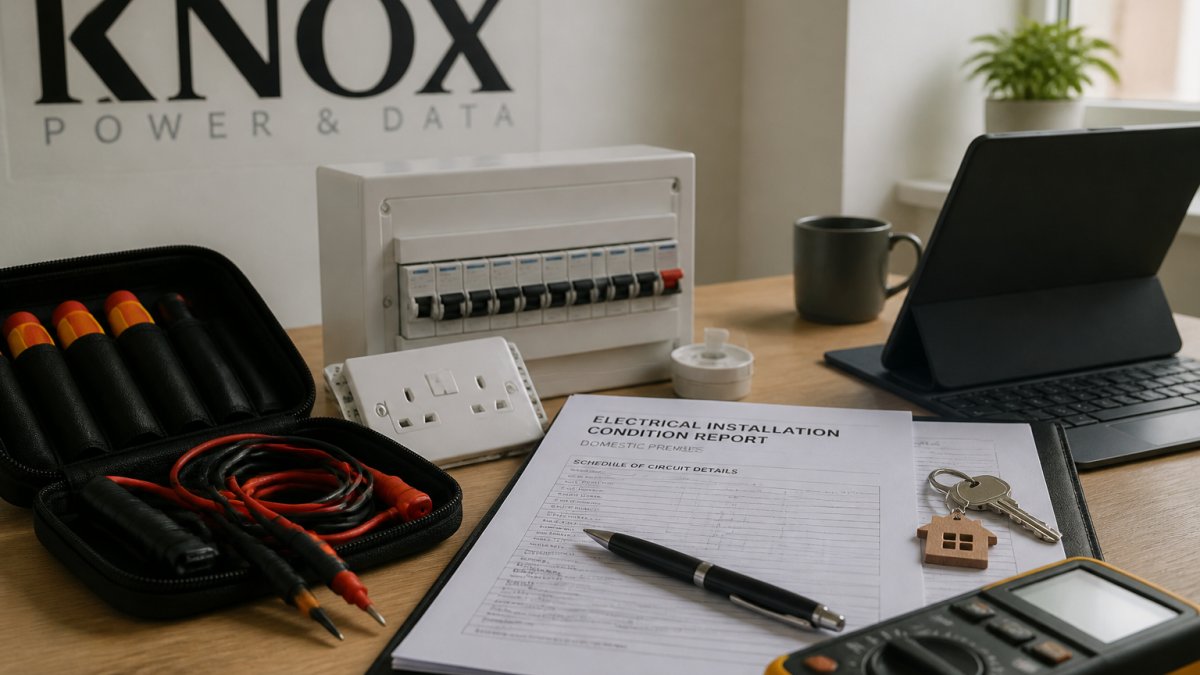
An Electrical Installation Condition Report (EICR) is a detailed inspection of your property's electrical systems. It identifies faults, hazards, and code violations before they become dangerous or costly.
Landlords must arrange an EICR at least every five years, or more frequently if the previous report identified defects (Electrical safety standards in the private and social rented sectors: guidance).
The EICR results in one of three outcomes: satisfactory (no action needed), unsatisfactory with observations (minor work required), or unsatisfactory with code violations (urgent remedial work needed). Delaying remedial work puts you at legal risk and exposes tenants to electrical hazards.
Landlord Electrical Compliance Requirements in 2026
Current regulations require landlords to ensure all electrical installations in rental properties are safe. The legal framework is set out primarily in the Electrical Safety Standards in the Private Rented Sector (England) Regulations 2020, which came into force on 1 June 2020 (The Electrical Safety Standards in the Private Rented Sector (England) Regulations 2020). This applies to all new tenancies from that date and all existing tenancies from 1 April 2021 onwards.
Inspection Intervals and Deadlines
You must arrange an Electrical Installation Condition Report (EICR) at least every five years. If your property was first let before 1 April 2021, you had until 1 April 2021 to arrange the first inspection. For properties let after 1 June 2020, the first EICR must be completed before the tenancy begins.
Once an EICR is complete, the clock resets: your next inspection is due five years from the date of that report. If the report identifies any code violations (classified as "C1" or "C2" defects), you must complete remedial work within a specified timeframe:
- C1 defects (danger present): remedial work must be completed immediately or the circuit isolated before the tenant re-occupies the property.
- C2 defects (potentially dangerous): remedial work must be completed within 28 days of the report date.
Failure to meet these deadlines is a breach of the regulations and can result in enforcement action.
Your Legal Responsibilities
Your responsibilities include:
- Arranging EICR inspections on the five-yearly schedule (or sooner if defects are identified).
- Completing remedial work within the specified timeframes (immediately for C1, 28 days for C2).
- Keeping inspection records and evidence of remedial work for at least seven years.
- Testing portable appliances you supply (kettles, heaters, tools, extension leads) at least annually and maintaining records.
- Installing working smoke alarms on each storey of the property (at least one on the landing near bedrooms).
- Ensuring all work is completed by a qualified electrician registered with a competent person scheme (such as NAPIT, NICEIC, or ELECSA).
- Providing tenants with a copy of the EICR within 30 days of completion.
- Notifying the local authority if you do not complete remedial work within the deadline.
Enforcement and Penalties
Local authorities enforce the Electrical Safety Standards in the Private Rented Sector Regulations. If you fail to comply, they can issue a Remedial Notice requiring you to complete work within a set timeframe. If you ignore the notice, penalties include:
- A civil penalty of up to £30,000 per breach (per property, per breach type).
- Prosecution in the magistrates' court, with fines up to £30,000 or unlimited fines in the Crown Court.
- Suspension or prohibition from letting the property.
- Reputational damage and difficulty obtaining landlord insurance.
More importantly, non-compliance puts tenants at serious risk of electrical fires, shock hazards, and injury. A single electrical incident can result in a tenant claim, criminal liability, or loss of your letting licence.
Compliance Checklist for 2026
Use this checklist to stay on track:
- Date of last EICR: _____ (due for renewal by: _____)
- EICR report classification: Satisfactory / Unsatisfactory with observations / Unsatisfactory with code violations
- Any C1 defects identified? If yes, date remedied: _____
- Any C2 defects identified? If yes, 28-day deadline: _____ Date remedied: _____
- Portable appliance testing last completed: _____ (due for renewal by: _____)
- Smoke alarms tested and working: Yes / No. Date tested: _____
- Copy of EICR provided to tenant? Yes / No. Date provided: _____
- Records stored securely for seven-year retention: Yes / No
- All work completed by registered electrician: Yes / No. Scheme: _____
Keep this checklist updated and review it annually to avoid missed deadlines and enforcement action.
Choosing the Right Electrical Contractors for Landlords
Finding a reliable electrical contractor is critical because your choice affects compliance timelines, repair costs, and tenant safety. Not all contractors are equally qualified or equipped to handle landlord responsibilities. A structured evaluation framework helps you compare alternatives fairly.
Essential Credentials and Qualifications
Before hiring, verify three critical credentials:
-
Competent Person Scheme Registration: Confirm membership with a recognised scheme such as NAPIT, NICEIC, or ELECSA. This certification proves the electrician has passed formal assessments and follows safety standards. Ask for their membership number and verify it on the scheme's website. Without this, their work may not satisfy the Electrical Safety Standards in the Private Rented Sector Regulations, and you remain liable.
-
BS 7671:2018+A2:2022 Qualification: This is the current standard for electrical installations in the UK (bsigroup.com). The electrician should hold a City & Guilds 2365 or equivalent Level 3 qualification in electrical installation. Ask when they last renewed their training; standards are updated periodically, and outdated knowledge can lead to non-compliant work.
-
Public Liability and Professional Indemnity Insurance: Confirm they hold at least £1 million public liability insurance and professional indemnity cover. Request a copy of their insurance certificate. This protects you if their work causes damage or injury.
A contractor who cannot provide these credentials is cutting corners. Your liability depends on hiring someone qualified.
Evaluation Framework: Key Criteria
Use this framework to compare contractors consistently:
Inspection Scope and Reporting
- Do they provide a full EICR report?
- Do they test circuits under load and document findings in a format you can provide to tenants and local authorities?
- How detailed is their remedial advice? Do they explain what work is needed and why?
Response Time and Availability
- What is their typical response time for emergency callouts (e.g., same-day, next-day)?
- Do they offer out-of-hours availability? If so, what is the premium charge?
- Are they available during your tenants' working hours, or do they require evening/weekend appointments?
Remedial Work Capability
- Can they complete remedial work themselves, or do they subcontract? (In-house teams are often faster and more accountable.)
- What is their typical turnaround for C2 defects (28-day deadline)?
- Do they hold the qualifications to upgrade consumer units, rewire circuits, and install RCD protection, or are these outsourced?
Pricing and Transparency
- Do they provide a written quote before work begins?
- What is their typical cost for an EICR inspection? (Expect £150-£400 depending on property size and complexity.)
- What is their typical cost for common remedial work, such as consumer unit upgrades or circuit isolation?
- Do they offer fixed-price packages for landlords, or do they charge hourly rates?
- Are there additional charges for report copies, certification, or follow-up visits?
Documentation and Compliance Records
- Do they provide a formal EICR report with a unique reference number and the electrician's signature?
- Do they retain copies of reports for your records?
- Will they provide evidence of their qualifications and insurance on request?
Geographic Coverage and Local Knowledge
- Do they service your area reliably, or are they based far away (which may delay emergency response)?
- Do they have experience with your property type (terraced houses, flats, HMOs)? Local contractors often know common issues in their area.
Contractor Selection by Property Type and Portfolio Size
Single-Property Landlords Prioritise reliability and transparency over cost. You need a contractor who responds quickly to emergencies and explains work clearly. A local, established electrician with strong reviews is often the best choice.
Small Portfolio (2-5 Properties) Consider contractors offering package discounts for multiple inspections or properties. Some will schedule inspections on the same day to reduce travel costs. Ask about loyalty discounts or retainer arrangements for emergency callouts.
Larger Portfolio or HMOs (6+ Properties) Negotiate a service agreement with a contractor or larger firm. You may secure fixed rates for inspections and remedial work, priority emergency response, and dedicated account management.
Red Flags: What to Avoid
- No verifiable credentials: If they cannot provide proof of scheme registration or insurance, do not hire them.
- Vague or verbal quotes: Always insist on a written quote. Verbal agreements leave you exposed to unexpected costs.
- Pressure to rush or skip steps: A contractor who suggests skipping testing or documentation is not trustworthy.
- No emergency availability: If they cannot respond to urgent faults, find someone who can.
- Poor communication: If they don't return calls or explain work clearly, they will be difficult to work with when problems arise.
- Unusually low pricing: If their quote is significantly lower than others, ask why. They may be cutting corners on testing, documentation, or qualifications.
Getting Started
Contact at least three contractors and ask for quotes. Provide the same information to each (property address, age, number of circuits, last inspection date if known) so you can compare fairly. Ask for references from other landlords if possible. Once you've chosen a contractor, confirm the inspection date in writing and ensure they provide a formal report within 14 days of completion.
Electrical Upgrades for Rental Properties
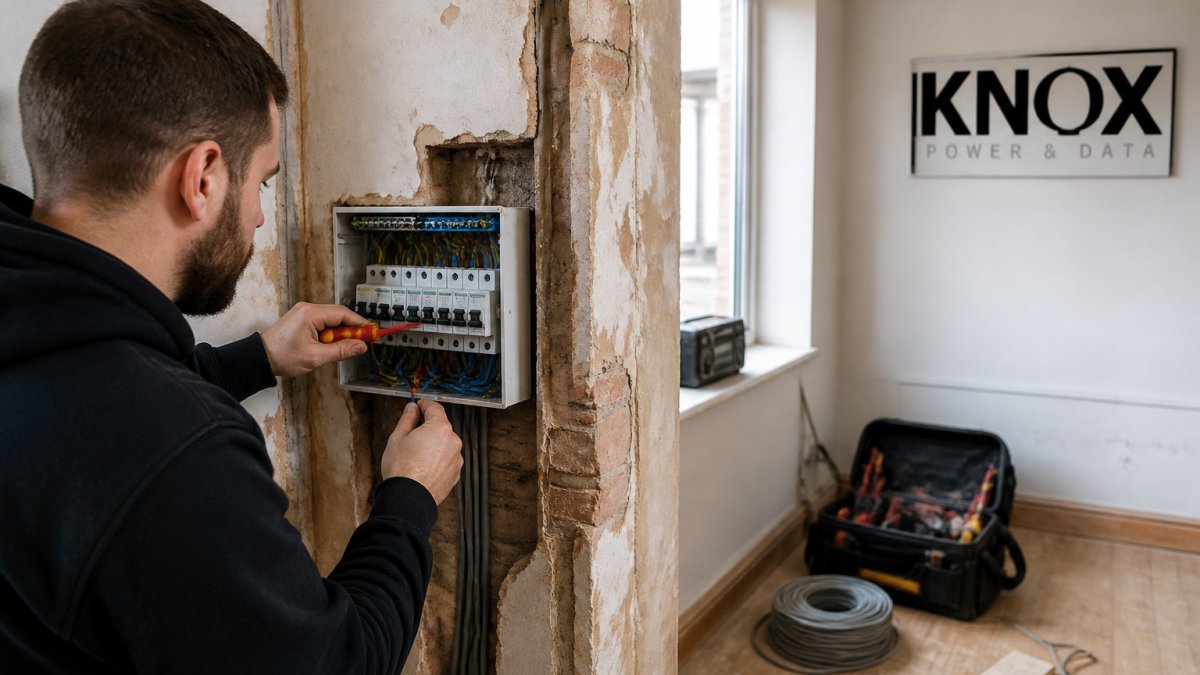
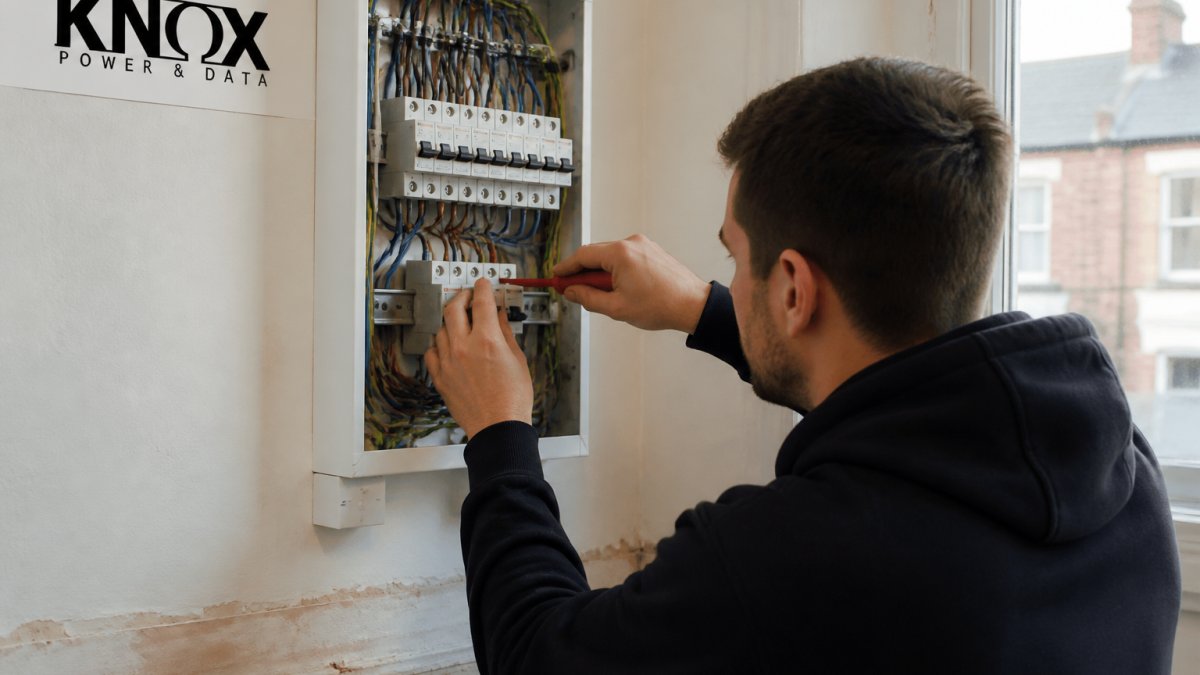
Older properties often need upgrades to meet current safety standards. Consumer units (fuse boards) installed before 2008 may lack RCD protection, a safety device that cuts power instantly if a fault is detected.
Upgrading to a modern consumer unit with RCD protection is a common remedial requirement after EICR inspections. Other upgrades include installing additional circuits for high-load appliances, replacing outdated wiring, or adding socket outlets to prevent overloading extension leads.
These upgrades improve safety, reduce insurance claims, and make properties more attractive to tenants. They're an investment in compliance and long-term property value.
Knox Power & Data vs Other Providers
Knox Power & Data stands out among LP Electrical alternatives for landlords because we combine electrical expertise with data cabling and emergency response in one team.
Our NAPIT registration (Member No. 69848) and BS 7671 18th Edition qualification mean your inspections and upgrades are handled by someone who knows rental property regulations inside out. We offer same-day availability for emergencies, critical when a tenant's electrics fail.
Other providers may specialise in one area or lack emergency availability. Some don't hold current certifications, or they're slow to respond when you need urgent repairs.
Frequently Asked Questions
Can a landlord be fined for not having an EICR?
Yes. Under the Electrical Safety Standards in the Private Rented Sector (England) Regulations 2020, landlords must provide an EICR every five years (or within 30 days of a new tenancy). Failure to comply can result in fines up to £30,000 per breach. Local authorities actively enforce this requirement, making EICR testing non-negotiable for rental property compliance.
What qualifications should electrical contractors for landlords have?
Electrical contractors for landlords must hold appropriate certifications, including BS 7671 18th Edition qualification and NAPIT, NICEIC, or equivalent registration. These credentials confirm the contractor has been assessed for competence in electrical safety standards. Always verify registration before hiring, it protects you legally and ensures the work meets current regulations.
How often should a rented property have an electrical safety inspection?
Rental properties require an EICR every five years under current regulations. If defects are found during inspection, remedial work must be completed and verified within a specified timeframe. Keeping inspection records and scheduling tests before expiry prevents compliance breaches and demonstrates due diligence if disputes arise.
What electrical upgrades add the most value for landlords?
Consumer unit upgrades, RCD protection installation, and fixed wiring repairs are priority upgrades that improve safety and rental appeal. Energy-efficient LED lighting and EV charger readiness also attract modern tenants and future-proof your property. Discuss which upgrades suit your property type and tenant demographic with a qualified contractor.
Electrical compliance for rental properties is non-negotiable, and the right contractor makes it straightforward. Knox Power & Data provides NAPIT-registered inspections, rapid emergency response, and fully certified upgrades tailored to landlord requirements. Get a quote from Knox Power & Data and ensure your properties stay compliant, safe, and attractive to tenants.