 ultimate-guide
EICR Testing Requirements for Landlords 2026: What You Need
Table of Contents
- What an EICR Testing Report Actually Contains
- EICR Testing Requirements for Landlords in 2026
- Electrical Safety Certificate Validity Period: When Reports Expire
- EICR Remedial Work Requirements: C1, C2, C3 and FI Codes
- How to Find a NAPIT Registered Electrician
- Penalties for Non-Compliance: Fines, Enforcement and Civil Penalties
- Digital Record-Keeping and Tenant Refusal Scenarios
- Frequently Asked Questions
Last Updated: September 15, 2026
What an EICR Testing Report Actually Contains
An Electrical Installation Condition Report (EICR) is a formal document produced after a qualified and competent person inspects and tests the fixed electrical installation of a property against BS 7671, the wiring regulations. It records the condition of wiring, accessories, and the consumer unit, and it ends with one of two verdicts: satisfactory or unsatisfactory.
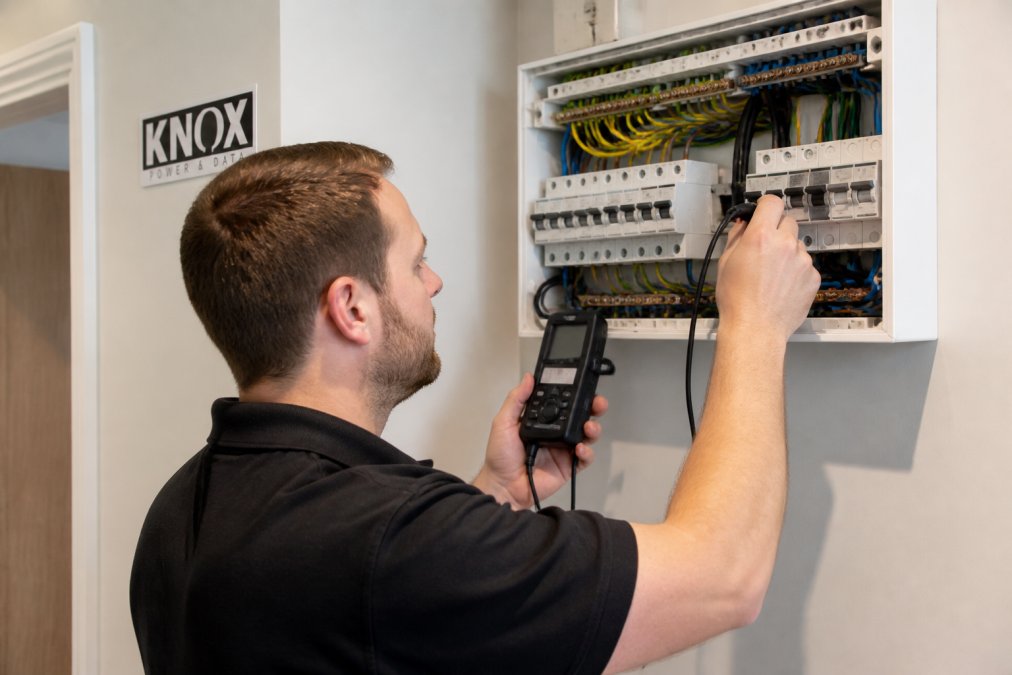
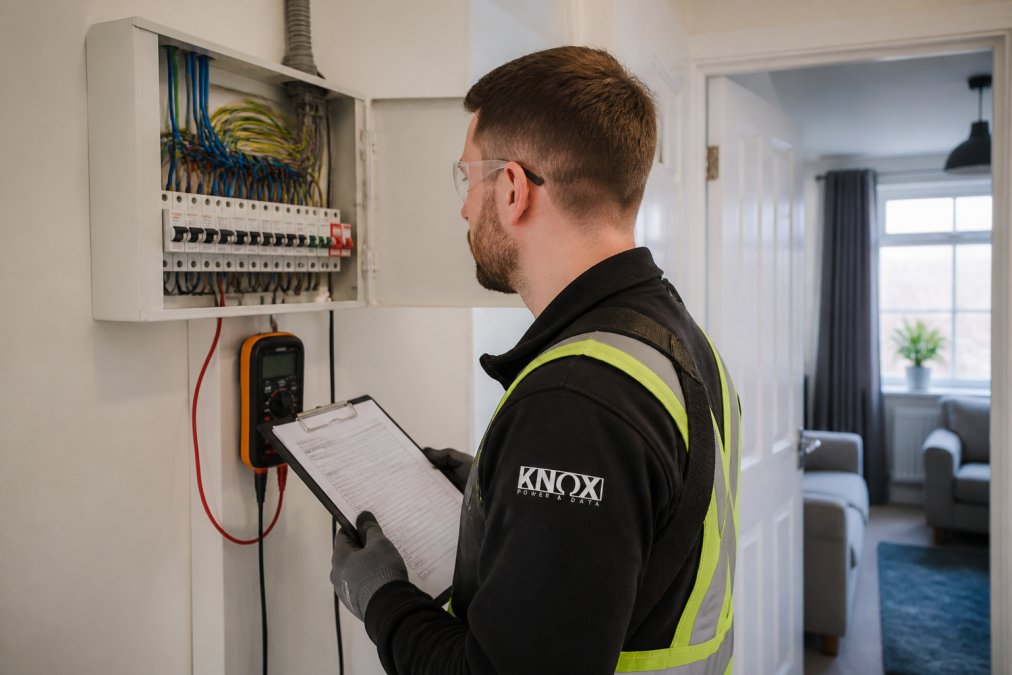
The report itself is not a pass-or-fail certificate for the building. It is a safety audit. Inside, you get a schedule of inspections covering every circuit, a schedule of test results showing measured readings, and a list of observations coded by severity. At Knox Power & Data, our NAPIT-registered team produces these reports with a consistent structure.
A common mistake is treating the EICR as a box to tick and filing it without reading the observations. The codes are where the real information sits.
EICR Testing Requirements for Landlords in 2026
EICR testing requirements for landlords in 2026 centre on one statutory duty: ensure the fixed electrical installation is inspected and tested at least every five years by a qualified and competent person, and hold a satisfactory report for every period a tenancy is active.
That duty flows from the Electrical Safety Standards in the Private Rented Sector (England) Regulations 2020, enforced by the local housing authority (The Electrical Safety Standards in the Private Rented Sector (England) Regulations 2020). The regulations apply to most private tenancies, and the same principle now shapes social housing expectations. The practical sequence is straightforward:
- Arrange an EICR before a new tenancy begins.
- Give the report to the tenant before they move in, or within 28 days of the inspection.
- Supply a copy to the local housing authority on request.
- Retain the report and repeat the cycle at the five-year mark.
The Five-Year Rule and New Tenancy Rules
Five years is the maximum interval, not a target to hit exactly. If the report recommends an earlier re-inspection, that shorter date becomes your deadline. A new tenancy also triggers a fresh requirement: you need a valid, satisfactory report in place before the tenant takes occupation, even if the last inspection was only two years ago. For guidance on the underlying standards, the official guidance on electrical safety standards in the private rented sector is the starting point every landlord should read.
HMOs vs Single-Let Properties
Houses in multiple occupation carry stricter expectations than a single-let flat. Licensing conditions for HMOs often require a current satisfactory EICR as part of the licence application, and some local housing authorities ask for more frequent testing than the five-year baseline. A single-let property follows the standard cycle.
Electrical Safety Certificate Validity Period: When Reports Expire
An electrical safety certificate validity period runs for a maximum of five years from the inspection date, provided the report is satisfactory. An unsatisfactory report has no meaningful validity at all: it signals outstanding danger or potential danger that must be fixed.
Many landlords assume the certificate simply "runs out" and can be renewed at leisure. In practice, the expiry date and the tenancy start date rarely line up neatly. Diarise the five-year date, then work backwards to book the inspection early enough that any remedial action is finished before a new tenancy agreement is signed.
EICR Remedial Work Requirements: C1, C2, C3 and FI Codes
Remedial work requirements are driven entirely by the observation codes on the report. A C1 means danger present and demands immediate action, usually isolation of the circuit. A C2 means potentially dangerous and must be resolved before the report can be deemed satisfactory. A C3 is improvement recommended and does not make the report unsatisfactory. FI means further investigation is needed because the engineer could not fully assess a circuit.
| Code | Meaning | Makes report unsatisfactory? | Typical timescale |
|---|---|---|---|
| C1 | Danger present | Yes | Immediately |
| C2 | Potentially dangerous | Yes | Within 28 days |
| C3 | Improvement recommended | No | At next inspection |
| FI | Further investigation required | Yes | Within 28 days |
Remedial Work Timelines and Deadlines
The 28-day window for C2 and FI work is the deadline most landlords miss. The regulations expect remedial action to be completed within 28 days of the inspection, or sooner if the report specifies a shorter period. What most guides miss is that the clock starts on the inspection date, not the day the report lands in your inbox. At Knox Power & Data, we flag C1 and C2 items on the day of the visit so landlords can schedule remedial work without losing time.
How to Find a NAPIT Registered Electrician
Finding a NAPIT registered electrician means checking membership directly rather than trusting a logo on a van.
What Competent Person Scheme Membership Actually Covers
When you verify a member, confirm three things separately:
Verification Checklist Before You Book
Why Scheme Membership Matters for Enforcement
The Cheaper Quote Trap
Penalties for Non-Compliance: Fines, Enforcement and Civil Penalties
Digital Record-Keeping and Tenant Refusal Scenarios
This section covers both record-keeping and tenant access.
Building an Audit-Ready Record System
HMO Licensing Adds a Layer
Tenant Refusal: The Lawful Access Procedure
A defensible access trail records, for each attempt:
Frequently Asked Questions
What are the new EICR regulations for 2026?
The core duty has not changed: landlords in the private rented sector must have the fixed electrical installation inspected and tested by a qualified and competent person at least every five years, and give a copy of the report to tenants and the local housing authority on request. What has tightened is enforcement. Local councils continue to use civil penalty notices and remedial deadlines.
Can a landlord be fined for no EICR?
Yes. Failing to meet your EICR testing requirements for landlords is a breach of the Electrical Safety Standards in the Private Rented Sector (England) Regulations 2020. A local housing authority can issue a remedial notice and, if you do not comply, impose a civil penalty of up to £30,000. They may also arrange the work themselves and recover the cost from you. Fines apply whether you ignored the duty or simply lost track of the date.
Do you need an EICR every 5 years or change of tenancy?
Every five years is the legal maximum, but a new tenancy does not automatically trigger a fresh inspection if a valid report is already in place. What you must do on a new tenancy is give the incoming tenant a copy of the existing report before they move in. If the report is more than five years old, or the previous report flagged C1 or C2 issues that were never fixed, you need a new inspection before letting the property.
What happens if an EICR report shows C1 or C2 defects?
C1 means danger is present and the circuit or item should be disconnected immediately. C2 means potentially dangerous and needs remedial work urgently. Under EICR remedial work requirements you must complete the repairs within 28 days of the inspection, or sooner if the report specifies a shorter window. You then need written confirmation from the electrician that the work is done, and you must send that confirmation to the tenant and the local housing authority within 28 days.
Are there different EICR requirements for social versus private landlords?
Private rented sector landlords are covered by the 2020 Regulations, which set the five-year cycle, the 28-day remedial rule and the duty to supply copies to tenants and the council. Social housing providers follow the same electrical safety standards but are also subject to the Social Housing (Regulation) Act 2023 and the Decent Homes Standard, which add reporting duties to the regulator. The inspection itself, and the codes used on the report, are the same for both.
How much does an EICR cost?
Pricing depends on the size of the property, the number of circuits, the age of the wiring and whether access is straightforward. A small flat with a modern consumer unit sits at the lower end; a large HMO with older wiring and multiple distribution boards sits higher. Knox Power & Data does not publish fixed prices because every property is different. Request a quote with your property details and you will get an accurate figure before any work starts.
How do I find a NAPIT registered electrician for my EICR?
Use the NAPIT online register to search by postcode and check the electrician's membership number, which should be quoted on the report. Ask whether they hold BS 7671 18th Edition and Inspection and Testing qualifications, and whether they carry public liability insurance for rented property. A registered electrician will give you a report with a clear satisfactory or unsatisfactory outcome, not a verbal summary, so you have the paperwork your council may ask to see.