 how-to
How to Prepare Your Home for EV Charger Installation
Last Updated: November 6, 2026
Quick Summary
To prepare your home for EV charger installation, confirm you have off-street parking, locate your electricity meter and consumer unit, and gather your energy tariff details and any landlord permission. Clear access to the meter cupboard, loft hatch and proposed cable route before the day, and have someone home to answer questions.
- Work backwards from your install date, starting four weeks out by confirming off-street parking and charger position.
- Photograph your meter and consumer unit in daylight so the installer can confirm supply details in advance.
- A consumer unit upgrade must be completed and certified before the charger circuit is energised.
- Ask your installer to list consumer unit work as a separate line on the quote.
- Renters need written landlord consent, and flats usually need freeholder or management company approval.
Table of Contents
- Start With a Home EV Charger Installation Checklist
- Checking Electrical Capacity and the Main Fuse
- When You Need a Consumer Unit Upgrade for EV Charger Work
- Choosing the Charger Location and Cable Route
- Booking an EV Charger Installation Site Survey
- How Long EV Charger Installation Time Actually Takes
- Handling Flats, Rentals and Shared Parking
- Book Your Installation Survey With Knox Power & Data
- Frequently Asked Questions
Start With a Home EV Charger Installation Checklist
Preparing for EV charger installation starts with knowing what the installer will ask before anyone drills a wall. Most delays come from information nobody gathered in advance, not from the work itself. A home EV charger installation checklist turns a vague worry into a short list of jobs you can actually tick off.
The three checks that matter most are your parking, your fuse board, and your paperwork. Get those right and the rest follows.
Working Through the Checklist by Timeline
Work backwards from your preferred install date:
- Four weeks out: Confirm you have off-street parking and decide roughly where the charger should go.
- Three weeks out: Find your electricity meter and consumer unit, and photograph both.
- Two weeks out: Gather your energy tariff details and any landlord permission if you rent.
- One week out: Clear access to the meter cupboard, loft hatch and proposed cable route.
- Installation day: Have someone home, unlock any side gates, and move cars off the driveway.
Most of these take minutes. Skipping them can push your booking back by days.
Checking Electrical Capacity and the Main Fuse
The first question any installer asks is whether your electrical supply can carry an EV charge point. Home charging draws a steady, heavy load for hours, so the supply has to cope with that plus everything else running at once.
Here is what gets checked:
- Main fuse rating: The rating determines which charger types are suitable.
- Single-phase or three-phase supply: Three-phase allows faster charging speeds.
- Spare ways in the consumer unit: A dedicated circuit is needed for the charger.
- Earthing arrangements: These must meet current safety requirements.
- Meter location: Distance from the meter to the charger affects cable length and cost.
You do not need to diagnose any of this yourself. Just know where the meter and fuse board are, and clear access to them. If you want to understand what your existing electrics can handle before booking, our guide on whether your home electrics can support an EV charger walks through it.
When You Need a Consumer Unit Upgrade for EV Charger Work
An older fuse board may not be able to take a new dedicated circuit safely. If yours has rewireable fuses, no RCD protection, or no spare ways, an upgrade is often the sensible route.
Signs your consumer unit needs replacing:
- Rewireable fuse carriers instead of circuit breakers
- No RCD protection on socket circuits
- A plastic enclosure with visible heat marks
- No spare ways for a new circuit
- Labelling that has faded or gone missing
- A board mounted in a location that no longer meets current clearance or accessibility expectations
What an Upgrade Actually Involves
A consumer unit upgrade is not a like-for-like swap. The electrician isolates the supply, removes the old board, fits a new enclosure with modern circuit breakers and RCD or RCBO protection, reconnects every existing circuit, and then tests and certifies the whole installation.
In practical terms, expect:
- A new enclosure with enough spare ways for the EV circuit and future additions
- RCD or RCBO protection on the circuits that need it, including the new charger circuit
- Earthing and bonding checks, because the charger's protective arrangements depend on them
- A new circuit schedule and labels, which the installer should leave with you
- An Electrical Installation Certificate, which you should keep with the charger paperwork
Who Arranges It and How It Affects the Plan
The consumer unit upgrade has to be completed and certified before the charger circuit is energised.
Some jobs are completed as two visits, with the board upgrade first and the charger second. Ask your installer for the consumer unit work as a separate line on the quote so you can see what you are paying for.
When an Upgrade Is Not Needed
Not every older board is a problem. If yours already has circuit breakers, RCD protection, spare ways and clear labelling, the installer may simply add a dedicated circuit with its own protective device. The survey is what settles it, confirming the supply rating, board capacity and earthing arrangement before work is committed.
You can read more in our guide to the signs your consumer unit needs replacing. If you are ready to act, you can get in touch with Knox Power & Data for a quote on consumer unit replacement.
Choosing the Charger Location and Cable Route
Where the charger goes decides how neat the job looks and how easy it is to live with. The best spot is usually close to where you park, sheltered from the worst weather, and within sensible cable reach of the consumer unit.
Compare your options:
| Location | Best for | Watch out for |
|---|---|---|
| Garage wall | Sheltered charging, cable stays dry | Car must fit inside or park close |
| Front house wall | Driveway parking, easy access | Weather exposure on the unit |
| Freestanding post | Long driveways, detached garages | Extra groundwork and cost |
| Side passage | Cars parked to the side | Narrow routes for cable |
Cable route planning matters as much as the charger itself. A short, tidy run along a wall costs less than a long buried trench. Keep the route clear of doorways, and think about trip hazards if the cable has to cross a path. A tethered charger keeps the cable attached; an untethered one uses your own charging cable. Pick based on how you park, not on what looks tidiest in a brochure.
Booking an EV Charger Installation Site Survey
An EV charger installation site survey is a short visit where an electrician confirms the supply, the consumer unit, the cable route and the charger position before any work is booked. It catches problems early, when they are cheap to fix.
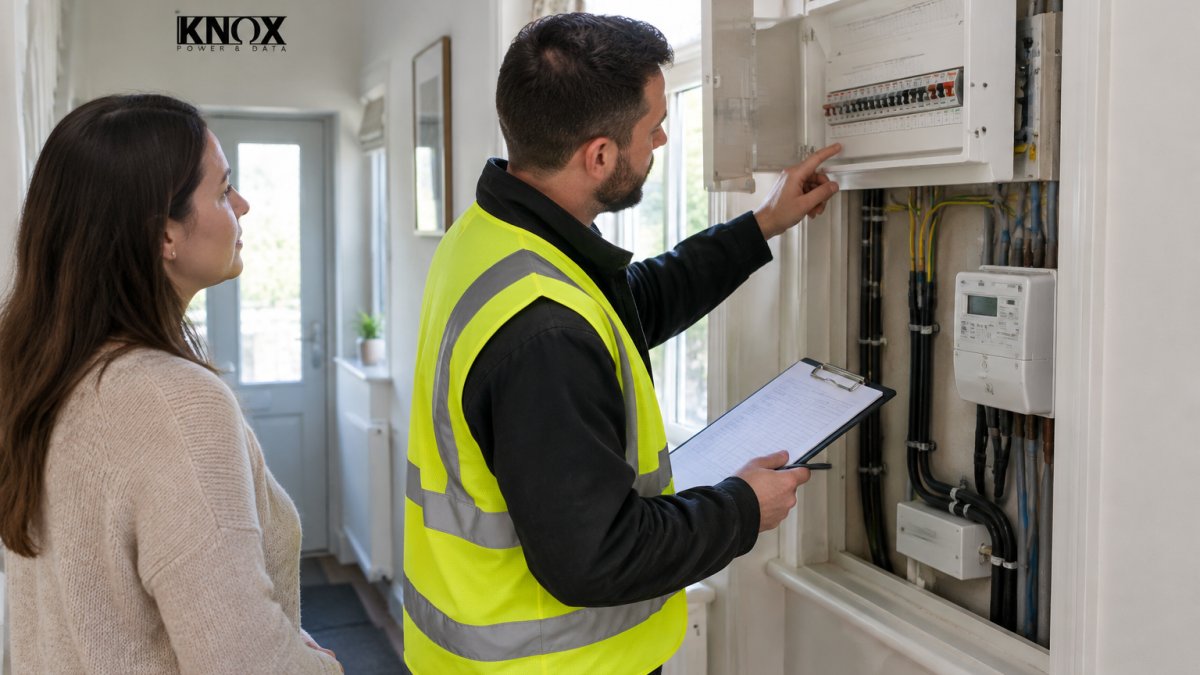
What to have ready for the survey:
- Photos of the meter, consumer unit and proposed charger wall
- Your parking arrangement and how the car sits on the drive
- Your electricity meter number and current tariff
- Any landlord or freeholder permission, if relevant
- A note of any planned building work near the route
Good photos save a return visit. Take them in daylight, step back far enough to show the whole board, and include one wide shot of the wall where the charger will go.
How Long EV Charger Installation Time Actually Takes
Most straightforward home installations take a few hours, with the survey and testing adding to that. Complex jobs take longer, and the honest answer is that time depends on your supply, cable route and whether the consumer unit needs work.
Expect the day to include:
- A final check of the supply and isolation of power
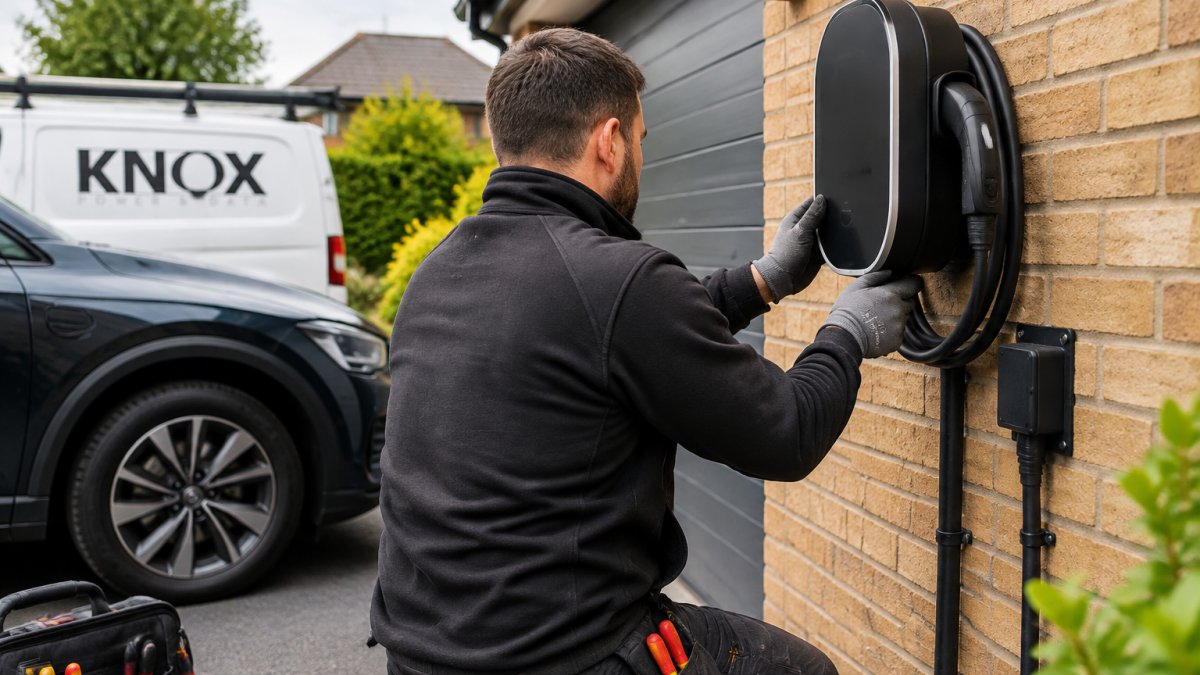
- Mounting the charger and running the cable
- Fitting the dedicated circuit and protective devices
- Testing, certification and app setup
- A handover explaining charging speeds and smart charging settings
The Decision Points That Move the Finish Time
A few moments on the day can add an hour or more each, and knowing them in advance stops them feeling like a crisis:
- The supply check. If the main fuse rating or earthing arrangement is not what the survey recorded, the installer has to stop and reassess before mounting anything.
- The cable route. A wall run that looked clear may turn out to need fire-rated containment, a different entry point, or a longer path around a soil pipe or downpipe.
- The consumer unit. If the board has less capacity than expected, the charger circuit may need a different protective device, or the board upgrade may need to be booked as a second visit.
- The charger position. If the chosen spot turns out to be in direct afternoon sun, under a window that opens, or beyond the cable reach stated in the manual, the position may need to shift, and that needs your agreement before drilling.
What Can Push the Job Into a Second Visit
Some issues cannot be resolved on the day and are better handled as a planned return:
- A consumer unit upgrade that needs parts not on the van
- Earthing remedial work that requires access to the incoming supply
- A cable route that needs groundwork, ducting or a trench
- A charger that arrives damaged or is the wrong variant
How to Keep the Day Short
The homeowner's contribution is mostly about access and information. Clear the meter cupboard and the proposed cable route, move cars off the drive, unlock side gates, and have someone home who can answer questions about the parking and the property. If you have the survey photos and any permissions to hand, the installer spends less time asking and more time fitting.
If your route is short and your board has capacity, the job is quicker. If a consumer unit upgrade or long cable run is needed, plan for a longer day. Our breakdown of how long EV charger installation takes covers the variables in more detail.
Handling Flats, Rentals and Shared Parking
Not every home has a private driveway, and that changes the process. Renters, flat owners and shared-parking residents need permission before an installer can touch anything.
The practical points:
- Rentals: Get written consent from the landlord before booking.
- Flats and communal areas: The freeholder or management company usually has to approve wall-mounted equipment and cable routes.
- Shared parking: Agree the charger position with neighbours so nobody loses access.
- Listed or conservation properties: Check whether external fittings need approval.
Landlords fitting chargers for tenants should also confirm the consumer unit can take the load. Get permissions in writing and keep them with your paperwork.
Book Your Installation Survey With Knox Power & Data
The gap between a smooth installation and a stressful one is nearly always preparation. Sort your parking, find your fuse board, take clear photos and gather permissions, and the rest is straightforward.
Knox Power & Data is a NAPIT-registered team. If you would like the full picture first, our EV charger installation guide for homes explains each stage.
Contact Knox Power & Data to discuss your requirements and request a quote.
Most EV charger problems trace back to information gathered too late. We check your supply, board and cable route before quoting, so there are no surprises on the day.
Frequently Asked Questions
What do I need to do before an EV charger is installed at home?
Clear access to your consumer unit and meter, confirm where you want the charger mounted, and gather any paperwork on your existing electrical setup. Photograph the fuse board, the meter and the proposed cable route so your installer can assess the job before the visit. If you rent or share parking, get written permission first. A short pre-installation checklist like this saves time on survey day and reduces the chance of a return visit for missing parts or access issues.
Does my home need a consumer unit upgrade for an EV charger?
Not always, but often. Chargers draw a continuous load, so the installer checks spare ways, RCD protection and whether the existing unit can take a dedicated circuit. Older fuse boards with rewireable fuses or no spare capacity usually need replacing. A consumer unit upgrade for EV charger work typically adds time to the job, so ask about it during the survey rather than on installation day.
How long does a home EV charger installation take?
Installation time depends on the supply, the cable route and whether the consumer unit needs upgrading. Your installer should confirm an expected duration after the site survey, once they have seen the fuse board and the route.
Do I need off-street parking to install a home EV charger?
You need a safe, legal place to park and charge, ideally a driveway or private bay. Charging cables should not cross public pavements because of trip hazards and local highway rules. If your parking is a shared bay or a garage set back from the house, the installer will assess cable length, weather exposure and whether a pedestal or wall-mounted unit suits the location better.