 how-to
EV Charger Installation Guide for Homes
Table of Contents
- Understanding Home EV Charger Installation
- Home EV Charger Installation Requirements
- Home EV Charger Installation Cost Breakdown
- EV Charger Installation Process Step by Step
- Home EV Charger Installation Time and Timeline
- Choosing the Right Home Charger for Your Needs
- Special Circumstances: Flats, Rentals, and Shared Parking
- After Installation: Safety, Maintenance, and Troubleshooting
- Frequently Asked Questions
Last Updated: October 6, 2026
Understanding Home EV Charger Installation
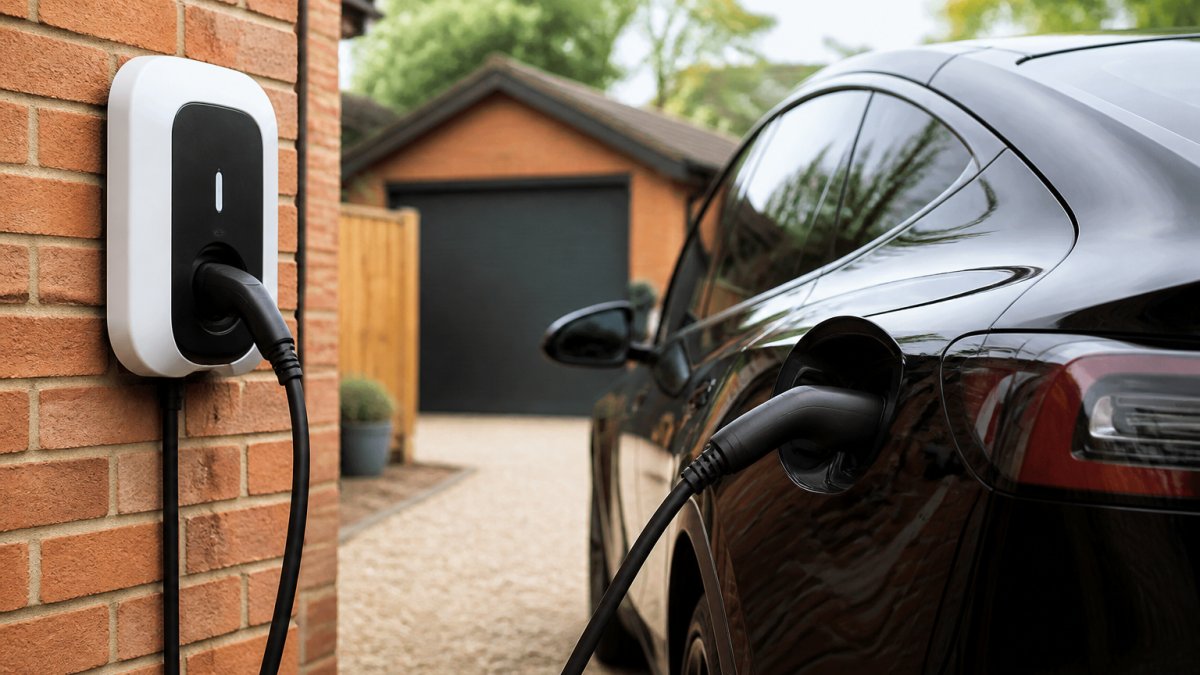
An EV charger installation at home means you charge overnight instead of hunting for public charging points.
But not every electrician can handle it. EV charger installation requires specialist knowledge, proper electrical assessment, and regulatory compliance, miss any and you risk safety issues, failed inspections, or installations that do not work.
At Knox Power & Data, we guide homeowners through this every week. Here is what you need to know before, during, and after your EV charger installation.
Home EV Charger Installation Requirements
Your home must meet specific conditions before installation can proceed. Skipping them leads to delays or rejection.
Electrical suitability and home assessment
Your home's electrical system must handle the charger's power demand. Most chargers draw 7 kW to 22 kW, and older homes may need upgrades.
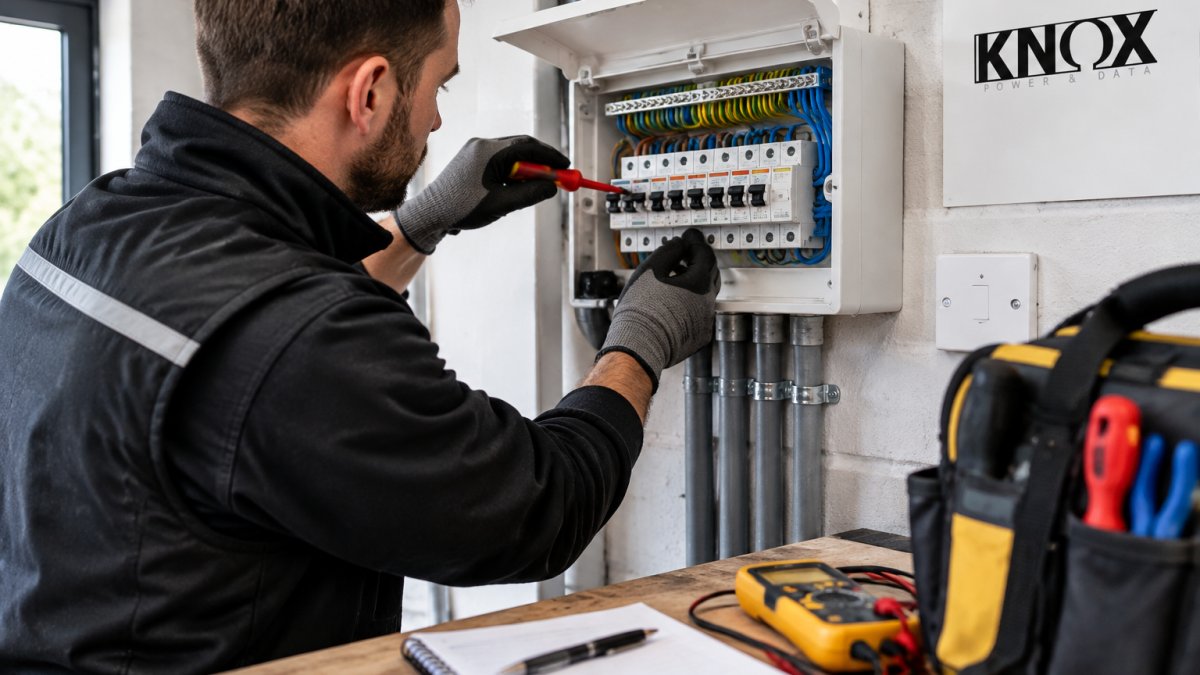
Here's what an electrical assessment covers:
- Consumer unit capacity and available circuits
- Current electrical load and headroom
- Cable routing from consumer unit to charger location
An assessment takes 30-60 minutes, and any upgrades become part of your installation quote.
Many homes built after 2000 have sufficient capacity; older properties often do not. Get a professional assessment first.
DNO notification and regulatory compliance
The Distribution Network Operator (DNO) manages the electrical network serving your area and must be notified about your charger installation, a legal requirement, not optional.
Notification must happen before installation, usually takes 10 working days, and your installer handles it as part of their service.
Some installations require formal DNO application. This happens when:
- Your charger exceeds 5 kW and you have single-phase supply
- Your charger is 7 kW or higher
- Your property has limited electrical capacity
Applications take 4-6 weeks, so plan accordingly. The installer should confirm DNO requirements upfront, if they do not mention it, ask directly.
Home EV Charger Installation Cost Breakdown
Installation costs vary with your home's electrical condition, the charger, and the cable route. Understanding each line item helps you budget and spot incomplete quotes.
Factors affecting installation pricing
The main cost drivers are:
- Charger unit cost: Wall-mounted units range from budget 3.6 kW models to 22 kW smart chargers with load management and solar diversion, usually the largest line item.
- Electrical work: A new dedicated circuit, protective device, and any consumer unit modification. Older plastic units or those with no spare ways may need replacement or a sub-board.
- Cable type and length: Standard 6 mm² or 10 mm² SWA cable for outdoor runs. Longer runs, armoured cable, and conduit add materials and labour.
A modern home with a spare way, accessible route, and short run sits at the lower end; an older property with a long underground run, earthing upgrade, and consumer unit replacement sits at the upper end. Get at least three quotes and compare what is included, not just the headline figure.
Grants and financial support available
Government support for home charging changes often, so verify eligibility before you book, most schemes require pre-approval and cannot be claimed retrospectively.
The main routes to check are:
- The Electric Vehicle Chargepoint Grant for homeowners and renters with off-street parking. It typically covers a percentage of the charger and installation cost, capped at a fixed amount, and usually requires off-street parking, an eligible vehicle or qualifying tenancy, and an approved installer.
- The Electric Vehicle Chargepoint Grant for landlords and social housing providers, for rental and shared properties, the route to check if you are a landlord or a tenant in a block with communal parking.
- The Workplace Charging Scheme, if you are a sole trader or run a business from home and want to claim for a charger used by staff or visitors.
Eligibility criteria that commonly trip people up: the charger must be on the approved list and installed by an approved installer; you usually need lawful use of the property and off-street parking; some schemes require the vehicle registered to the property address; and funding is capped per installation and property, and cannot be combined with certain other schemes.
A worked example of how the numbers stack up
Consider two scenarios. A modern home with a spare way, a short surface-mounted run to a garage wall, and a standard 7 kW smart charger: the bulk of the cost is the unit and a half-day of labour, certification included.
The lesson: the charger is often not the main cost driver, the electrical infrastructure and cable route usually are. That is why an on-site assessment matters more than an online quote.
Check current eligibility and apply for the government chargepoint grant
EV Charger Installation Process Step by Step
The installation follows a clear sequence. Understanding each stage removes surprises.
Pre-installation home checklist
Before your installation appointment, prepare your home:
- Clear the installation area: Remove obstacles, plants, or stored items from the mounting wall.
- Arrange access: Ensure the installer can reach your consumer unit, cable routes, and external wall easily.
- Locate your DNO paperwork: Have any DNO approval documents ready.
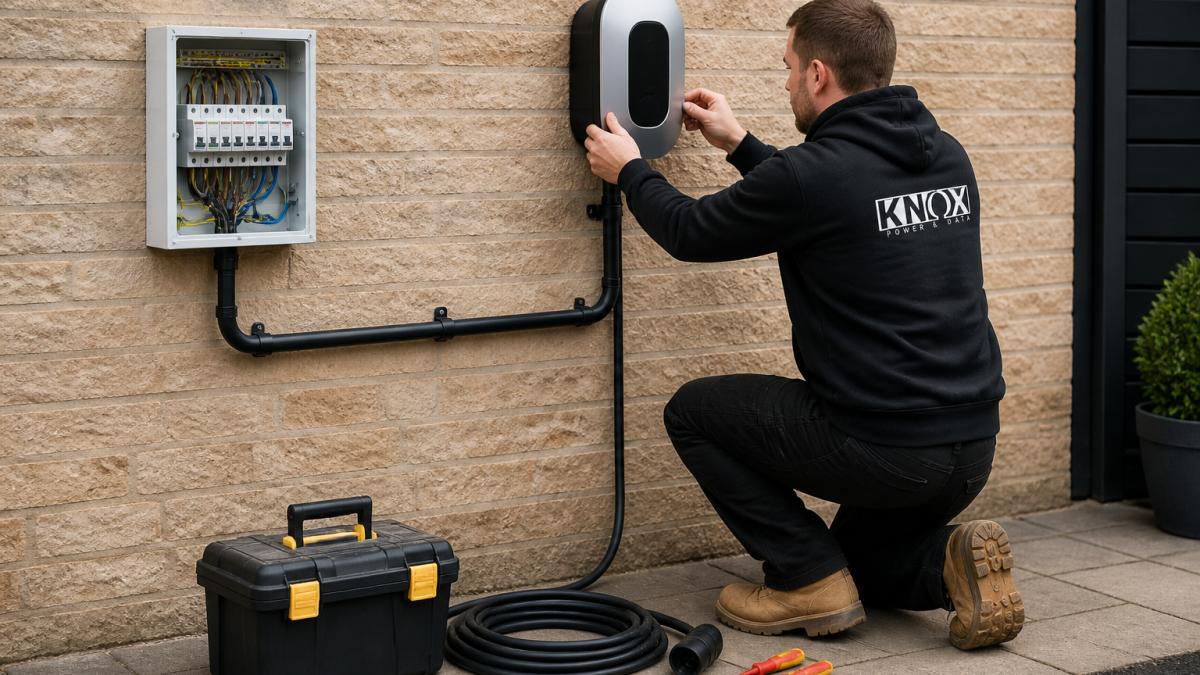
What happens on installation day
Your installation typically takes 4-8 hours:
- Safety checks: The installer verifies your electrical supply, consumer unit capacity, and earthing compliance.
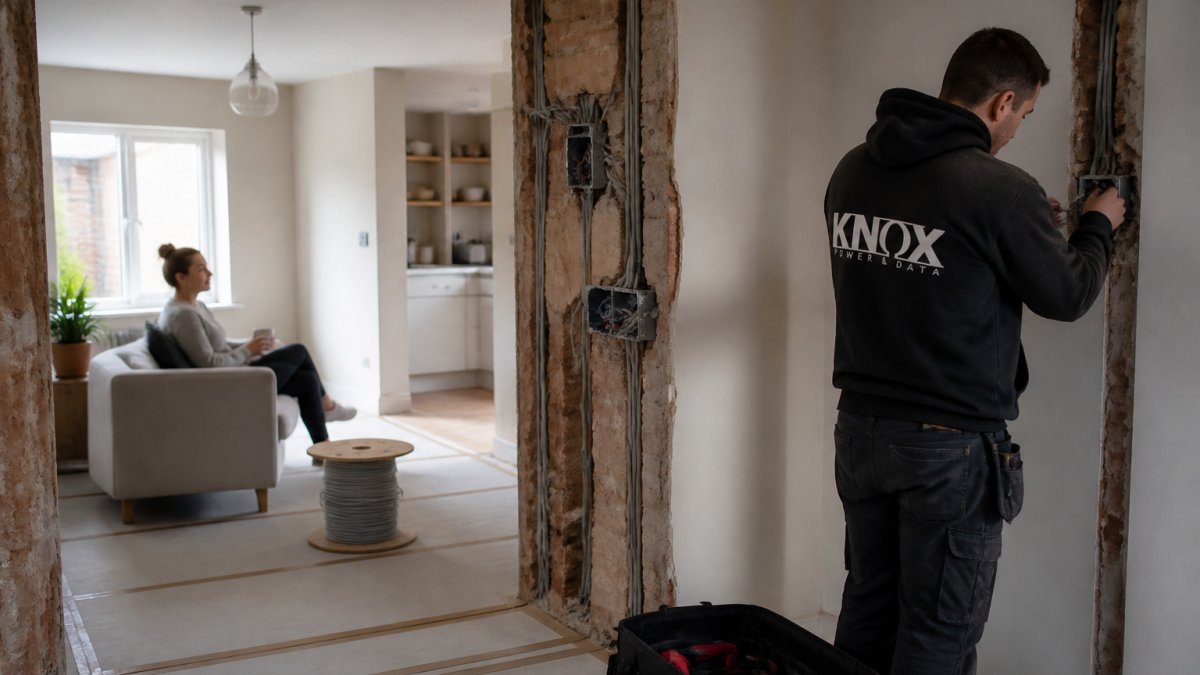
- Cable installation: They run the dedicated cable from your consumer unit to the charger location, securing it safely.
- Circuit installation: A new circuit is created in your consumer unit with appropriate protection devices.
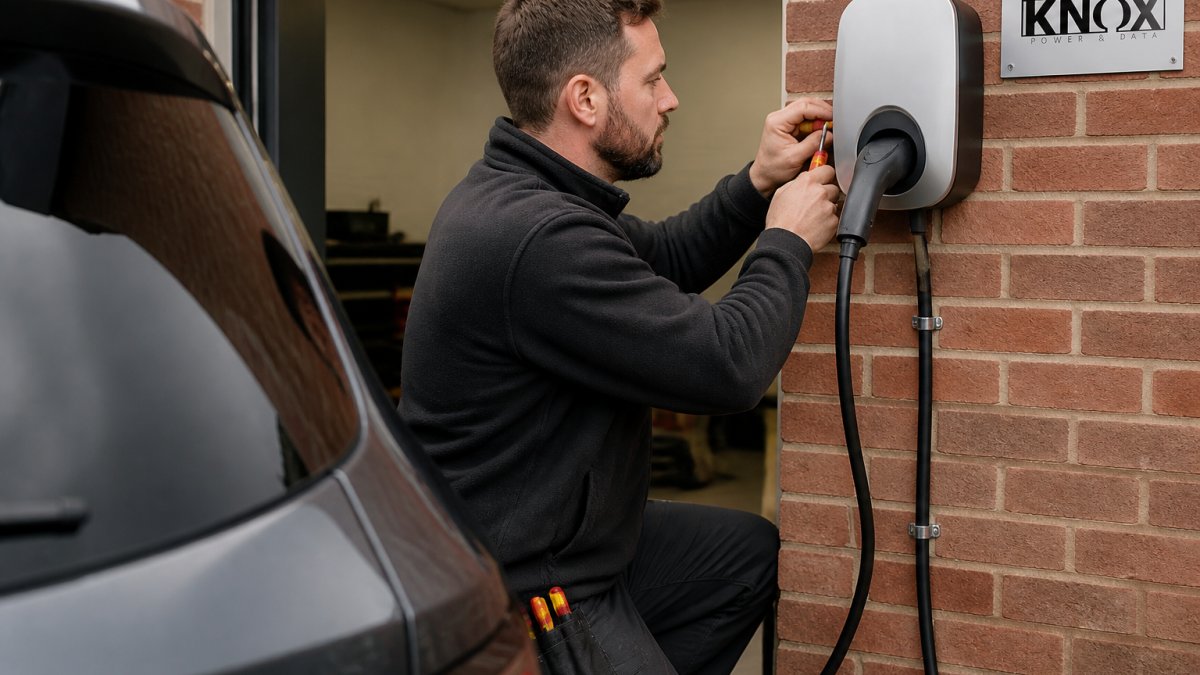
- Charger mounting: The unit is mounted on your wall at the agreed location.
- Connections: The cable is connected to the charger and tested.
- Testing and certification: The installer performs safety tests and issues an electrical installation certificate.
- Handover: You receive instructions and documentation for your records.
Ask questions if anything is unclear, and stay on site during installation in case unexpected decisions arise.
Home EV Charger Installation Time and Timeline
The total timeline from decision to charging depends on several factors.
Planning phase: 1-2 weeks for research and quotes.
Assessment and approval: 2-4 weeks. If a DNO application is needed, add 4-6 weeks.
Installation appointment: 1 day, usually 4-8 hours.
Total typical timeline: 4-8 weeks from decision to first charge. Urgent installations are sometimes possible, but expect premium pricing.
Choosing the Right Home Charger for Your Needs
Your charger choice depends on your vehicle, driving patterns, and home setup.
Comparing charger models and features
Key differences between chargers:
- Power output: 3.6 kW (slow), 7 kW (standard), 11 kW (faster), 22 kW (fastest). Higher power charges faster but needs a stronger supply.
- Connector type: Type 2 (most common), Type 1, or CCS. Check your vehicle manual.
- Smart features: WiFi, app control, scheduling, and tariff integration on premium models.
Basic chargers handle everyday charging; smart chargers add convenience and energy management. Choose based on your needs, not unused features.
Smart charging and energy tariff integration
Smart chargers connect to your WiFi and energy provider, enabling:
- Off-peak charging: Automatically charge during cheaper tariff periods.
- Load management: Avoid overloading your home's electrical system.
- Solar integration: Prioritize charging when your panels generate power.
They cost more upfront but save on energy bills over time. If you have a time-of-use tariff or solar panels, a smart charger makes financial sense.
Special Circumstances: Flats, Rentals, and Shared Parking
Most guides assume a detached house with a private driveway. If you live in a flat, rent, or share parking, the question is more about permissions, infrastructure, and billing than which charger to buy.
Flats and apartments
If you own a leasehold flat with an allocated parking space, you may be able to install a charger, but the route is rarely straightforward.
- Lease and freeholder consent: Your lease usually requires written consent from the freeholder or management company before altering common parts or installing equipment on a shared wall. Read the lease, then write to the managing agent describing what you want and where.
- Landlord and Tenant Act 1985, section 19: For long leaseholders, consent for improvements cannot be unreasonably withheld. Freeholders often ask for conditions such as an approved installer, adding the charger to the building's insurance, and removal and making good at the end of the lease.
- Common parts and cable routes: The cable from your flat's consumer unit to the parking space may cross common parts, a separate permission that may need a wayleave or licence to alter.
First, ask the managing agent whether the building has a communal charging policy or preferred installer. Some buildings have already run the supply and simply need a charger added.
Rental properties
As a tenant, you cannot install a permanent charger without your landlord's written consent, but the law and grant schemes have moved in favour of renters.
- Getting consent: Put your request in writing, explain the benefit (a charge point can increase the property's appeal to future tenants), and offer to cover the cost. Some landlords agree if an approved installer does the work and the charger stays at the end of the tenancy.
- Grant eligibility for renters: The Electric Vehicle Chargepoint Grant is available to some renters, including tenants of flats, with off-street parking and other criteria (Electric vehicle chargepoint grant for renters or flat owners: What you can get). Check current rules before assuming you are excluded.
- Who owns the charger: Agree in writing who owns and maintains the unit and what happens at the end of the tenancy. Removal and making good can cost more than leaving it.
Shared and communal parking
Shared parking is the hardest case, because the charger needs a supply and a way to bill the right person.
- Communal charging schemes: Some councils and housing providers install shared charge points in residents' car parks, often funded through the landlord or social housing grant route. Ask whether a scheme is planned for your area.
- Billing models: On a communal supply, the building must recover electricity costs, via subscription, per-session app payment, or service charge. Each has different fairness and admin implications.
- Wayleaves and permissions: Running a supply across shared land may need a wayleave or licence from the landowner, a legal agreement that can take weeks.
Landlords and multiple properties
If you own several rental properties, plan installations strategically rather than one at a time.
- Standardise the hardware: The same charger model across properties simplifies maintenance, app management, and tenant support.
- Check the grant rules: The landlord grant route has its own eligibility criteria, including number of properties and parking type. Confirm before you commit.
- Coordinate with tenants: Give notice, agree access times, and provide a simple written guide at handover.
After Installation: Safety, Maintenance, and Troubleshooting
Your charger needs basic care to function safely:
Monthly checks:
- Visual inspection for damage or loose connections
- Ensure the charger is dry and free from debris
- Check cables are not cracked or worn
Annual maintenance:
- Have your installer perform a safety inspection
- Test the charger's safety functions
- Verify electrical connections remain secure
Common issues and fixes:
| Issue | Likely Cause | What to Try |
|---|---|---|
| Charger will not start | Vehicle not connected properly | Reseat the connector firmly |
| Slow charging | Smart charger limiting power | Check your energy tariff settings |
| Error message on display | Electrical fault detected | Unplug and wait 10 minutes, then retry |
| No power to charger | Circuit breaker tripped | Check your consumer unit and reset if safe |
| Physical damage | Impact or weather damage | Stop using and contact your installer immediately |
Most issues are simple to resolve. If unsure, contact your installer, do not attempt electrical repairs yourself.
Frequently Asked Questions
Can I install a home EV charger myself?
No. EV charger installation must be carried out by a certified installer qualified to BS 7671 (the standard for electrical safety in the UK). The work involves connecting to your consumer unit and often requires DNO notification. Attempting DIY installation risks electrical hazards, invalidates warranties, and breaches building regulations. A qualified installer ensures your system is safe, compliant, and properly tested before use.
What are the main home EV charger installation requirements?
Your home must have adequate electrical capacity, typically requiring a dedicated 32-amp circuit from your consumer unit. A certified installer will assess your electrical supply and may recommend upgrades if needed. If your charger exceeds 3.68 kW, you must notify your Distribution Network Operator (DNO). Planning permission is rarely required for wall-mounted chargers on your property, but check with your local authority if you live in a listed building or conservation area.
How long does home EV charger installation take?
Installation typically takes 4-8 hours on the day, depending on your home's electrical setup and whether additional work is needed. If your consumer unit requires upgrades or the DNO application process is lengthy, the total timeline from quote to completion can be 2-6 weeks. Simple installations with no additional electrical work may be completed within days of your appointment.
What factors affect home EV charger installation cost?
Costs depend on cable length from your consumer unit to the charger location, whether you need a new dedicated circuit, consumer unit upgrades, and any additional groundwork. DNO fees apply if your charger exceeds 3.68 kW. Labour, materials, and testing add to the total. For an accurate quote reflecting your home's specific requirements, contact a certified installer who can assess your property and provide transparent pricing based on your actual electrical situation.
Installing an EV charger transforms your electric vehicle ownership. The process is straightforward when you understand the requirements and plan ahead. Knox Power & Data helps homeowners navigate every stage, from electrical assessment through installation and beyond. We handle DNO compliance, electrical upgrades, and full certification so your charger works safely and reliably. Get a quote from our NAPIT-registered team and start charging at home with confidence.