 how-to
How Long Does EV Charger Installation Take in 2026?
Last Updated: October 26, 2026
Quick Summary
A standard home EV charger installation takes roughly two to four hours on site, according to Charge Home Solutions' 2026 installation guide. The full EV charger installation timeline stretches much longer once you add the survey, booking lead time and any electrical upgrades, so plan for days or weeks from first enquiry to a working charging point.
- Complex jobs with consumer unit upgrades or groundworks can take a full day or more.
- Cable routing is the most variable step, ranging from 30 to 90 minutes.
- Testing and commissioning usually take twenty to thirty minutes, including a live test.
- A consumer unit upgrade discovered at survey typically adds a week or two.
- Ask your installer for the estimated duration in writing when you book.
Table of Contents
- How Long Does EV Charger Installation Take? The Short Answer
- Home EV Charger Installation Time: Standard vs Complex Jobs
- The EV Charger Installation Survey: What Happens Before the Fitting
- The EV Charger Installation Process, Step by Step
- What Can Delay an EV Charger Installation?
- How to Prepare: A Homeowner Readiness Checklist
- Book Your EV Charger Installation with Knox Power & Data
- Frequently Asked Questions
How Long Does EV Charger Installation Take? The Short Answer
A standard home EV charger installation takes roughly two to four hours on site, according to Charge Home Solutions' 2026 installation guide. The full EV charger installation timeline stretches much longer once you add the survey, booking lead time and any electrical upgrades. At Knox Power & Data, we tell customers to plan for days or weeks from first enquiry to a working charging point, not hours.
Below, we break down each stage, what makes a job complex, and what can push your installation back. For the wider picture, our EV charger installation guide for homes covers the full scope.
Home EV Charger Installation Time: Standard vs Complex Jobs
Home EV charger installation time splits into two clear groups: straightforward jobs and jobs that need extra electrical work. Most homes fall into the first group. Older properties and homes with outdated electrics land in the second.
What Counts as a Standard Installation
A standard installation usually means:
- A dedicated charging point on an exterior wall
- A cable run of a few metres to the consumer unit
- A consumer unit with spare capacity
- No groundworks or long cable routes
These jobs typically finish in two to four hours.
When the Job Becomes Complex
Complex jobs take longer, sometimes a full day or more. Common triggers include:
- A consumer unit that needs upgrading or a spare way adding, see our electrical panel upgrade guide for EV charging
- Long cable runs around the property
- Groundworks to cross a driveway or garden
- Charging points set well away from the electrical supply
- Older wiring that needs attention first
Owners of older properties should also read our planning advice for EV charger installation in older houses, where longer timelines are normal.
The EV Charger Installation Survey: What Happens Before the Fitting
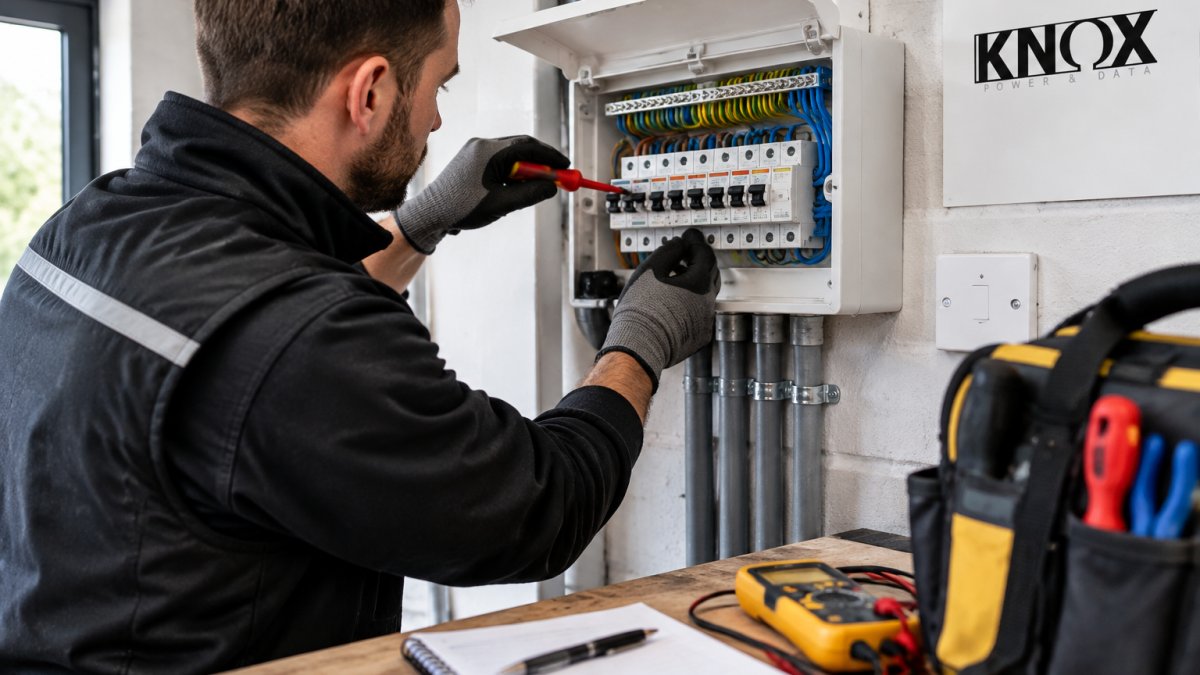
What the surveyor checks:
- The main fuse and meter position
- Consumer unit capacity and spare ways
- Earthing and bonding arrangements
- The proposed charger location and cable route
- Whether the parking space is suitable
The EV Charger Installation Process, Step by Step
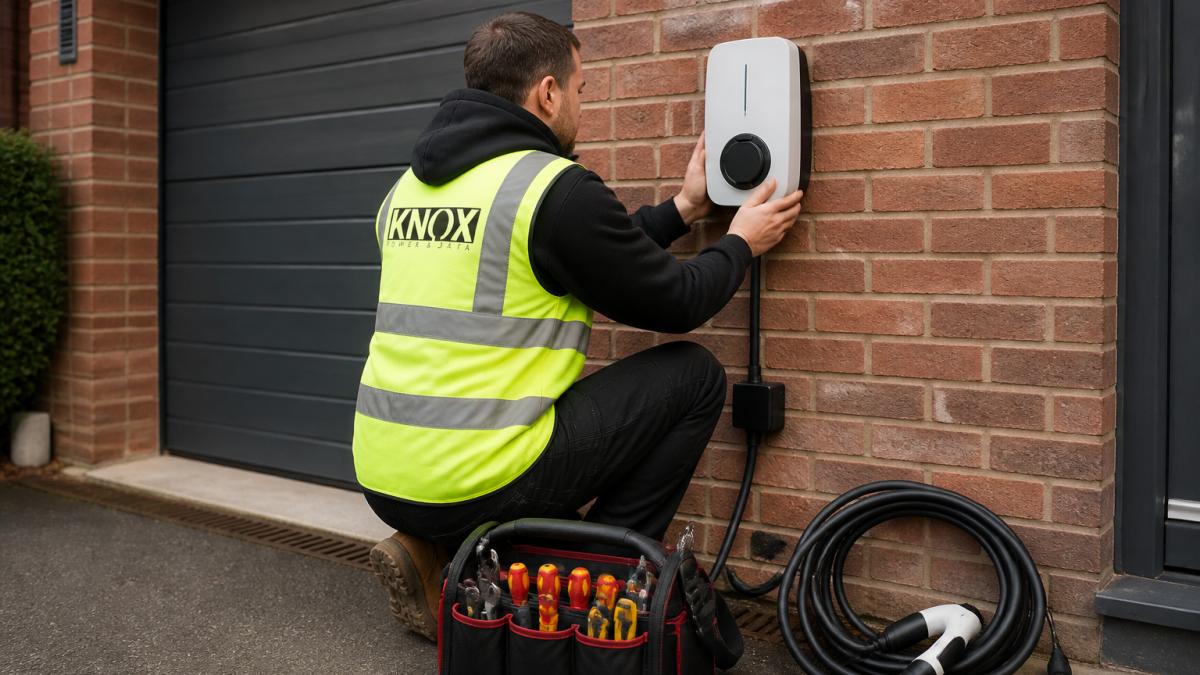
- Isolate the supply (5-10 minutes). This is a legal requirement under the Electricity at Work Regulations 1989.
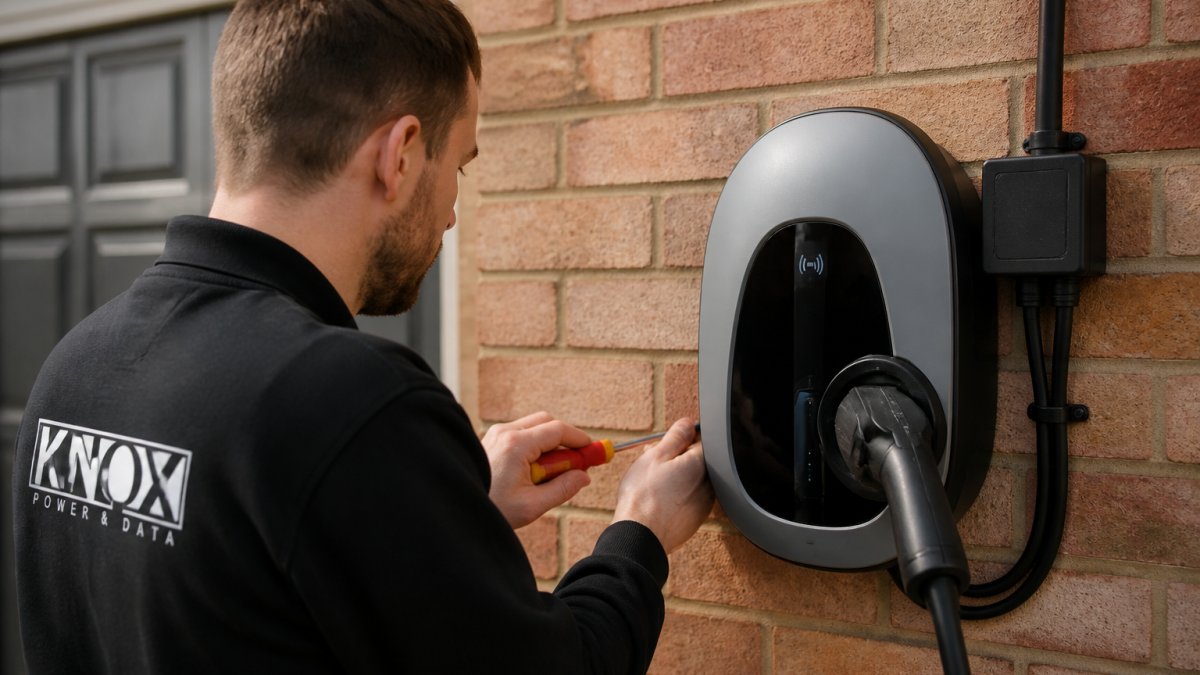
- Mount the charging point (20-40 minutes). Drilling and fixing the unit to your chosen wall. The installer checks the wall is suitable, brick, render and masonry are straightforward; cladding or timber-framed walls may need extra fixings or a mounting plate.
- Run the cable (30-90 minutes). Routing cable from the charger to the consumer unit. This is the most variable step. A short run through a garage wall takes half an hour; a route around a house, under a path or across a driveway can take two hours or more, especially if conduit or trunking is needed.
- Connect and protect (20-30 minutes). Wiring in the supply and fitting the correct protective device, typically an RCBO (residual current breaker with overcurrent protection) or an MCB paired with an RCD. The installer also confirms the earthing and bonding arrangements are adequate, which is a key check under BS 7671.
- Test and commission (20-30 minutes). Safety checks including earth continuity, insulation resistance and a live test of the charging point. The installer verifies the charger delivers power correctly and that any smart functions connect to your home network.
- Handover (10-15 minutes). A walkthrough of how to use the charger, app setup if applicable, and the paperwork, including the Electrical Installation Certificate (EIC) or Minor Electrical Installation Works Certificate (MEIWC) and the Building Regulations compliance certificate for notifiable work in England and Wales.
Cable Routing, Consumer Unit Checks and Mounting
Cable routing is the variable that most affects time. A short run through a garage wall is quick. A route around a house, under a path or across a driveway adds hours. The installer also confirms the consumer unit can take the new circuit safely, checking for a spare way, adequate capacity and correct earthing. If the consumer unit is full or outdated, the job may need a separate visit, which is why the survey matters. Readers whose survey raises questions about their existing electrics can check whether their home electrics can support an EV charger.
Testing, Commissioning and Handover
Testing and commissioning usually take twenty to thirty minutes. The installer checks earth continuity, insulation resistance and the protective device, then confirms the charger delivers power correctly. You should receive a certificate and a short demonstration before they leave. For smart chargers, the installer will also help you connect the unit to your Wi-Fi and set up the app, poor broadband signal at the charger location can delay this, so check before the day.
Here is how the on-site stages break down, with typical timings for each.
| Step | What happens | Time |
|---|---|---|
| Isolate the supply | Legal requirement under Electricity at Work Regulations 1989 | 5-10 minutes |
| Mount the charging point | Drilling and fixing the unit to the wall | 20-40 minutes |
| Run the cable | Routing cable from charger to consumer unit | 30-90 minutes |
| Connect and protect | Wiring in supply and fitting RCBO or MCB with RCD | 20-30 minutes |
| Test and commission | Earth continuity, insulation resistance and live test | 20-30 minutes |
| Handover | Walkthrough, app setup and certificates | 10-15 minutes |
What Can Delay an EV Charger Installation?
Here is how the common delays play out in practice:
- Consumer unit upgrade needed. If the survey missed a lack of spare ways or an outdated board, the installer may need to return with the correct parts. This typically adds a week or two to the timeline, and the charger remains unusable until the upgrade is complete and tested.
- Long cable run or groundworks. A route that needs trenching across a driveway or garden can add a full day or more, and may require a separate visit if the groundworks are extensive. The charger cannot be commissioned until the cable is run and protected.
- Charger model out of stock. Popular models can go on backorder. Ask your installer to confirm stock at the point of booking; if the model is unavailable, a substitute may be offered, but this can add days or weeks.
- Access issues on the day. Locked gates, vehicles blocking the consumer unit, or no one home to provide access can force a rescheduled visit. Confirm access arrangements in advance.
- Additional earthing or bonding work. If the earthing arrangements are inadequate, the installer must upgrade them before commissioning. This is usually a same-day fix but can add an hour or two.
- Failed electrical checks. If insulation resistance or earth continuity tests fail, the installer cannot commission the charger until the fault is found and fixed. This may require a follow-up visit and adds uncertainty to the timeline.
- Weather. Outdoor installations in heavy rain or high winds may be postponed for safety, particularly if groundworks or external cable routing are involved.
How to Prepare: A Homeowner Readiness Checklist
-
Clear access to the consumer unit and meter
-
Clear the proposed charger wall and cable route
-
Move vehicles off the driveway if groundworks are planned
-
Confirm parking position and charger side with the installer
-
Have your survey report and any certificates to hand
-
Confirm someone will be home for the full appointment
-
Ask for the estimated duration in writing when you book
Book Your EV Charger Installation with Knox Power & Data
Our NAPIT-registered team (Member No. 69848) is qualified to BS 7671 18th Edition and Inspection standards, and every installation is fully tested and certified. Business readers ready to act can book a workplace EV charger installation with grant support.
Frequently Asked Questions
How long does it take to install a home EV charger?
A straightforward home EV charger installation usually takes 2 to 4 hours on the day, once the survey and booking stages are complete. That covers mounting the unit, routing the cable, checking the consumer unit, and testing the charger. If the job needs a consumer unit upgrade, longer cable runs, or groundwork, it can stretch into a full day or more. The total timeline from order to working charger is often one to three weeks because of survey, scheduling, and any notification work.
Do I need a survey before an EV charger is installed?
Yes, in most cases. An EV charger installation survey lets the installer check your consumer unit capacity, earthing arrangements, cable route, and charger location before the fitting date. It typically takes 30 to 60 minutes. The survey is what separates a two-hour job from a job that needs extra parts or a return visit, so it is worth doing properly. Ask for a fixed quote after the survey so there are no surprises on the day.
What can delay an EV charger installation?
Common EV charger installation delays include consumer unit upgrades, longer cable routes than expected, groundworks for a detached garage or driveway, and scheduling issues around parts availability. Notification to your distribution network operator can also add time if the installer needs approval for a higher-rated connection. To reduce delays, clear access to the meter cupboard and proposed charger location before the appointment, and confirm the appointment in writing with your installer.
How soon can a home EV charger be installed after ordering?
Lead time depends on the installer's availability and whether a survey is needed first. A typical sequence is: order or quote, survey, booking confirmation, then installation. Many jobs are completed within one to three weeks of order, with the installation appointment itself taking 2 to 4 hours. If you need a consumer unit upgrade or DNO notification, allow extra time. Ask your installer for a clear schedule with each stage dated so you know when to expect the fitting.
Ready to find out exactly how long your installation will take? Get a quote from Knox Power & Data and we will survey your property, confirm the scope, and give you a clear timeline before any work begins.