 how-to
Troubleshooting Flickering Lights and Power Surges Safely
Last Updated: November 12, 2026
Quick Summary
Flickering lights are often harmless and usually come from a loose bulb, a worn dimmer or a surge from nearby switching. If several rooms flicker, or you notice burning smells, scorch marks or sparking, switch off the circuit and call a registered electrician.
- Check whether the flicker affects one light or the whole house, as this narrows the cause.
- Switch the light off at the wall, let the bulb cool, then check the bulb, fitting and dimmer.
- LED bulbs fitted to a dimmer designed for old halogen or incandescent lamps often cause flicker.
- Note when the flicker happens, such as when a kettle or washing machine starts, and after heavy rain or wind.
- A whole-house surge protection device fitted at the consumer unit is the single most effective measure for the whole property.
Table of Contents
- A Safety-First Decision Tree for Flickering Lights
- Lights Flickering Throughout the House: Supply and Voltage Causes
- What to Do After a Power Surge
- Documenting Power-Quality Problems and Understanding Test Limits
- When to Call an Electrician for Flickering Lights
- Booking a Diagnostic Visit With Knox Power & Data
- Frequently Asked Questions
Flickering lights are one of the most common electrical complaints in UK homes, and they are often harmless.
Start with a simple question. Is the flicker limited to one light, or does it affect the whole house? That single answer narrows the causes more than anything else.
Before you touch anything, make a note of three things:
- Which lights flicker, and whether it is one fitting or many
- When it happens, such as when a kettle or washing machine starts
- Whether it follows weather, especially after heavy rain or wind
These notes will help whoever you call, and they point you towards the right checks below.
A Safety-First Decision Tree for Flickering Lights
Work through these questions in order. Stop as soon as one applies.
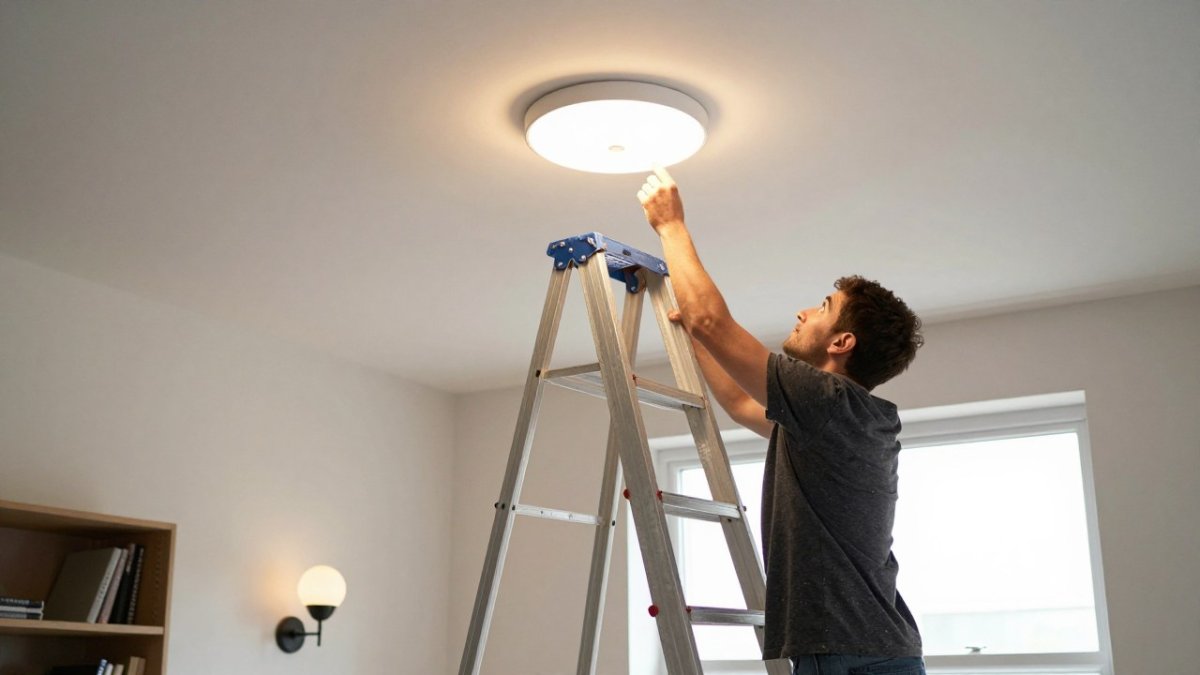
- Is there burning smell, scorch marks, sparking or a warm socket or switch? Switch off the circuit at the consumer unit and call a registered electrician. Do not use the affected outlet again.
- Are several rooms flickering, or does the whole house dim? This suggests a supply or service problem. Check whether neighbours are affected, then contact your network operator if they are.
- Does one circuit keep tripping, or does an RCD trip after rain? Repeated trips mean a fault that needs testing, not a reset. Get the next steps if your RCD keeps tripping after heavy rain and what to check first. See the sections on loose connections below.
- Does the flicker only affect one light? Work through the bulb, fitting and dimmer checks below. These are safe to do yourself with the power off.
If you are unsure at any step, treat it as urgent and get a professional opinion.
Checking Bulbs, Fittings and Dimmers
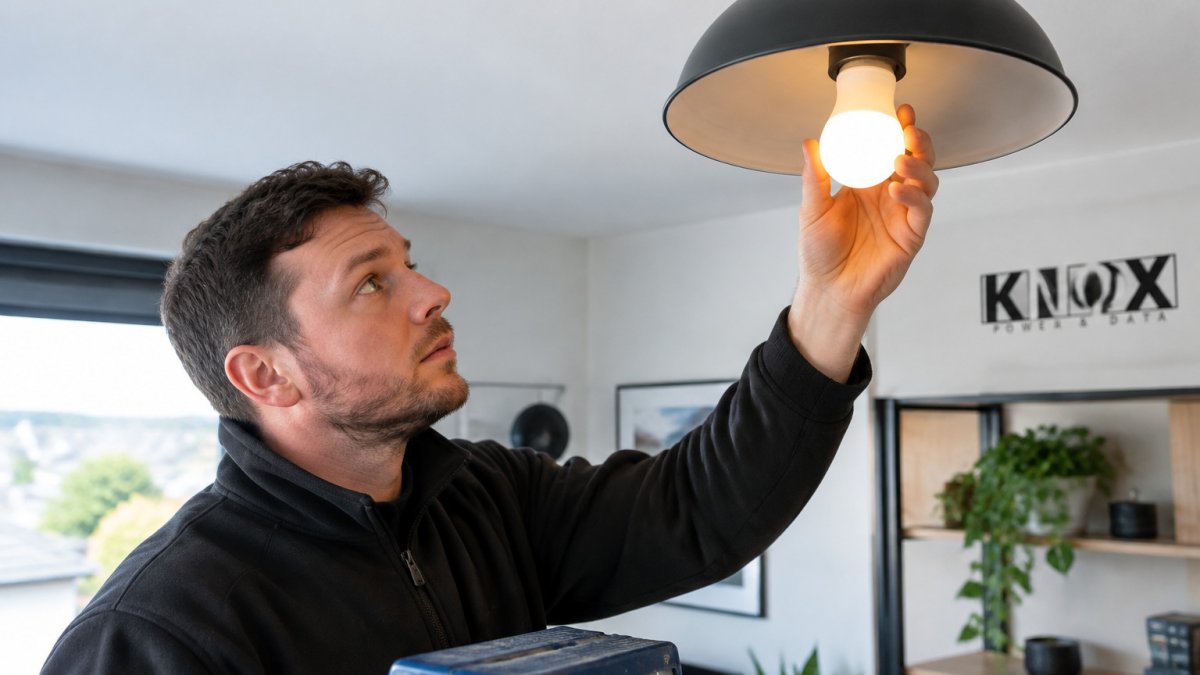
Most single-light flicker comes from the light itself. Switch the light off at the wall, let the bulb cool, then work through this list:
- Make sure the bulb is screwed or pushed fully home in its holder
- Replace the bulb with a known-good one, ideally the same type and wattage
- Check that the bulb is rated for the dimmer, if one is fitted
A common mistake is fitting LED bulbs to a dimmer that was designed for old halogen or incandescent lamps. The bulb may flicker, buzz or fail to dim smoothly. Replacing the bulb with a dimmable LED rated for that dimmer usually fixes it. Read the full cause-by-cause fixes for flickering lights if the problem continues. If the problem continues with a good bulb, the dimmer or the fitting is the likely cause, and a qualified electrician should inspect it.
Spotting Overloaded Circuits and Loose Connections
Flicker that happens when a large appliance starts, or a circuit that trips often, can mean an overloaded circuit or a loose connection. Look for these signs:
- Flicker that coincides with the kettle, oven, tumble dryer or power tools
- Warm plug sockets, switches or consumer unit surfaces
- A faint crackling or buzzing from a switch or outlet
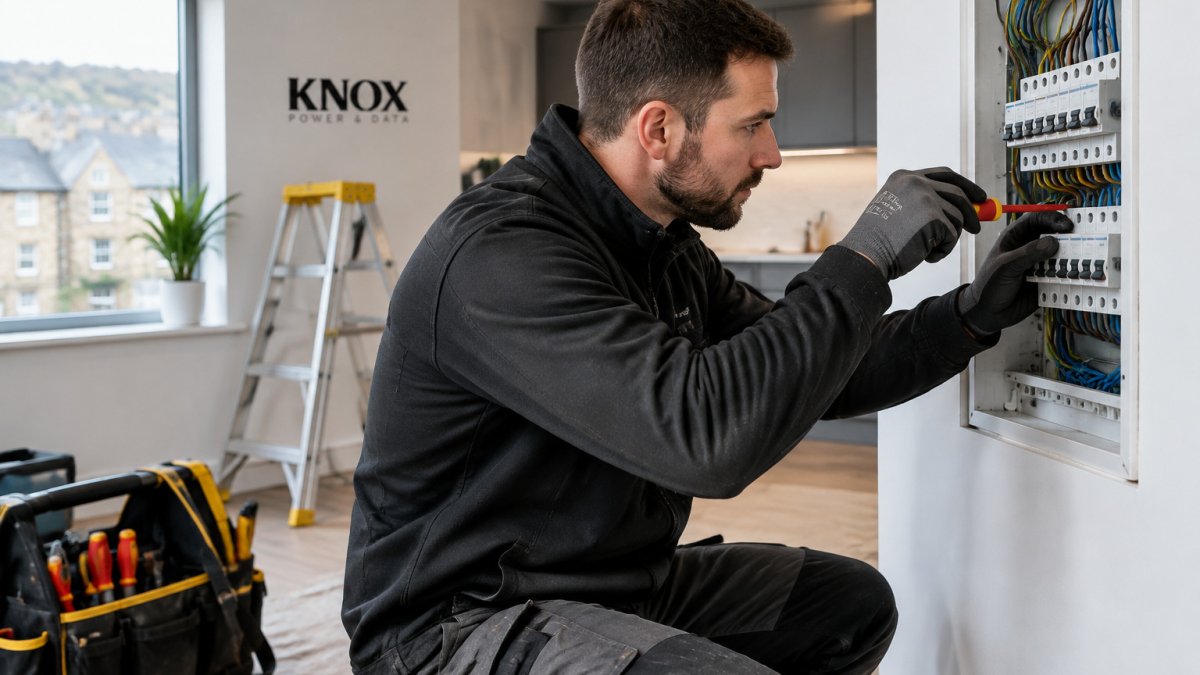
Loose connections at terminals can cause intermittent flicker that gets worse over time. Check the signs that your consumer unit needs replacing if the trips keep coming back. This is a fire risk, so do not leave it. Turn off the circuit and arrange a professional inspection.
Lights Flickering Throughout the House: Supply and Voltage Causes
When lights dim across several rooms at once, the cause is usually outside the light fittings. Common causes include:
- Voltage fluctuations from the local network, often during high demand in the evening
- A partial supply problem, where one phase of a three-phase supply is weak
- A problem at the service head or a loose connection between the meter and the consumer unit
Heavy rain or wind can cause brief supply disturbances, and this is also when an RCD may trip. Note the weather and time, and tell your electrician. Repeated trips after wet weather often point to a moisture-related fault in an outdoor circuit, cable or junction, which needs testing rather than repeated resetting.
Do not attempt repairs to the service head or network supply yourself. These parts are the responsibility of the network operator or a suitably qualified person.
What to Do After a Power Surge
A power surge is a brief rise in voltage above the normal level. In a UK home the supply is nominally 230 V at 50 Hz, and a surge can push that far higher for a fraction of a second. Surges arrive by three main routes: through the incoming supply (often from lightning or network switching), through a large appliance switching off and releasing stored energy, and through telephone, broadband or aerial cables that enter the property.
Recognising Surge Damage
Surge damage is not always dramatic. Look for these patterns after a suspected event:
- An appliance that will not power on, or that powers on but behaves erratically
- A device that resets itself, loses its clock or settings, or shows a fault code
- A tripped breaker or an RCD that will not reset
Watch out: a device that has failed after a surge may still be live internally even when it appears dead, so unplug it at the wall before handling it and do not open the casing.
Immediate Steps
- Switch off and unplug any appliance that smells of burning or shows scorch marks. Do not use that socket again until it has been checked.
- Check the consumer unit for tripped breakers or an RCD that will not reset. Reset a breaker once; if it trips again, stop and call an electrician.
- Note the time of the surge and what was running at that moment. If neighbours were affected, the cause is likely to be on the network rather than in your property.
- Keep damaged appliances and their plugs. An insurer or the network operator may ask to see them.
Protection That Actually Helps
Surge protection works in layers, and a single plug-in strip only protects what is plugged into it. A more complete approach is:
- A whole-house surge protection device at the consumer unit. This clamps surges arriving on the incoming supply before they reach your circuits. It is a fixed device installed by a qualified electrician and is the single most effective measure for the whole property.
- Surge-protected socket outlets or adapters for sensitive equipment such as computers, televisions and home-office gear. These protect the devices plugged into them, not the fixed wiring.
- Protected entry for data and telephone lines, where the router or aerial cable enters the property, because surges travel along those cables too.
A whole-house device will not protect equipment on a circuit that is switched off at the time, and it will not stop a surge that originates inside the property from a faulty appliance. It reduces risk; it does not remove it. Pricing for a whole-house device depends on the unit and the installation, so ask for a quote before work begins.
After the Event
If an appliance was damaged, record the surge date, the time, the affected equipment and any network disturbance you noticed. This record helps when you speak to your insurer or the network operator. If the surge followed a lightning strike or a known network fault, report it to your network operator, who can confirm whether a supply event occurred in your area.
Documenting Power-Quality Problems and Understanding Test Limits
Intermittent faults are hard to diagnose from memory. A written record turns a vague complaint into evidence a professional can act on, and it is the difference between a one-off visit and a proper diagnosis.
What a Useful Log Contains
For each event, record:
- Date and time, including whether it was during a known peak period such as early evening
- Which lights or circuits were affected, and whether it was one fitting, one room or the whole property
- What was running at the time, such as a kettle, oven, tumble dryer, shower or power tools
A short phone video of the flicker, taken with the time visible, is often more useful than a written note because it shows the pattern. Keep the log for at least a few weeks before reporting a recurring problem, so the pattern is clear.
Reporting a Recurring Problem
If the pattern points to the supply, report it to your network operator rather than your electricity supplier. The network operator owns and maintains the cables and equipment that bring electricity to your property, and it is the body that investigates supply quality complaints. Your supplier can tell you who your network operator is if you are unsure. Give them the dates, times and affected circuits from your log.
What Voltage Readings Mean
The nominal UK supply is 230 V at 50 Hz, and the statutory tolerance allows the voltage to vary within a defined band around that figure (The Electricity Supply (Amendment) (No. 2) Regulations 1994). A reading taken at a socket with a consumer meter can tell you whether the supply is roughly in range at that moment, but it cannot tell you what happened during a brief dip or spike.
Power-quality terms you may hear include:
- Voltage dip, a short drop in voltage, often when a heavy load starts
- Voltage swell, a short rise above normal
- Transient, a very brief spike, the kind that damages electronics
The Limits of Testing
A standard visual inspection and a basic socket check cannot always find an intermittent fault that only appears under load or in damp weather. Some faults only show up with specialised test equipment and time spent monitoring the circuit.
Watch out: do not probe live wiring or open the consumer unit to take your own measurements. Consumer meters are not a substitute for professional diagnosis, and a reading taken without the right equipment and safe isolation can be dangerous and misleading.
When to Call an Electrician for Flickering Lights
Call a registered electrician promptly if any of these apply:
- Flicker affects several rooms or the whole house
- Lights flicker with burning smells, scorch marks, sparking or warm switches or sockets
- A circuit keeps tripping, or an RCD trips after rain
Knox Power & Data is NAPIT registered (Member No. 69848) and our team holds BS 7671 18th Edition and inspection qualifications. We are fully insured for domestic and commercial sites, and we offer same-day availability for emergency services.
Some flicker problems need a registered electrician promptly. These are the situations the article flags as urgent or worth a call.
| Situation | Why it matters | Action |
|---|---|---|
| Burning smell, scorch marks or sparking | Possible fire risk | Switch off circuit and call electrician |
| Several rooms or whole house flickering | Points to supply or service problem | Check neighbours, then contact network operator |
| Circuit trips repeatedly or RCD trips after rain | Fault needs testing, not resetting | Arrange professional testing |
| Flicker persists after bulb and fitting checks | Dimmer or fitting may be faulty | Have an electrician inspect |
| Power surge followed by faults | Equipment or wiring may be damaged | Call an electrician for inspection |
Booking a Diagnostic Visit With Knox Power & Data
If you are unsure whether your flickering is minor or urgent, contact Knox Power & Data. Pricing depends on the work needed, so please request a quote before any work begins. Get a quote from Knox Power & Data today.
Frequently Asked Questions
Why are my lights flickering throughout the house?
When flickering spreads across several rooms, the cause is usually upstream of individual fittings. Common reasons include a fault on the main supply, a loose or corroded connection at the consumer unit, or a voltage fluctuation from the utility network. Check whether neighbours report the same problem and whether it coincides with appliances switching on or off. If the flicker is whole-house, do not dismiss it. Switch off major loads, note the times it happens, and arrange a qualified electrician to inspect the supply and main connections before the fault worsens.
Can a power surge cause lights to flicker?
Yes. A surge or voltage dip can make lamps flicker briefly, particularly LED and low-energy bulbs that are sensitive to supply changes. Surges are often caused by lightning, switching on large loads or faults on the network. After a surge, check whether appliances still work normally and whether any circuit breakers have tripped. If lights keep flickering or any equipment behaves unusually, arrange an inspection rather than assuming the problem has passed.
Is it safe to use lights that keep flickering?
A single flickering bulb is usually a loose bulb, an incompatible dimmer or a worn fitting, and it can often be fixed by replacing the bulb or checking the switch. Flickering accompanied by warm switches, burning smells, buzzing, discoloured sockets or scorch marks is not safe to ignore. Switch off the affected circuit at the consumer unit, stop using the fitting, and call a qualified electrician. Do not attempt repairs inside the consumer unit yourself.
When should I call an electrician about flickering lights?
Call a qualified electrician if flickering affects several rooms, continues after you have replaced the bulb, happens with burning smells or warm switches, or comes with frequently tripping breakers. Knox Power & Data serves West Yorkshire, and same-day availability is offered for emergency services. For a current quote, please visit the Knox Power & Data website, as pricing depends on the nature of the fault and the work required.