 how-to
Solar EV Charger Incentives: What UK Homeowners Can Claim
Last Updated: November 12, 2026
Quick Summary
Solar EV charger incentives are not automatic. The main UK grant for homeowners is the government's EV chargepoint grant, which requires off-street parking, property permission, an approved installer and an approved chargepoint. Solar panels and batteries are covered by separate schemes, so check GOV.UK for current rules before buying.
- Check GOV.UK for the current EV chargepoint grant rules before committing to any purchase.
- The charger grant does not pay for solar panels or a home battery; those fall under separate schemes.
- You need off-street parking and permission to modify the property to qualify.
- Use an installer approved under the scheme and a chargepoint on the approved list at install.
- Never claim the same cost under two schemes; keep one cost line and one scheme.
Table of Contents
- Why Solar EV Charger Incentives Are Harder to Pin Down Than They Look
- EV Charger Grant Eligibility: Who Qualifies Today
- EV Chargepoint Grant for Renters and Flat Owners
- EV Charger Installation Costs and Solar System Economics
- Stacking Incentives: Worked Examples
- EV Charger Discounts from Energy Suppliers and Retailers
- Booking Your Solar-Compatible Charger Installation with Knox Power & Data
- Frequently Asked Questions
Solar EV charger incentives are harder to pin down than most guides suggest, and that is the first thing UK homeowners should know. The schemes change, budgets run out, and eligibility often depends on details like your property type, your tenure and whether you buy the charger and the solar system together. Knox Power & Data installs EV chargers and electrical systems, and the same questions about incentives come up often.
Many homeowners assume a solar panel install unlocks a grant for their charger automatically. That is not usually how it works. Check the current scheme rules on the official government website before you commit to any purchase.
Confirming eligibility before committing to any work is sensible. Here is how to approach it.
Why Solar EV Charger Incentives Are Harder to Pin Down Than They Look
Incentives for EV chargers and solar panels are often separate schemes with separate rules. A grant for one does not automatically cover the other. Funding can also be time-limited, so a scheme that exists today may close or change before you apply.
Many homeowners find that the paperwork causes more delay than the installation itself. Keep your invoices, your installer's certificates and your property details together from day one.
EV Charger Grant Eligibility: Who Qualifies Today
Eligibility is not a single test. In practice, most UK homeowners find they are checking three separate things at once: whether a grant exists for the charger, whether it exists for the solar or battery, and whether the two can be claimed for the same installation. The rules rarely line up neatly.
The main domestic scheme to check is the government's EV chargepoint grant for homeowners (Electric vehicle chargepoint grants). Check GOV.UK for the current rules, which typically require that you:
- own or have permission to modify the property, and have suitable off-street parking
- use an installer who is approved under the scheme
- buy a chargepoint model that appears on the approved list at the time of installation
- apply within the scheme's stated window
Renters and flat owners may have a separate route (see the next section), and businesses and commercial landlords should check the current workplace charging rules on GOV.UK (Electric vehicle chargepoint grants).
What the charger grant does not do is pay for solar panels or a home battery. Those are handled through separate mechanisms, which can include VAT treatment and local offers. Treat each cost line separately and confirm which scheme, if any, applies to it before signing anything.
Ask any installer for pricing both with and without grant support before you commit, so you can see how eligibility affects the cost.
A practical eligibility check, in order:
- Confirm you have off-street parking and the right to install at the property.
- Check GOV.UK for the current scheme status and approved chargepoint list.
- Confirm your chosen installer is approved for that scheme.
- Separately confirm whether your solar or battery quote includes any VAT relief or local offer.
- Keep the grant reference, installer notification and invoices together, schemes can audit claims after payment.
If any of those steps is unclear, the safest move is to delay the purchase rather than assume eligibility. Schemes change, and claims made outside the rules can be recovered.
The article lays out the core eligibility checks in a quick reference, so you can see what each one means before you commit.
| Check | What it means | Source |
|---|---|---|
| Off-street parking | Needed to qualify for the grant | GOV.UK scheme rules |
| Property permission | Own it or have permission to modify | GOV.UK scheme rules |
| Approved installer | Must be approved under the scheme | GOV.UK scheme rules |
| Approved chargepoint | Model must be on the list at install | GOV.UK approved list |
| Application window | Apply within the stated window | GOV.UK scheme rules |
| Solar and battery | Not covered by the charger grant | Separate schemes apply |
EV Chargepoint Grant for Renters and Flat Owners
Renters and flat owners face extra steps. You usually need written permission from your landlord or freeholder before any work starts. Shared parking can also complicate where a charger can be fitted.
A common mistake is paying for an installation before the landlord agrees. Get the permission in writing first, and ask whether the scheme accepts applications from tenants.
EV Charger Installation Costs and Solar System Economics
Installation costs depend on your consumer unit, cable run, and whether you are adding solar. We cannot give you a price because quotes depend on your property and the work needed. Ask for a fixed quote after a survey so you can compare like with like.
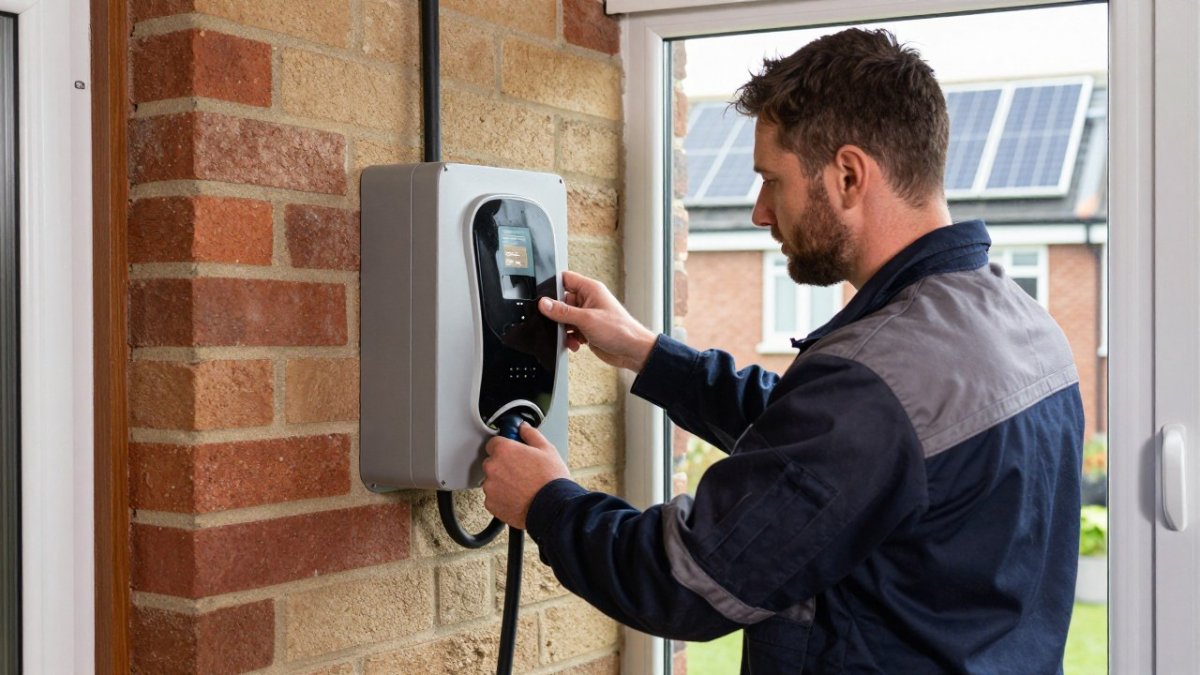
Solar economics also matter. A charger that uses your own solar generation can lower running costs, but the saving depends on how much you drive and when you charge.
Charger Only Versus Solar Plus Battery
A charger alone is a simpler starting point. Adding solar and a battery costs more upfront, and whether it reduces grid charging depends on your timing.
Stacking Incentives: Worked Examples
Stacking is where most guides go vague, so here is the mechanic in plain terms. You are not usually stacking two grants on the same cost. You are stacking different reliefs on different cost lines, and the rules on double-claiming are strict. The same invoice cannot normally be claimed under two schemes.
A common pattern for a homeowner adding a charger and solar looks like this:
- Chargepoint and installation: may be eligible under the EV chargepoint grant, subject to the scheme's conditions.
- Solar panels and battery: the charger grant does not apply. Confirm any current VAT treatment and eligible scope with your installer.
- Local authority or supplier offer: occasionally a council or energy supplier runs a separate discount. These are time-limited and often cannot be combined with the government grant on the same item. Read the terms before assuming they stack.
In practice, stacking is about sequencing and separation: treat each scheme and any supplier or council offer as a separate decision with its own rules.
Watch out: claiming the same cost under two schemes is generally not permitted. Keep one cost line, one scheme.
Before you apply, write down each scheme name, the cost line it covers, and any reference number. If two schemes appear to cover the same item, ask the administrator in writing which takes precedence.
EV Charger Discounts from Energy Suppliers and Retailers
Some energy suppliers and retailers offer discounts on chargers or installation. Check the current terms directly, as these offers change. Read the small print on minimum contract lengths and whether the discount applies to your tariff.
Booking Your Solar-Compatible Charger Installation with Knox Power & Data
If you want an EV charger fitted, contact Knox Power & Data for a quote. Our NAPIT-registered team is fully insured for domestic and commercial sites.
Contact Knox Power & Data for a quote.
Frequently Asked Questions
Are there grants for installing a home EV charger?
Grant availability changes, so check current schemes before you commit. Government chargepoint grant schemes have offered support for eligible households, and schemes open and close as funding changes. Confirm the scheme is live and that your installer is approved under it before work begins, and check the current rules on GOV.UK.
Can renters or flat owners get an EV chargepoint grant?
Renters and flat owners can sometimes qualify, but the process differs from a standard owner-occupier application. Renters will generally need written permission from the landlord, and flat owners may need consent from the freeholder or management company. Ask for this consent in writing before booking an installation. Requirements vary by scheme, so check the current criteria on GOV.UK.
Does the EV chargepoint grant cover solar panels as well as a charger?
Grants for EV chargers and grants for solar panels are normally separate schemes with separate rules, so a charger grant will not usually cover the cost of solar panels. Solar panel support depends on the scheme in force at the time. Confirm which schemes apply to each part of the project.
Who is eligible for an EV charger grant?
Eligibility generally depends on whether you own or rent the property, whether you have off-street parking, whether the charger is installed by an approved installer, and whether the equipment meets the scheme specification. Schemes can also set conditions on the type of vehicle and the timing of installation. Because criteria change, read the current scheme guidance before applying.