 how-to
EV Charger Installation for Older Houses: How to Plan
Table of Contents
- Step 1: Book a Home EV Charger Electrical Survey Before Anything Else
- Step 2: Understand Your Consumer Unit, Main Fuse and Supply Capacity
- Step 3: Decide Do I Need to Rewire My House for an EV Charger
- Step 4: Choose EV Charger Load Management for a Limited Supply
- Step 5: Plan the Dedicated Circuit, Charger Location and Cable Run
- Step 6: Approvals, Notifications and Who Signs It Off
- Step 7: Understand EV Charger Installation Cost and Upgrade Scenarios
- Frequently Asked Questions
Last Updated: October 20, 2026
Step 1: Book a Home EV Charger Electrical Survey Before Anything Else
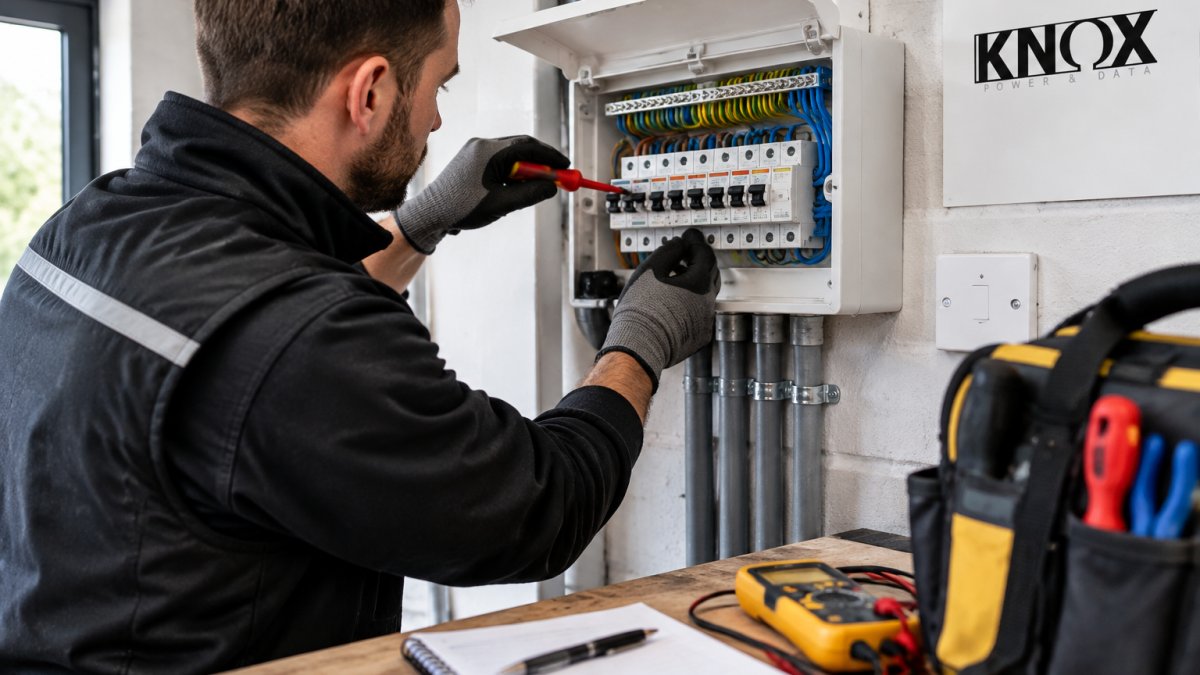
The first move in any ev charger installation for an older property is a proper electrical survey, not a quote over the phone. Older houses hide surprises behind the plasterboard, and a surveyor needs to see them before anyone promises you a working charge point.
A proper electrical survey tells you what your electrics can actually take. It also stops you paying for a charger that trips the supply every time you plug in.
What the Surveyor Checks and Why It Matters
A home EV charger electrical survey covers five things:
- Consumer unit capacity and whether there are spare ways for a new circuit
- Main fuse rating and the supply capacity coming into the property
- Earthing and bonding arrangements, which older homes often get wrong
- Cable routes from the meter position to where you want the charger
- Existing wiring condition, including any circuits that need attention
Each check affects whether the job is simple or needs work first. A survey takes around an hour and saves you from nasty surprises later.
Step 2: Understand Your Consumer Unit, Main Fuse and Supply Capacity
Your consumer unit is the box of circuit breakers that controls every circuit in the house. The main fuse is the supplier's fuse that caps how much power the property can draw. Both decide whether your ev charger installation is straightforward or needs an upgrade.
Many older properties still run on a 60-amp or 100-amp single-phase supply. A modern 7kW charger draws around 32 amps on its own, which is a large share of that budget once you add an electric shower (typically 8.5-10.5kW), an oven, an immersion heater and general socket demand.
What the Consumer Unit Needs to Provide
For a dedicated EV circuit, the consumer unit generally needs:
- Two spare ways, one for the circuit breaker, one for the RCD or RCBO protection. Many older units have no spare ways at all, which forces a unit replacement rather than a simple addition.
- RCD protection, a 30mA Type A RCD or RCBO is the usual requirement for a socket-outlet circuit and for EV charge points under BS 7671 wiring regulations. Older units with only rewireable fuses or no RCD cannot meet this without replacement.
- Correct breaking capacity, the unit must be rated for the prospective fault current at the origin, which a survey measures.
A consumer unit replacement is a common part of an older-property install. It is not usually a full rewire; it is a contained upgrade at the origin.
Main Fuse and Supply Upgrades
The main fuse is owned by your distribution network operator (DNO), not by you or your electrician. If the load calculation shows the existing fuse cannot carry the charger alongside the rest of the house, the options are:
- Apply to the DNO for a supply upgrade, typically from 60A to 80A or 100A, or from single-phase to three-phase where the property warrants it. The DNO assesses the network and may charge for the work; timelines vary by region and can run to several weeks.
- Install load management instead, covered in Step 4, this avoids the DNO process entirely by capping the charger's draw.
- Reduce other demand, replacing an electric shower with a mixer shower, for example, frees up capacity without touching the supply.
A common pattern is a 60A supply in a post-war semi with an electric shower and an older consumer unit. In that scenario, load management plus a consumer unit upgrade is often cheaper and faster than a DNO supply upgrade.
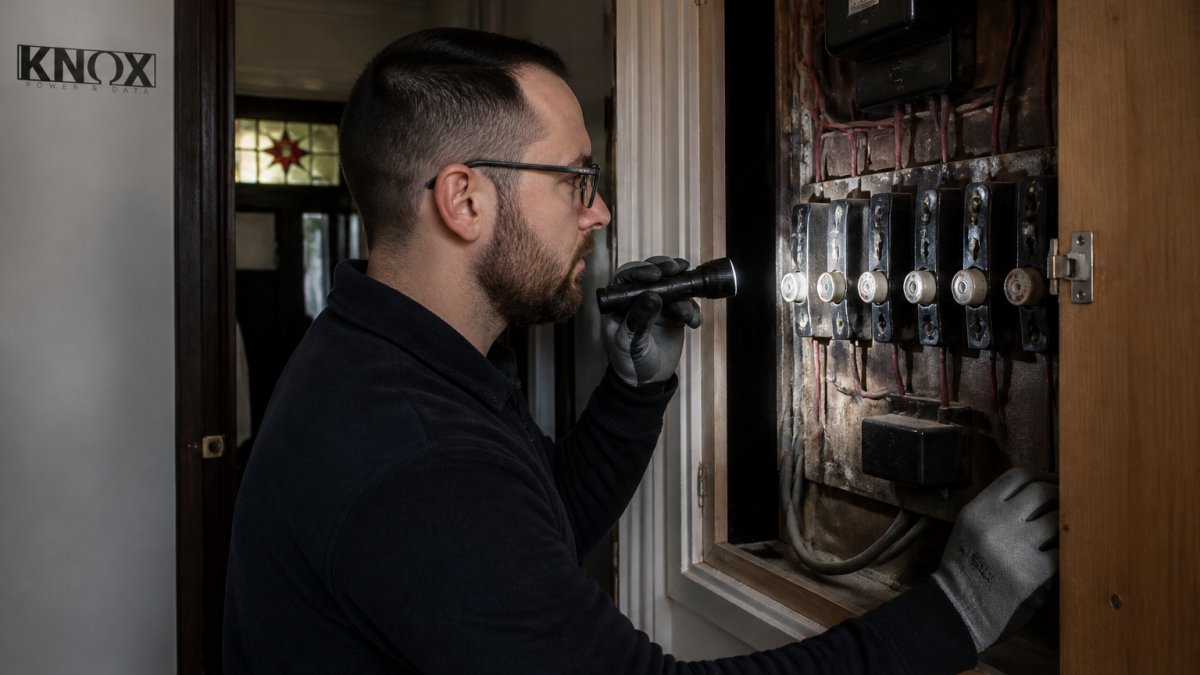
Earthing, Bonding and Cable Routes in Older Properties
Earthing and bonding are safety systems that give fault currents a safe path to ground. Older houses sometimes have outdated earthing, a TT system with a rod, or a TN-S with a deteriorated sheath, and that must be corrected before a charger goes in.
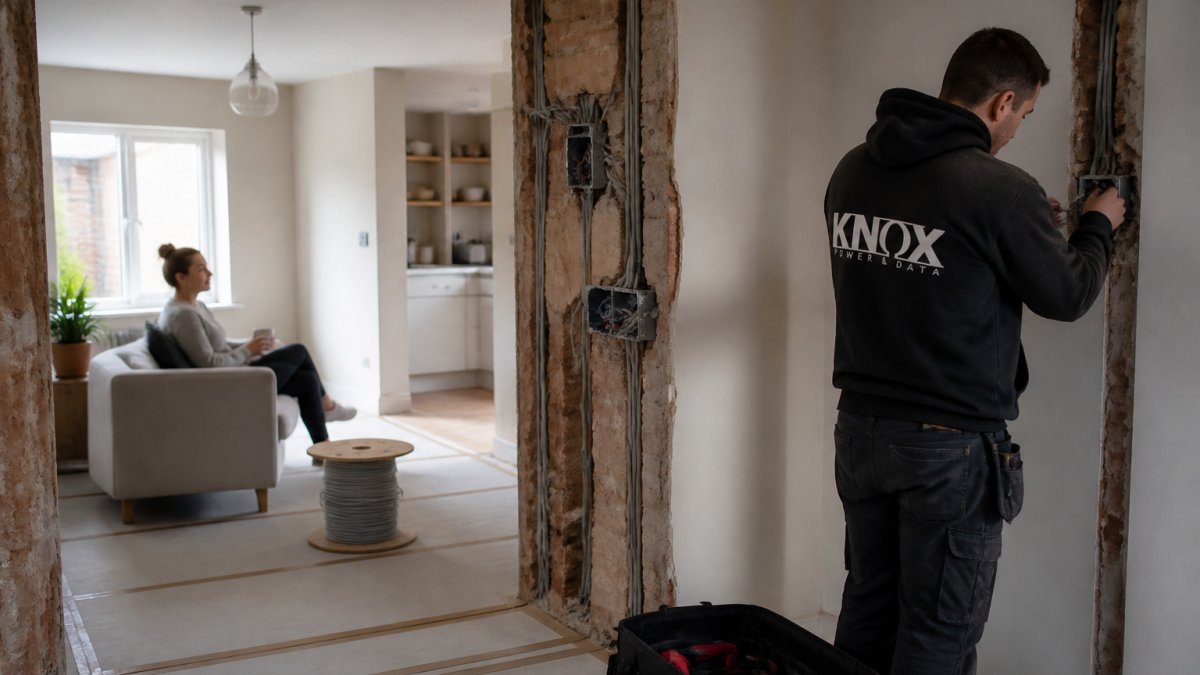
Cable routes matter too. Period properties often have solid walls, narrow voids and no easy path from the meter to the driveway. The surveyor maps the route so the cable run is planned, not improvised on the day.
Ask the surveyor for the load calculation, the earthing arrangement and the spare-way count in writing. Those three numbers tell you whether you need a consumer unit upgrade, a DNO application, or neither.
Step 3: Decide Do I Need to Rewire My House for an EV Charger
Most older homes do not need a full rewire for an EV charger. They need a dedicated circuit and, sometimes, an upgraded consumer unit. A full rewire is only necessary when the existing wiring is genuinely unsafe or cannot carry the extra load.
So when does a rewire make sense?
- The wiring is old rubber or fabric cable with no earth
- The consumer unit has no RCD protection
- Circuits fail inspection during the survey
- The supply cannot be upgraded without wider work
If your electrics pass inspection, a dedicated circuit is usually enough. It is recommended to get the survey findings in writing before committing to anything bigger.
Step 4: Choose EV Charger Load Management for a Limited Supply
EV charger load management is a system that watches your home's power use and dials the charger down when demand is high. It lets you charge safely without upgrading the supply. For older homes on a limited fuse, this is often the smartest route.
There are two common approaches:
- Static load limiting sets a fixed lower charging rate
- Dynamic load management adjusts the charger in real time based on household demand
Dynamic systems cost more but protect your supply better. A smart charger with built-in load management can be the difference between a workable install and an expensive supply upgrade.
Step 5: Plan the Dedicated Circuit, Charger Location and Cable Run
A dedicated circuit is a separate circuit from your consumer unit that feeds only the charger. It needs its own circuit breaker and RCD protection. This keeps the charger isolated from the rest of the house.
Charger location matters more than people expect. You want it close to where you park, sheltered from weather, and within reach of the cable without stretching.
Plan these three things together:
- Where the car actually parks
- The shortest safe cable route from the consumer unit
- Whether the charger needs to be outdoors or in a garage
Getting this right at the planning stage saves money on cable and labour.
Step 6: Approvals, Notifications and Who Signs It Off
In the UK, home charge point installations must comply with BS 7671 wiring regulations and be notified to your local building control body.
Ask for the certificate when the job is done. It proves the installation meets the standards and protects you if you sell the property. If you rent, you also need your landlord's written permission before any work starts.
Step 7: Understand EV Charger Installation Cost and Upgrade Scenarios
EV charger installation cost depends on your property, not a fixed price list. A simple install on a modern supply costs far less than one that needs a consumer unit upgrade, earthing work or a longer cable run. Your survey findings will set the actual price.
Typical Cost Ranges
- Electrical survey, usually £80-£200, sometimes credited against the install if you proceed.
- Standard charger install (charger supplied, dedicated circuit, short cable run, existing consumer unit with spare ways and RCD protection), commonly £800-£1,200 including the charger.
- Consumer unit replacement, typically £400-£800 depending on unit size, RCBO count and access.
- Earthing and bonding corrections, often £150-£400, more where a new earth rod is needed.
- Long or complex cable run, charged per metre beyond the standard included length, commonly £15-£40 per metre depending on route difficulty (solid walls, conduit, excavation).
- DNO supply upgrade, varies widely by region and scope; a fuse upgrade may be a few hundred pounds, while a new service or three-phase connection can run into four figures. The DNO quotes after assessment.
These ranges are indicative. A quote that comes in far below them usually excludes the upgrade work the survey identified.
Three Realistic Scenarios
Scenario 1, Modernised older home. Consumer unit already replaced with RCBOs, 100A supply, earthing in good order, charger mounted on an external wall near the meter.
Scenario 2, Unmodernised period property. 60A supply, older consumer unit with no spare ways, questionable earthing, charger at a detached garage 20 metres from the house.
Scenario 3, Listed or historic property. Solid stone walls, restrictions on external fixtures, and a meter position in an awkward cellar.
How to Compare Quotes Fairly
Ask your installer to break the quote into parts: charger, circuit, consumer unit work, earthing, cable run and any DNO coordination. It makes it easy to see where the money goes and to compare fairly.
Government guidance on electric vehicle charging sets out the rules installers must follow, and grant schemes for charge point installations change over time, check current eligibility before you commit.
Get the survey findings and a written quote that itemises upgrade work separately from the base install. A single lump-sum figure hides whether you are paying for a consumer unit you may not need.
Frequently Asked Questions
Do you need building regs to install an EV charger?
An EV charger installation is notifiable work under Part P of the Building Regulations, so it must be carried out by a competent person registered with a competent person scheme, or notified to your local building control body before work starts. A registered installer can self-certify the job and issue the compliance certificate, which keeps the process simple. Keep that certificate with your property paperwork, because it proves the circuit was installed and tested to BS 7671 and is useful if you sell the house or your insurer asks about the charger.
Can an older house support a home EV charger?
Most older houses can support a home EV charger, but rarely without checks first. The deciding factors are the age and condition of the wiring, the consumer unit capacity, the main fuse rating and the earthing arrangement. A house with a modern consumer unit, sound wiring and a 100-amp supply often needs only a dedicated circuit and a smart charger. A property still on an older fuse board, with no RCD protection or a looped supply, will usually need an upgrade before the charger goes in. A home EV charger electrical survey tells you which situation you are in.
How can load management help when an older home's electrical supply is limited?
EV charger load management lets a charger run at a reduced rate when the house is drawing a lot of power, then speed up when demand drops. A smart charger with current clamps on the supply tails monitors total household demand and throttles the charging point so the main fuse is never overloaded. That often means you can install a 7kW charger on an older property without a supply upgrade. It charges more slowly overnight, but it avoids the cost and disruption of a new service capacity upgrade.
What electrical checks are needed before installing an EV charger?
Before any charger goes on the wall, an electrician should carry out an electrical installation condition assessment covering the consumer unit, main fuse rating, earthing and bonding, existing circuit loading and cable condition. They also check the proposed charger location for cable routing and whether a dedicated circuit can be run from the board. The results feed into a load calculation and decide whether you need a consumer unit replacement, an earthing upgrade or load management. Skipping this step is how older properties end up with nuisance tripping or an overloaded supply.
Older houses can support an EV charger, but only when the electrics are checked and planned properly. A survey, a clear load calculation and the right load management turn a risky job into a safe one.
At Knox Power & Data, our NAPIT-registered team handles the full process, from survey to certified install. We are BS 7671 18th Edition qualified and fully insured for domestic work. Get a quote from Knox Power & Data and charge at home with confidence.