 blog
Full House Rewire vs Partial Rewire: A 2026 Guide
Table of Contents
- Full House Rewire vs Partial Rewire: What's the Difference
- Signs a House Needs Rewiring
- When a Full Rewire Is Necessary
- When a Partial Rewire May Be Suitable
- Partial House Rewire Cost and Full Rewire Pricing
- How Long Does a House Rewire Take
- Disruption, Mess, and Wall Access During Rewiring Work
- UK Certification and Your Responsibilities
- Frequently Asked Questions
Last Updated: October 12, 2026
Full House Rewire vs Partial Rewire: What's the Difference
When considering a full house rewire vs partial rewire, the cost difference can be thousands of pounds. Understanding what each involves, and which suits your property, is the first step toward making the right decision for your home's safety and future.
A full house rewire means replacing all electrical cabling, circuits, and the consumer unit throughout your property. A partial rewire involves replacing only the circuits and cabling in specific areas or rooms. The choice between them depends on your property's age, condition, and what you plan to do with the space.
The difference isn't just about cost, it's about safety, compliance, and whether you're future-proofing your home or addressing an immediate problem.
What a Full Rewire Involves
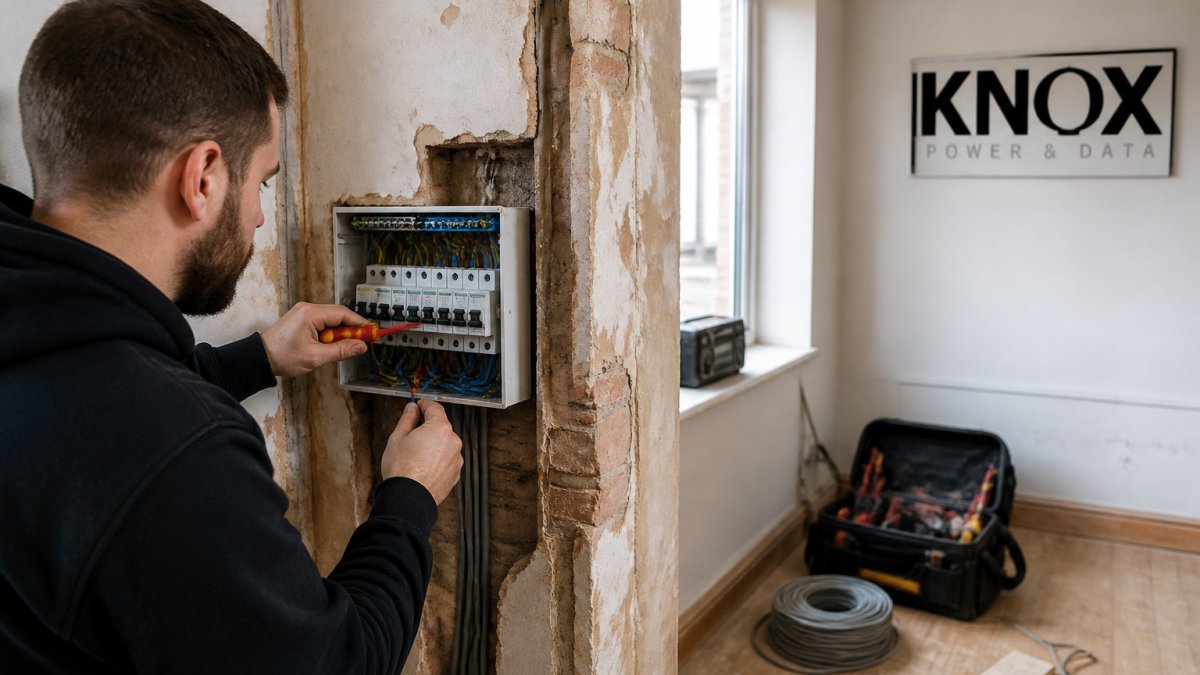
A full rewire replaces every circuit, cable run, and the consumer unit in your home. This means opening walls, removing old wiring, installing new cables to current standards, fitting a new consumer unit, and making good all the damage caused by the work.
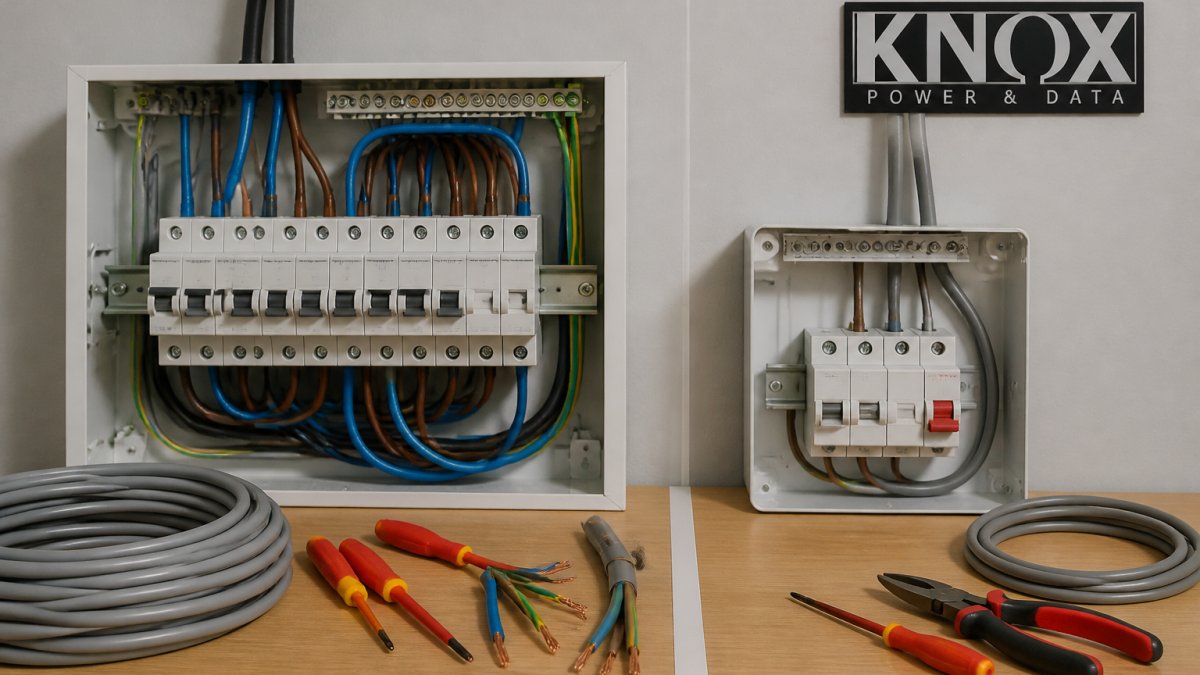
The job includes upgrading to a modern consumer unit (replacing an old fuse box), installing new circuit breakers, and ensuring every socket, switch, and lighting circuit meets current safety standards. Every wire gets replaced, from the main incoming supply to the final socket in the loft.
This is comprehensive work. It typically involves significant disruption: walls are chased out, plaster removed, new cables run through the building, and then walls are replastered and decorated. For a three-bedroom semi-detached house, a full rewire can take one to two weeks depending on property layout and access.
What a Partial Rewire Involves
A partial rewire focuses on specific circuits or areas. Common examples include rewiring a kitchen, rewiring upstairs bedrooms, or replacing circuits feeding a particular section of the house. The consumer unit typically stays in place, though circuits feeding the rewired areas are replaced.
Partial rewires are often used when only certain areas show signs of age or damage, or when a property has been extended and the new circuits need to be properly integrated. You might keep the old wiring in areas that are safe and functional, replacing only the problematic circuits.
The work is more contained. You're not opening every wall, so disruption is limited to the areas being rewired. This means lower labour costs and less time for making good afterwards. However, you're left with a mixed electrical system, some old circuits remain, some new.
Signs a House Needs Rewiring
Not every old house needs a full rewire. Some properties have been maintained well and pose no safety risk. Others show clear signs that rewiring, whether partial or full, is overdue.
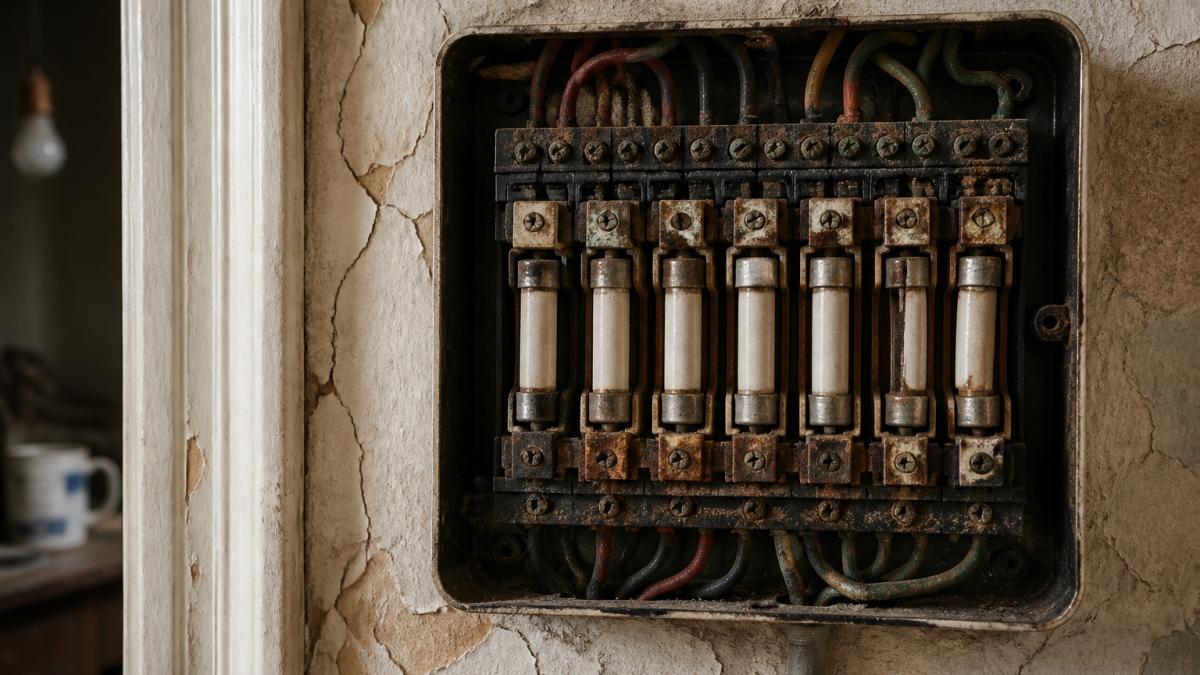
Common warning signs include frequent blown fuses or tripped circuit breakers, outlets that are warm to the touch, flickering lights, a burning smell near sockets or switches, or visible damage to cables. If your home has cloth-covered wiring or original rubber insulation, these materials degrade over decades and pose a fire risk.
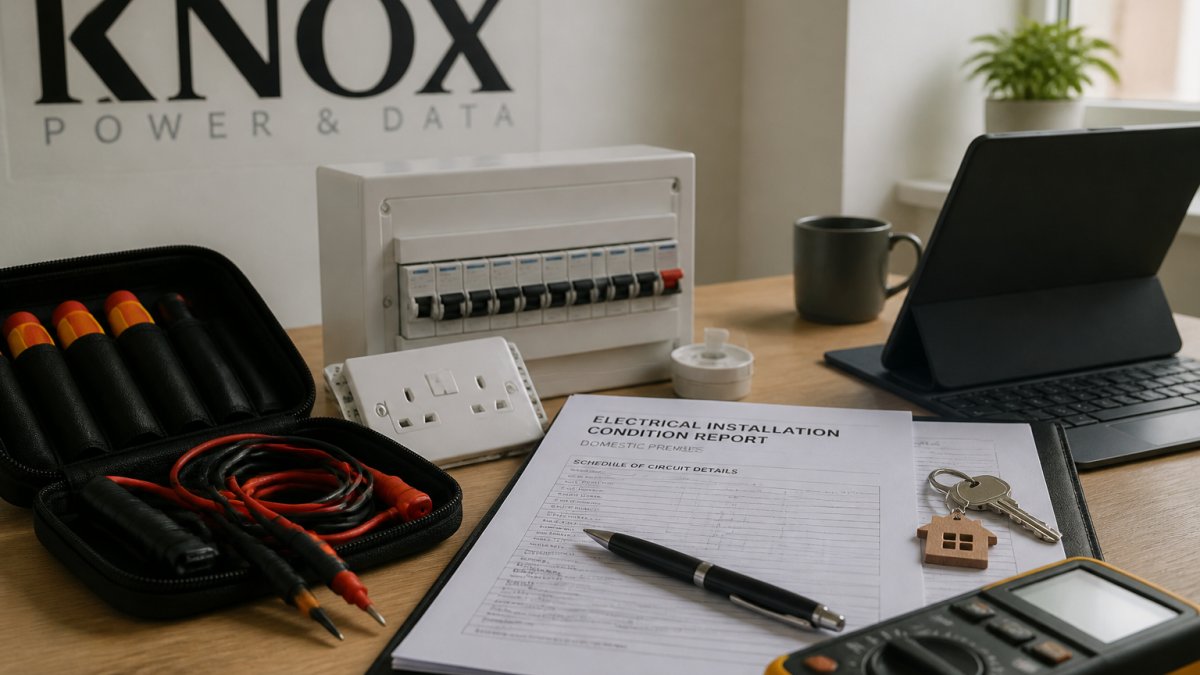
An electrical inspection from a qualified electrician is the definitive way to establish whether rewiring is needed. This test, known as an EICR (Electrical Installation Condition Report), checks every circuit, tests insulation resistance, and identifies faults.
Properties with outdated wiring often lack sufficient circuits for modern demand. A 1970s house might have been designed for 60 amps of supply; today's appliances, heating systems, and EV chargers demand far more. This mismatch is a safety issue and a practical one, you run out of available circuits and resort to overloading what you have.
When a Full Rewire Is Necessary
A full rewire becomes necessary when the entire electrical system is unsafe or when a property is undergoing major renovation. If your EICR identifies widespread faults, deteriorated insulation, or circuits that no longer meet current standards, a full rewire is the only safe option.
Properties being substantially renovated, a full conversion, major extension, or complete refurbishment, typically warrant a full rewire. The walls are already open, access is straightforward, and you're bringing the building up to current standards anyway. Rewiring at the same time makes economic sense.
Age alone doesn't trigger a full rewire. A well-maintained 1960s property might have perfectly safe wiring. A neglected 1990s property might need complete replacement. The condition revealed by inspection, not the decade of construction, determines necessity.
If your property is being sold, a surveyor or buyer's surveyor might flag electrical concerns. Many buyers' mortgages require an EICR, and lenders often require remedial work if faults are found. A full rewire provides peace of mind and removes a barrier to sale.
When a Partial Rewire May Be Suitable
A partial rewire works well when only specific areas are problematic or when you're addressing a particular upgrade without overhauling the entire system. If your kitchen circuits are failing but upstairs wiring is sound, a partial rewire of the kitchen circuits makes sense.
New extensions often need partial rewiring, integrating new circuits into the existing consumer unit to feed the added space. Similarly, if you're converting a loft or adding an en-suite, partial rewiring of the affected circuits is typical.
Partial rewiring also suits properties where budget is tight and immediate safety concerns are localised. You address the problem areas now and can plan a full rewire later if needed. This staged approach spreads costs across time.
However, a partial rewire leaves you with a mixed system. Some circuits remain old, others are new. This can complicate future work and may limit your options if you later want to add significant new loads (like an EV charger or heat pump). A qualified electrician should assess whether a partial approach is sustainable for your property's future needs.
Partial House Rewire Cost and Full Rewire Pricing
Rewiring costs depend on property size, wiring condition, wall construction, and how much of the work requires making good afterwards. A partial rewire for a single room or circuit is significantly cheaper than rewiring an entire house, but the per-circuit cost can sometimes be higher because setup and mobilisation costs are spread over fewer circuits.
What Changes the Quote
Several factors shift the cost substantially. Older properties with solid brick walls are more expensive to rewire than newer homes with cavity walls, chasing out brick takes longer and creates more mess. Properties with suspended timber floors are cheaper to work in than solid concrete because cables can run beneath the floor instead of through walls.
Access matters too. A bungalow with accessible loft space is quicker to rewire than a four-storey Victorian terrace where every cable must be chased through walls. The condition of existing wiring affects price, if old cables are difficult to remove or asbestos is present, costs rise.
Whether you want cosmetic making good or full decoration affects the final bill. A basic replaster is cheaper than full redecoration, but your walls will show the work has been done. Full redecoration returns walls to their original finish but increases labour time and cost.
The consumer unit upgrade is a separate line item. A basic modern unit costs less than a smart unit with monitoring capability. If your incoming supply needs upgrading too, moving from a 60-amp to 100-amp service, for example, that's additional cost and complexity.
For a transparent quote, we recommend getting a qualified electrician to inspect your property and provide a detailed quote before committing.
How Long Does a House Rewire Take
A full house rewire for a three-bedroom semi-detached home typically takes one to two weeks. A smaller terraced property might take five to seven working days. A larger detached house could stretch to three weeks or more.
Partial rewiring is quicker, a single-room rewire might take two to three days, while rewiring an entire floor could take five to seven days. The timeline depends on circuit complexity, wall construction, and whether making good is included.
The work progresses in stages: initial cable removal and disposal, new cable installation, consumer unit replacement, testing and certification, and finally making good the walls. If walls need full redecoration afterwards, that adds time beyond the electrical work itself.
Disruption during rewiring is significant. Power is typically isolated to sections of the property as work progresses, though a qualified electrician will coordinate with you to minimise inconvenience. Some areas may be without power for several days during the active rewiring phase.
Disruption, Mess, and Wall Access During Rewiring Work
Rewiring creates mess. Walls are chased out with power tools, plaster dust settles throughout the property, and old cables are removed. Furniture needs moving, and areas under work become inaccessible. For a full rewire, expect your home to be a building site for one to three weeks.
Wall access is the biggest variable. Properties with cavity walls are easier, cables run through the cavity, minimising damage. Solid brick or stone walls require chasing, cutting channels into the masonry for cables to sit in. This is time-consuming and creates significant dust and debris.
Modern properties with suspended timber floors offer another advantage: cables can run beneath the floor, avoiding wall damage entirely in some cases. Older properties with solid concrete floors offer no such option, everything goes through walls.
Making good afterwards is substantial work. Chased walls need replastering, and replastered walls typically need decoration to blend with existing surfaces. Budget for this as part of the rewiring project, not as an afterthought.
Coordinating access is essential. If you're in a terraced property, the electrician needs clear access to your property and potentially to your neighbours' properties to run cables externally if internal routing isn't viable. Planning ahead prevents delays and disputes.
UK Certification and Your Responsibilities
All electrical work in UK homes must comply with BS 7671 (the Building Regulations for electrical safety) (BS 7671 - Requirements for Electrical Installations).
This certificate proves the work meets current standards and is safe. It's essential for insurance claims, property sales, and future work. Many mortgage lenders and home insurers now require it.
Rewiring work should only be carried out by a qualified electrician, ideally one registered with a competent body like NAPIT. Registration demonstrates the electrician has the skills, knowledge, and insurance to do the work safely.
As a homeowner, you're responsible for ensuring the work is done by someone qualified and certified. Hiring an unregistered electrician might save money short-term but leaves you liable if faults develop and creates problems when you sell the property.
If you're a landlord, the responsibility is even clearer. Your tenants' safety depends on compliant electrical systems. An EICR every five years is now standard practice, and any faults must be remedied promptly.
Deciding between a full house rewire and a partial rewire comes down to your property's condition, your budget, and your plans. An EICR from a qualified electrician provides clarity, it identifies exactly what needs replacing and what's safe to keep.
Frequently Asked Questions
What is the difference between a full and partial house rewire?
A full house rewire replaces all electrical wiring, circuits, and the consumer unit throughout the property. A partial rewire upgrades specific circuits, rooms, or areas while leaving existing wiring in safe areas untouched. Full rewires suit older homes or major renovations; partial rewires address localised problems or extend capacity to new areas. Both must meet current BS 7671 standards and be certified by a qualified electrician.
How much does it cost to partially rewire a house?
Partial rewire costs depend on the number of circuits, rooms, and existing wiring condition. Factors affecting the quote include wall access, plastering requirements, and whether the consumer unit needs upgrading. For accurate pricing tailored to your property, contact a qualified electrician for an inspection and quotation. Costs are typically lower than full rewires because less wiring and labour are involved.
How long does a house rewire take?
A full house rewire typically takes 1-3 weeks depending on property size and complexity. Partial rewires usually take 3-10 days for targeted circuits or rooms. Disruption includes power interruptions, wall chasing, and plastering work. The timeline also depends on inspector availability for testing and certification. Your electrician will provide a realistic schedule during the quotation phase.
How do I know if my house needs a full rewire?
Signs include outdated wiring (cloth or rubber insulation), frequent circuit breaker trips, flickering lights, discoloured outlets, or a fuse box instead of a modern consumer unit. Properties built before the 1970s often need full rewires. An electrical inspection by a qualified electrician will identify whether partial upgrades are sufficient or a full rewire is necessary for safety and compliance.