 how-to
7 Things to Know Before Charging Your EV on a Driveway
Last Updated: October 30, 2026
Quick Summary
Yes, you can charge your EV on a driveway, and ev driveway charging is the most practical way to charge at home when you have off-street parking. You need a dedicated parking space next to your property, a safe cable route, and a home electrical supply that can carry the load. Most driveways pass all three, though some need work first.
- A qualified installer fits a wall-mounted charge point on a dedicated circuit and certifies it against BS 7671.
- Tethered cables are typically 5 m to 7.5 m, so measure the diagonal with the car in its normal parking position.
- Renters, leaseholders and shared driveways need written consent before any fixed charge point is fitted.
- A 7 kW home charge point adds about 25 to 30 miles of range per hour and takes 4 to 6 hours for 20% to 80%.
- Off-peak EV tariff charging on a driveway costs roughly a quarter of the equivalent public rapid charge.
Table of Contents
- Can I Charge My EV on a Driveway?
- EV Charger Installation on a Driveway: What Is Involved
- Outdoor EV Charger Safety: What You Must Get Right
- EV Charging Cable Across a Pavement: Rules and Risks
- Charging an EV Without a Driveway: Your Realistic Options
- Realistic Charging Times and Running Costs on a Driveway
- Book a Driveway Charger Survey and Quote
- Frequently Asked Questions
Can I Charge My EV on a Driveway?
Yes. EV driveway charging is the most practical way to charge at home, and it is the method most EV drivers prefer when they have off-street parking. The International Energy Agency's Global EV Outlook notes that home charging, whether in a driveway, garage or other dedicated parking space, is the preferred option for drivers who have access to it.
The answer is usually yes, but there are conditions.
You need three things:
- A dedicated parking space next to your property
- A safe route for the charging cable
- A home electrical supply that can carry the load
Most driveways pass all three. Some need work first. Below, we'll show you what is involved, from the first survey to the day you plug in.
EV Charger Installation on a Driveway: What Is Involved
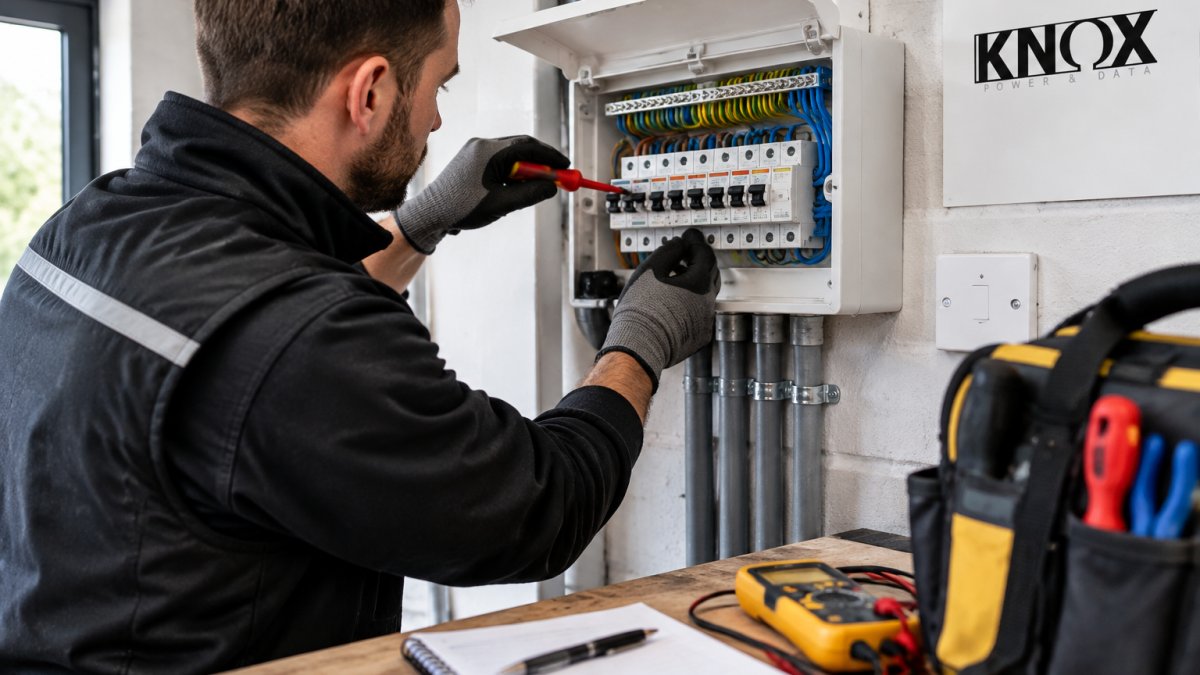
A driveway charger installation is a fixed job, not a plug-and-play one. A qualified installer typically fits a wall-mounted charge point, runs a dedicated cable back to your consumer unit, and tests the circuit before it goes live.
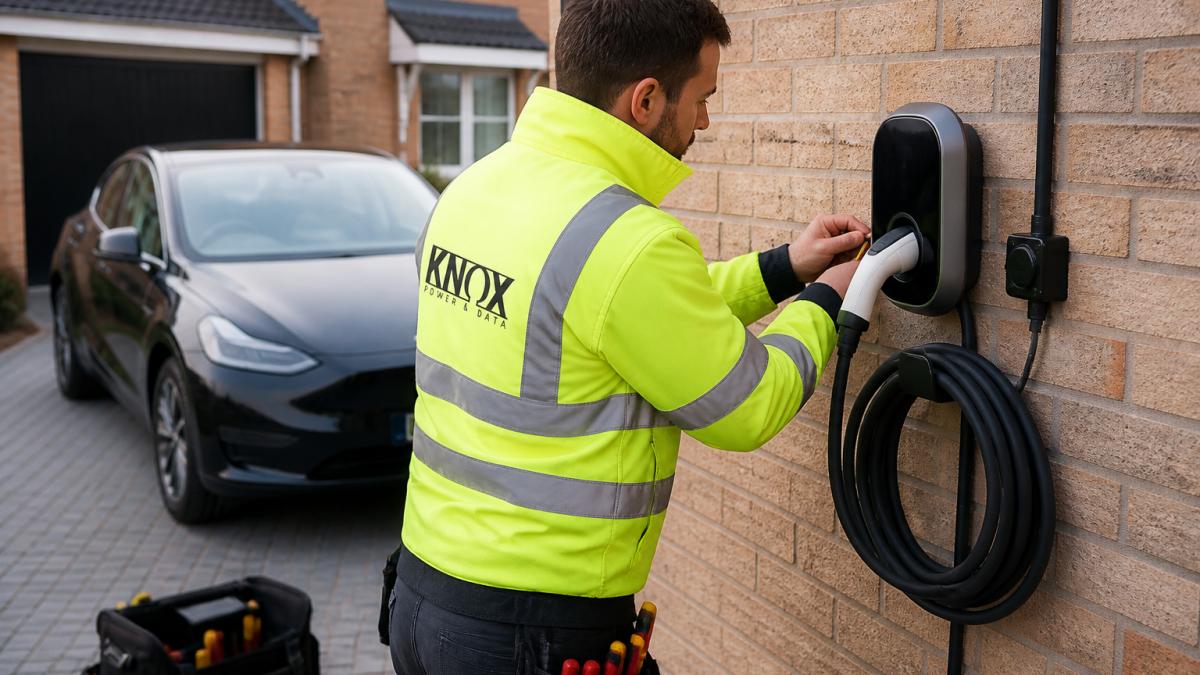
The work usually follows this order:
- Survey the electrical supply and earthing
- Agree the charge point position and cable route
- Fit the charge point and protective device
- Test and certify the circuit
If you want to know how long the job takes, our guide on how long EV charger installation takes covers typical timings from survey to handover.
Driveway Installation Checklist
Use this as a pre-installation checklist before getting a quote.
-
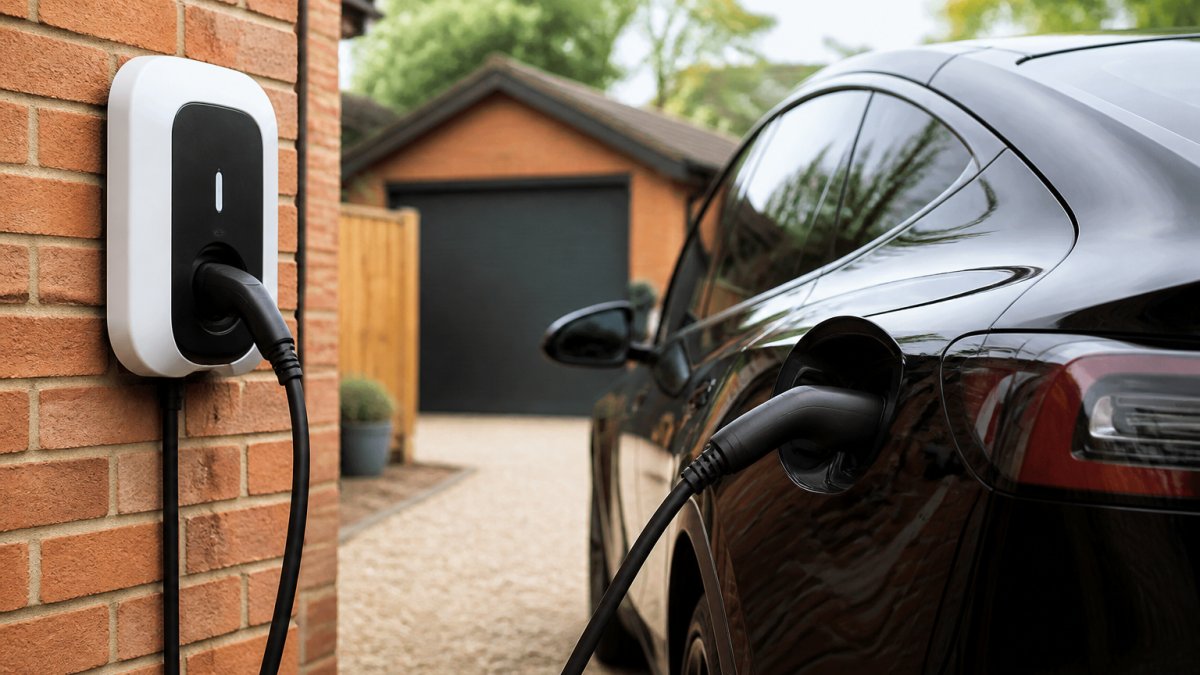
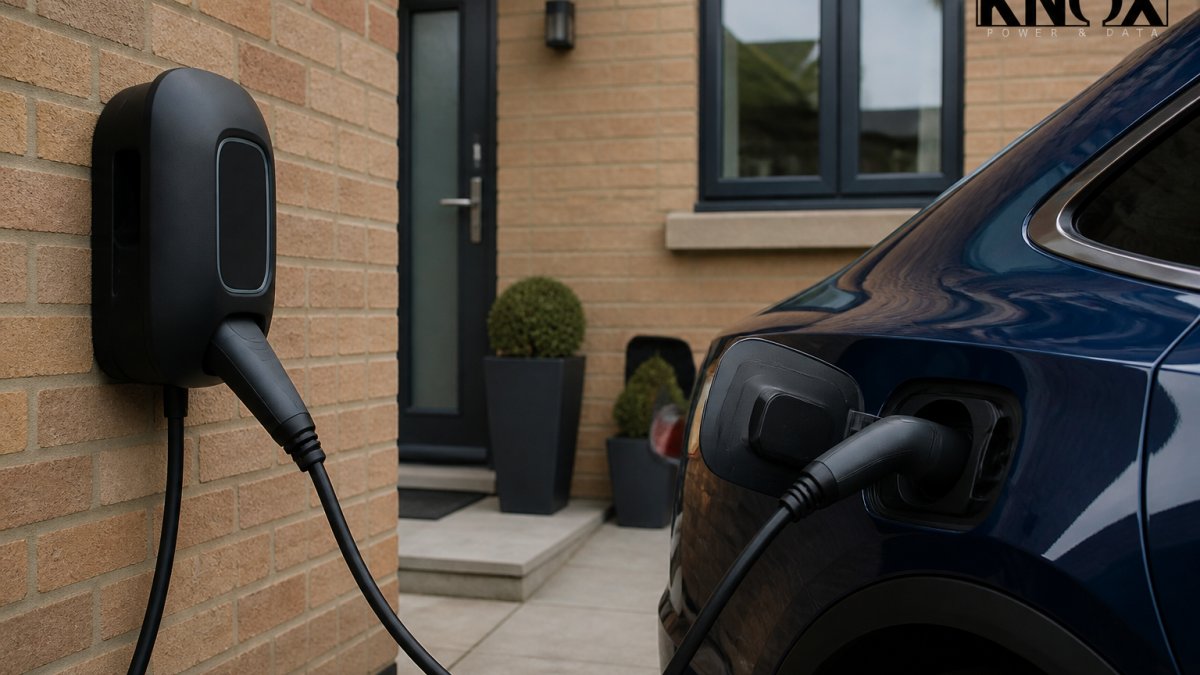
Charger location: mount on a wall or post within reach of the charging port when the car is parked nose-in or reverse-in. A tethered cable is typically 5 m to 7.5 m; check the run with the car in its normal parking position.
-
Cable reach: measure the diagonal, not the straight line. If the drive is wide or the car parks at an angle, a longer tethered cable or an untethered unit with a longer mode 3 cable may be needed.
-
Electrical supply: the installer checks the main fuse rating, spare ways in the consumer unit, and the earthing arrangement (TN-S, TN-C-S or TT). A charge point needs a dedicated circuit and a Type A RCD with DC leakage detection, or an RCBO to the same specification.
-
Certification: you should receive an Electrical Installation Certificate or a Minor Electrical Installation Works Certificate, plus the charge point's test record and the Building Regulations compliance certificate where applicable.
Checking Your Electrical Supply and Earthing
Your consumer unit and earthing arrangement decide whether a charger can go in as-is or needs an upgrade first.
A charger fitted to a supply that cannot carry it will trip, or worse, overheat.
If the supply is tight, a consumer unit upgrade may be needed. Our article on whether your home electrics can support an EV charger explains what installers look for, and our consumer unit upgrade guide covers what the work involves.
Positioning the Charge Point and Cable Route
Put the charge point where the car actually parks, not where the wall looks tidiest. The cable should reach the charging port without stretching, and the route back to the consumer unit should avoid doorways and trip hazards.
- Mount the unit at a comfortable height, roughly a metre from the ground
- Choose a tethered or untethered unit based on how you park
- Route the cable in conduit or trunking where it is exposed
Who Owns the Driveway? Permission Scenarios
The installation route changes depending on your tenure.
- Homeowner, sole use: straightforward. You instruct the installer and own the certificate.
- Renter: you need the landlord's written consent before any fixed charge point is fitted. The installation becomes a fixture, so agree in writing who owns it and whether it stays at the end of the tenancy.
- Leaseholder or flat with an allocated driveway: check the lease and any management company rules. You may need freeholder or managing agent consent, and the cable route may cross communal land.
Planning Permission and Local Rules
For most driveways, a wall-mounted charge point falls under permitted development and does not need a planning application. Exceptions include listed buildings, conservation areas, and some flats or properties with restricted permitted development rights. If in doubt, check with your local planning authority before work starts. Off-street driveway charging does not need a cross-pavement cable channel, those rules apply only where the cable has to cross public land.
Outdoor EV Charger Safety: What You Must Get Right
Outdoor EV charger safety comes down to three things: a proper protective device, correct earthing, and a unit rated for outdoor use. A charge point on a driveway is exposed to rain, frost and sun, so it must withstand all three.
Charge points should be tested and certified against BS 7671, the wiring regulations, and a certificate is your record that the work has been checked.
EV Charging Cable Across a Pavement: Rules and Risks
Running an EV charging cable across a pavement is where driveway charging gets complicated. If your car sits on the road rather than your drive, the cable has to cross public land, and that brings rules.
- A cable trailing across a pavement is a trip hazard for pedestrians
- Some local authorities allow a cable channel or gully, but you need permission first
- Without approval, you risk liability if someone trips
If your parking is on-street, read our guide to installing an EV charger without garage access before you plan anything. It sets out the options when the cable cannot stay on your own land.
Charging an EV Without a Driveway: Your Realistic Options
No driveway does not mean no charging. Drivers without off-street parking charge elsewhere, and most manage fine with a mix of options.
On-Street, Kerbside and Public Charging
Kerbside charge points are appearing on residential streets, and public charging stations cover longer journeys. DC fast charging tops up quickly when you need it, while AC charging suits longer stops. The trade-off is cost and convenience: you pay more per unit and may have to wait for a free bay.
Workplace, Shared and Borrowed Parking
Workplace charging is often the simplest fix. If your employer has charge points, you plug in while you work. Shared parking and charging at a friend's or family home also work if you have regular access and permission. For private rental or shared parking, get the owner's consent in writing before anyone fits anything.
Realistic Charging Times and Running Costs on a Driveway
Overnight EV driveway charging is the cheapest and slowest way to charge. A standard home charge point adds a useful amount of range over a few hours, and most drivers simply plug in when they get home.
The Plug In America 2026 EV Driver Survey reports that most EV drivers do not charge every day, because a battery can cover several days of driving between charges.
Charging Times by Charger Type
Charging time depends on the charger's power rating, the car's on-board charger limit and the battery size. The figures below are indicative for a mid-size EV with a 60 kWh battery, a rough benchmark rather than a promise for your car.
| Charger type | Typical power | Range added per hour | 20% to 80% charge |
|---|---|---|---|
| Three-pin household socket | 2.3 kW | About 8 to 10 miles | 15 to 18 hours |
| Dedicated 7 kW home charge point | 7.4 kW | About 25 to 30 miles | 4 to 6 hours |
| 11 kW home charge point | 11 kW | About 35 to 45 miles | 3 to 4 hours |
| 22 kW home charge point | 22 kW | About 60 to 70 miles | 2 to 3 hours |
| 50 kW public rapid | 50 kW | About 150 miles | 30 to 45 minutes |
| 150 kW public ultra-rapid | 150 kW | About 400 miles | 15 to 25 minutes |
Second, the car's on-board charger may limit AC charging to 7.4 kW or 11 kW even if the unit can deliver more.
What It Costs to Charge on a Driveway
Running costs depend on your electricity tariff, not on the charger. The charger sets the speed; the tariff sets the price per unit.
What the Installation Itself Costs
Installation cost depends on cable run, supply condition and whether a consumer unit upgrade or earth works are needed. Installation cost depends on the cable run, the condition of the supply and whether a consumer unit upgrade or earth works are needed. Pricing varies by property, so please contact Knox Power & Data for a survey and a current quote.
Grant Support
| Scenario | Where you charge | Typical speed | Best for |
|---|---|---|---|
| Driveway, overnight | Home charge point | Slow AC | Daily drivers with off-street parking |
| Kerbside | On-street charge point | Slow to fast AC | Homes without a drive |
| Workplace | Shared charge point | Slow AC | Commuters parking all day |
| Public rapid | DC fast charger | Fast DC | Long journeys and top-ups |
Book a Driveway Charger Survey and Quote
The safest way to charge an EV on a driveway is to have it surveyed and fitted by a qualified installer. Knox Power & Data's team is NAPIT-registered (Member No. 69848) and BS 7671 18th Edition and Inspection qualified.
You can see a real completed job in our EV charger installation in Wakefield breakdown, including a detached garage setup.
Get started with Knox Power & Data and charge at home with confidence.
Frequently Asked Questions
Can I charge my EV on a driveway without a dedicated home charger?
You can, using a standard three-pin socket and the granny cable supplied with most cars, but it is slow: expect roughly 8 to 12 hours for a full charge depending on battery size. A three-pin plug is not designed for continuous high current, so check the socket and wiring are in good condition and have a qualified electrician confirm the circuit can take the load. For regular driveway charging, a dedicated 7kW charge point is faster and safer.
Is it safe to charge an EV outside on a driveway in the rain?
Yes. Properly installed outdoor charge points are built for British weather and have sealed enclosures and protection against moisture and dirt. The connector pins are not live until the handshake with the vehicle completes. Keep the charging cable off the ground where possible, check the plug and cable for damage before each use, and never use a unit with a cracked case or exposed wiring. Outdoor EV charger safety depends on correct installation and a quick visual check each time.
Can I run an EV charging cable across a pavement to my car?
Only if your local authority explicitly permits it. Some councils run cross-pavement charging trials using a cable channel or gully, but most do not, and a cable trailed across a pavement is a trip hazard and can breach highway rules. Never assume it is allowed. Contact the highways team at your council before doing it, and if permission is not granted, use a public or kerbside charge point instead.
How long does it take to charge an EV on a driveway?
A 7kW home charge point typically adds around 30 to 40 miles of range per hour, so an overnight session of 6 to 8 hours covers most daily driving. A three-pin socket adds roughly 8 to 10 miles per hour and is best kept as a backup. Driver surveys commonly find that most drivers do not charge every day, because modern batteries often cover several days of driving between charges.
Charging on a driveway is straightforward once the supply, the position and the safety checks are done properly. If you are unsure whether your home is ready, our team can survey it and tell you exactly what is needed. Get a quote from Knox Power & Data and we will guide you from survey to certified installation.