 how-to
How to Install an EV Charger Without Garage Access
Last Updated: October 23, 2026
Quick Summary
You can complete an ev charger installation without garage access by using a private off-street space with written landowner consent, or a kerbside setup where the charger sits on your property and the cable reaches the car. Kerbside cable across a public pavement normally needs council highways approval, which most councils do not grant.
- Confirm who owns the ground and wall, and get all permissions in writing before ordering equipment.
- A qualified installer must check supply capacity, earthing arrangement and protective devices before any charger is fitted.
- Never let anyone install a charger without checking the earthing first, as the wrong arrangement creates a serious shock risk.
- A cable lying across a public footpath is a trip hazard and can leave you liable if someone falls.
- Ask every installer for a written quote that separates the charger, labour, cable route and any consumer unit upgrade.
Table of Contents
- EV Charger Without a Driveway: Your Options at a Glance
- Step-by-Step: How to Install an EV Charger Without Garage Access
- Outdoor EV Charger Installation: Weatherproofing and Placement
- Detached Garage EV Charger Installation: Running Power Safely
- EV Charging Cable Across Pavement: Managing Trip Hazards
- Renters, Flats and Shared Parking: What You Can Do
- Costs, Grants and Common Mistakes to Avoid
- Frequently Asked Questions
EV Charger Without a Driveway: Your Options at a Glance
You can install an EV charger without garage access, but it depends on where you park. The two realistic routes are a private off-street space with shared or rented access, or a kerbside arrangement where the charger sits on your property and the cable reaches the car.
The core issue is not the charger itself. It is the distance between your consumer unit and the car, and who controls the ground in between.
Off-street parking and shared access
Off-street parking is the easiest scenario. A shared driveway, a rented space behind a building, or a marked bay on private land all allow a standard outdoor charger. You need written permission from whoever owns the land if it is not yours. You also need a safe cable route that does not cross a footpath.
Kerbside and public pavement charging
Kerbside charging is where most searches go wrong. You cannot normally dig up or run cable across a public pavement without council approval (Issuing section 50 street works licences). Some councils run trial schemes for cross-pavement channels. Most do not. Check with your local highways team before assuming it is allowed.
| Scenario | Charger Location | Permission Needed | Practical Difficulty |
|---|---|---|---|
| Shared private driveway | Wall or post on your property | Landowner consent | Low |
| Rented off-street bay | Post or wall, landlord approved | Landlord plus freeholder | Medium |
| Kerbside, cable across pavement | Wall-mounted, cable to car | Council highways approval | High |
| Detached garage with no power | Inside or on garage | None beyond electrical sign-off | Medium |
Step-by-Step: How to Install an EV Charger Without Garage Access
The process follows five stages: confirm permissions, book an electrical assessment, agree the route and charger position, install and certify, then commission and hand over. Skipping any one of them is how jobs get ripped out and redone. The sequence below is the one a competent installer will follow on a no-garage property; ask any firm you shortlist to talk you through it before you book.
Step 1: Confirm your parking and permissions
Before anything else, establish who owns the ground and the wall. For a rented bay, get consent in writing from the landlord and, where the bay sits on a managed estate, the freeholder or management company. For a shared driveway, agree with the other users how the cable will sit, who moves it, and who pays for the electricity. For kerbside, ask the council highways department directly whether cross-pavement routing is permitted on your street, most do not allow it, and some run trial schemes with specific channel products.
Step 2: Book a site assessment and electrical check
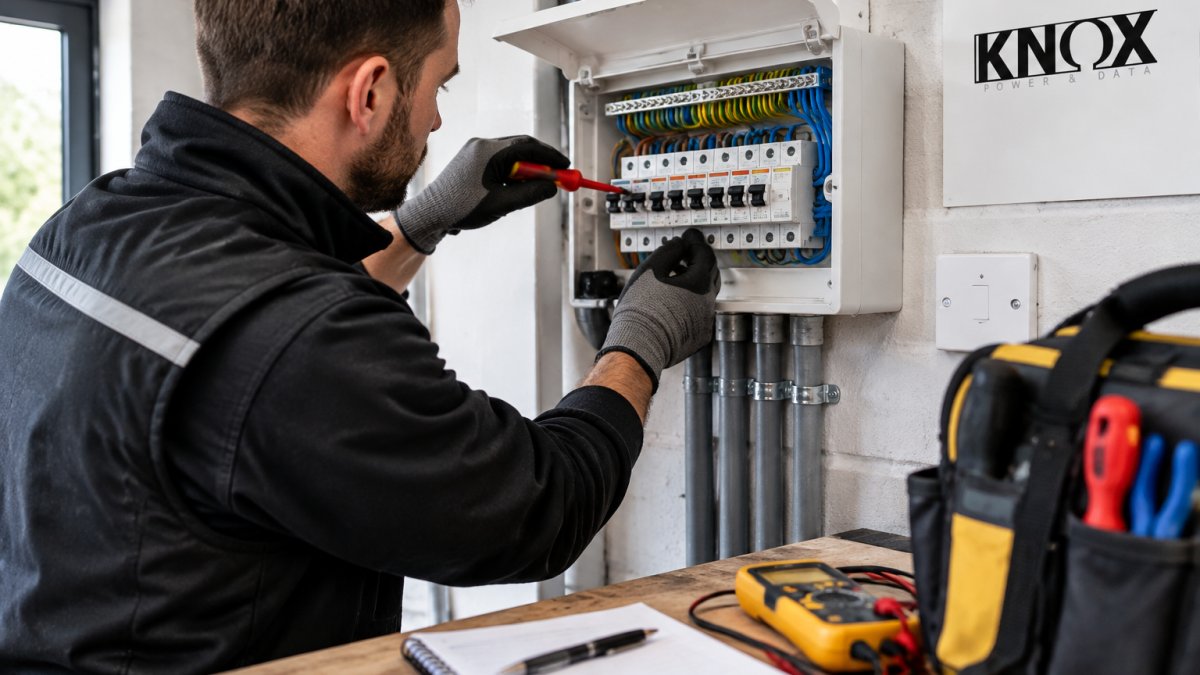
A qualified installer will check your consumer unit, earthing arrangement and spare capacity. Chargers pull a steady load for hours, so the supply has to cope. Older units often need an upgrade before a charger can be added. The assessment should cover:
- Supply capacity, whether the existing main fuse and consumer unit can carry a 7kW charger alongside normal household load, or whether a supply upgrade or load management is needed.
- Earthing arrangement, the charger must be matched to the property's earthing system; a charger on the wrong arrangement can create a serious shock risk and is one of the most common faults found on remedial visits.
- Protective devices, whether the circuit needs a dedicated RCBO and surge protection, and whether an earth electrode is required for the chosen charger.
If you want to understand what the assessment covers beforehand, read our guide on whether your home electrics can support an EV charger.
Step 3: Agree the charger location and cable route
The best charger position is close to where the car actually parks, not where the wall looks tidiest. Measure the real distance, a 5-metre cable rarely reaches across a pavement and around a car. Decide now whether you need a longer tethered cable, a cable hook, or a post-mounted unit. For a detached garage or a bay far from the house, the route may need armoured cable in ducting, and the cable size must be calculated for voltage drop over the run.
Step 4: Installation, testing and certification
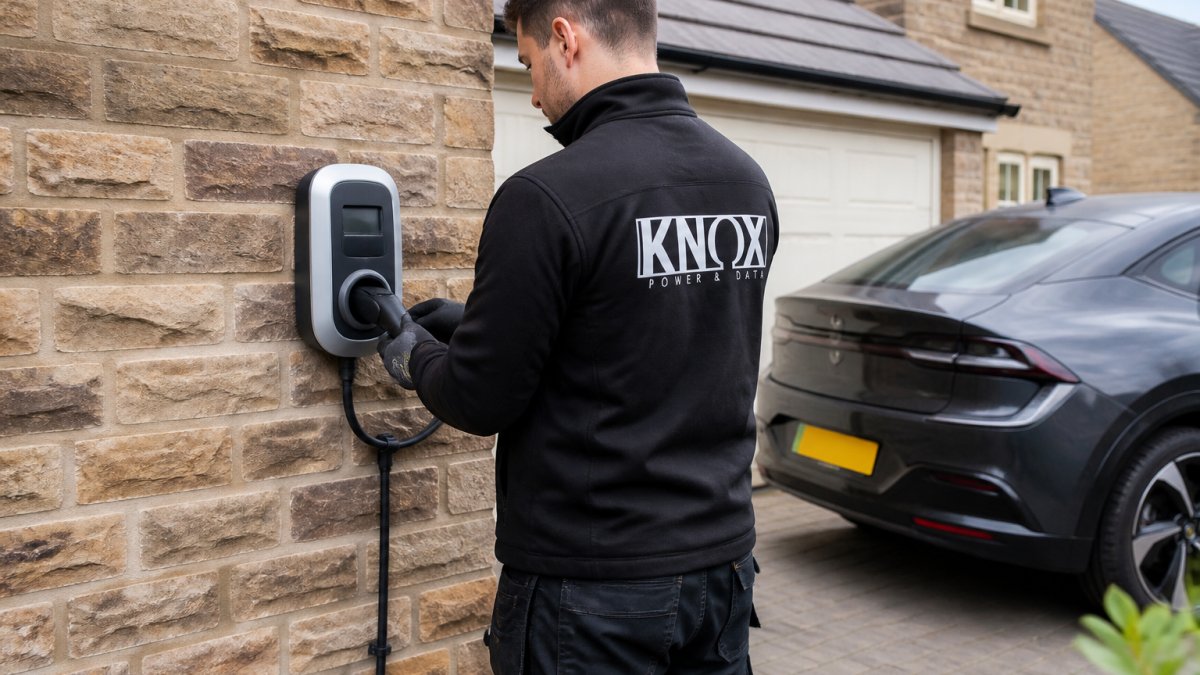
Installation typically takes a few hours for a straightforward wall mount, longer where trenching or ducting is needed. The installer runs the supply, mounts the unit, tests the circuit and issues certification. You should receive:
- an Electrical Installation Certificate (or a Minor Electrical Installation Works Certificate where applicable);
- notification under Building Regulations Part P through a competent person scheme, or a building control notification if the installer is not registered;
- the charger manufacturer's commissioning record and, where fitted, the load-management settings.
If you want a NAPIT-registered local team to carry out and certify the work, you can book an electrician for the assessment and install.
Step 5: Commission and hand over
The installer should demonstrate a full charge cycle, confirm the app or RFID access works, and show you how to isolate the unit. Ask for the test results and keep the certificate with your property documents, it matters at resale and for any future grant claim.
Outdoor EV Charger Installation: Weatherproofing and Placement
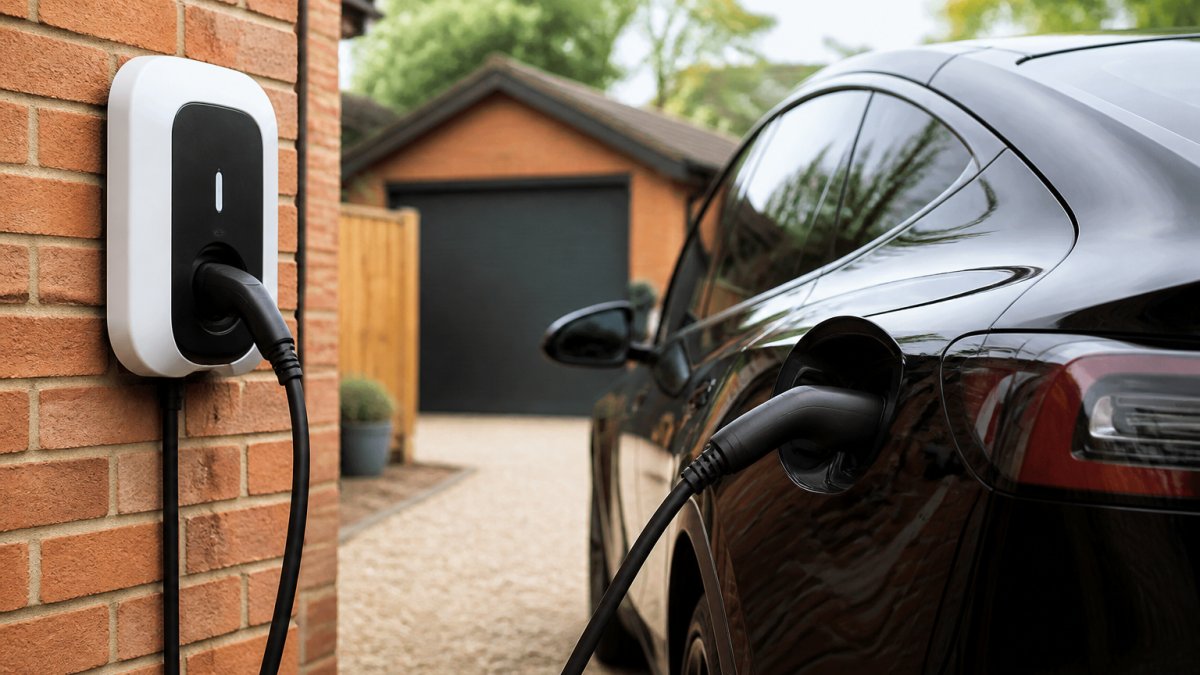
Outdoor EV charger installation lives or dies on placement. A unit fitted where it takes direct rain and standing water will fail early, whatever its IP rating claims.
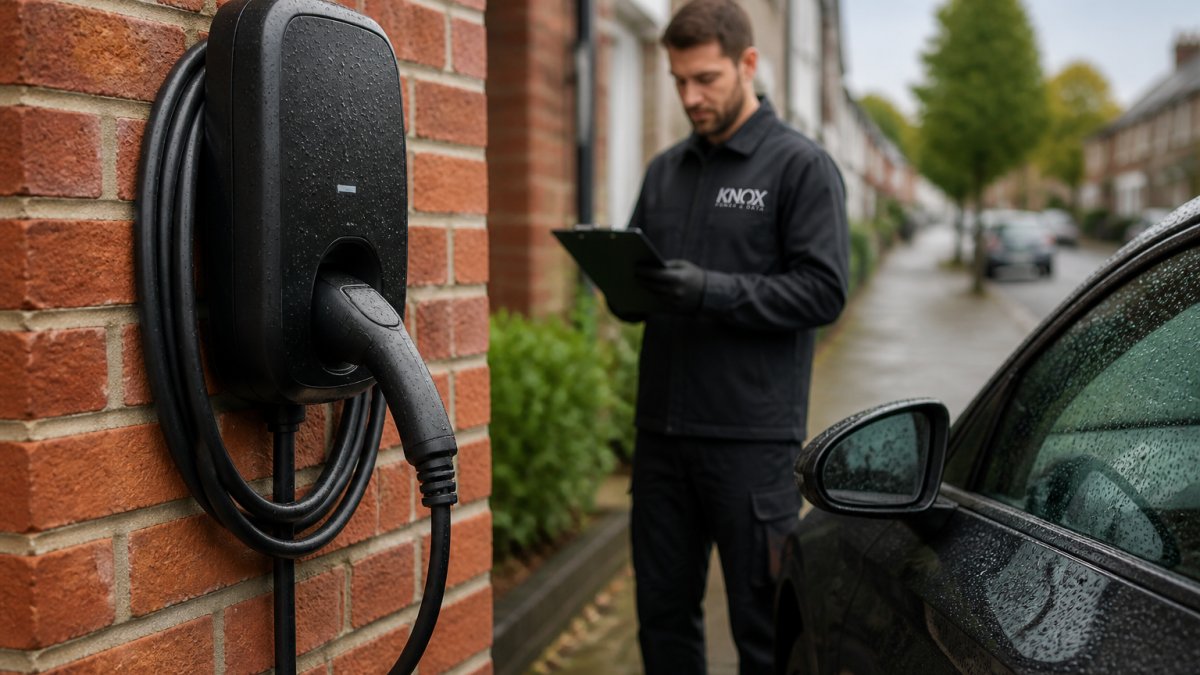
Choose a unit rated for outdoor use and check the cable gland is sealed properly. For the wider safe-installation walkthrough, see our guide on how to install an EV charger at home safely.
Detached Garage EV Charger Installation: Running Power Safely
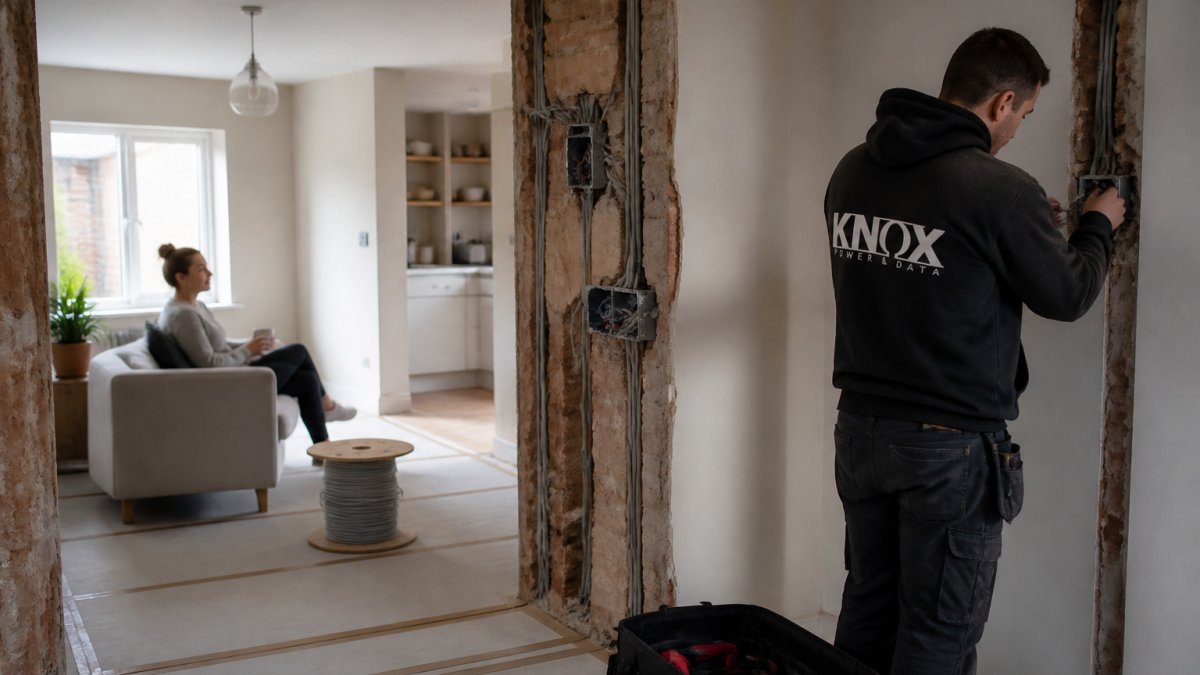
Detached garage EV charger installation usually means one thing: a long cable run from the house. That distance affects voltage drop and cable sizing, so it is not a DIY job.
If the garage has its own small supply, check it can carry the charger load. Many garage supplies were sized for a light and a socket, not a 7kW charger running for hours.
EV Charging Cable Across Pavement: Managing Trip Hazards
An EV charging cable across pavement is the single biggest safety and legal problem in this scenario. A cable lying across a public footpath is a trip hazard and can leave you liable if someone falls. Cable ramps help on private ground but rarely satisfy a highways team on public pavement.
- Keep the cable on your own property wherever possible
- Use a wall-mounted holster so the cable never rests on the ground
- Never run a cable through a window and across a path as a permanent fix
Renters, Flats and Shared Parking: What You Can Do
Renters have fewer options but not none. The practical routes are a landlord-approved charger on a rented bay, a shared unit in a communal car park, or reliance on nearby public charging.
For flats, a communal charger with a billing app is often the only workable answer. It needs freeholder or management company approval, and the supply has to be metered fairly.
Costs, Grants and Common Mistakes to Avoid
Pricing depends on cable run length, whether your consumer unit needs upgrading, and the mounting method. We do not quote blind figures, because a 3-metre wall mount and a 25-metre garage run are different jobs. What we can do is set out the cost drivers by scenario so you can sanity-check any quote you receive, and explain how the grant system actually works.
Cost drivers by scenario
| Scenario | Main cost drivers | What pushes the price up |
|---|---|---|
| Wall mount on the house, short run | Charger unit, labour, certification | Consumer unit upgrade, longer tethered cable |
| Post or pillar in a rented bay | Post and foundation, armoured cable, landlord consents | Distance from the house, surface reinstatement |
| Detached garage with no power | Trenching or ducting, armoured cable sized for voltage drop, garage sub-board | Long runs, hard surfaces, separate earthing |
| Kerbside with cross-pavement channel | Council approval, channel product, reinstatement | Whether the council permits it at all |
As a rule of thumb, the charger unit and standard labour are the predictable part; the route and the electrical upgrade are where quotes diverge. Always ask for the quote to itemise the cable run length, the consumer unit work, and any trenching or reinstatement separately.
Grants and funding
The main domestic funding route has been the Electric Vehicle Chargepoint Grant, administered through approved installers and subject to eligibility rules that change. Check the current rules before you book, see our guide on grant eligibility for 2026, and confirm the installer is approved under the scheme, because not all are.
For renters and flat residents, grant rules and landlord consent often interact: the property must meet the scheme's criteria and the landlord must approve the works. Get both confirmed before paying a deposit.
Common mistakes we see
- Assuming a grant applies without checking eligibility first
- Buying a charger before the electrical check
- Ignoring the cable route until installation day
For current local pricing, see our breakdown of EV charger installation costs.
Frequently Asked Questions
Can an EV charger be installed outside without a garage?
Yes. Most home EV chargers are designed for outdoor use and carry an appropriate IP rating for rain and dust. The charger is typically mounted on an exterior wall, a dedicated post, or a garage wall if you have a detached one. A qualified installer will check the electrical supply, confirm the cable route, and make sure the unit is weatherproofed and protected from damage. Outdoor EV charger installation is common where there is off-street parking but no garage, and the work should be tested and certified to BS 7671.
Can I run an EV charging cable across a public pavement?
Running a charging cable across a public pavement is generally discouraged and can be unsafe. It creates a trip hazard for pedestrians, including people with pushchairs or mobility aids, and may breach local council rules or highway requirements. Some councils run trial schemes for cable channels or kerbside charging, but you should check with your local authority first. A safer approach is to use off-street parking where possible, or ask your installer about cable protection and routing options that keep the pavement clear.
How do I charge an electric car if I do not have a driveway?
If you have no driveway, look at what parking you can legally use. Options include a shared off-street space, a rented parking bay, or a detached garage if you have one. Where none of these apply, public and kerbside charging may be the practical route. Speak to your local council about any residential charging schemes, and ask a qualified installer to assess whether a charger can be fitted to a wall or post near your parking. The right solution depends on access, permissions, and the distance to your electrical supply.
How long does it take to install an outdoor EV charger?
Most straightforward outdoor installations are completed in a few hours, but the time depends on the cable run, the state of your consumer unit, and whether any groundworks are needed. A detached garage or a parking space far from the house can add time because the cable route is longer and may need extra protection. A site assessment beforehand gives you a realistic timescale. The installer should also allow time to test the circuit and issue the relevant certification once the charger is fitted.
Installing a charger without garage access is entirely doable, provided the permissions and electrical checks come first. At Knox Power & Data, our NAPIT-registered team handles the site assessment, supply checks and certified installation in one visit. We are BS 7671 18th Edition qualified and fully insured for domestic and commercial work. Get a quote from Knox Power & Data and get your charger fitted, tested and certified properly.