 ultimate-guide
Benefits of Smart Home EV Chargers: 2026 Guide
Table of Contents
- What Makes a Home EV Charger 'Smart'?
- EV Charger Load Management Systems Explained
- Off-Peak EV Charging Tariffs: Cutting Costs While You Sleep
- EV Charger Installation Requirements You Need to Know
- Smart Charging and Solar Integration: Maximising Renewable Energy
- Data Privacy and Cybersecurity: What Your Charger Knows About You
- Calculating Your ROI: When Do Smart Chargers Pay for Themselves?
- Pros and Cons of Smart Home EV Chargers
- Frequently Asked Questions
Last Updated: September 28, 2026
What Makes a Home EV Charger 'Smart'?
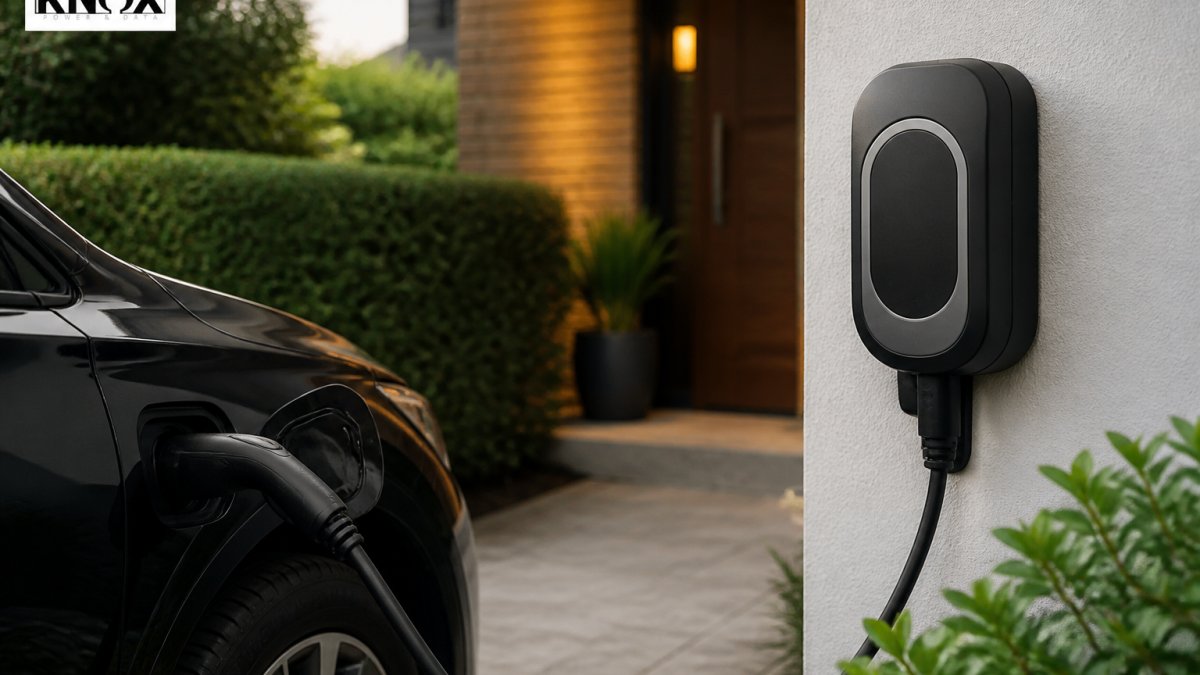
A smart home EV charger connects to your home network and lets you control when, how fast, and at what cost your EV charges. Unlike a basic plug-and-charge unit, it communicates with your energy tariff, solar panels, and household load in real time.
Hardware vs. Software: What You're Actually Buying
The physical unit, or EVSE (Electric Vehicle Supply Equipment), handles safety-critical work: earthing, fault protection, and communication with the vehicle. The software layer handles scheduling, load balancing, tariff integration, and reporting. Excellent hardware with poor firmware will frustrate you within a month.
When comparing units, ask three questions:
- Does the manufacturer push firmware updates, and how often?
- Does the app support charging schedules and remote monitoring without a subscription?
- Does the unit expose an open protocol such as OCPP for future integration?
EV Charger Load Management Systems Explained
EV charger load management systems stop your charger and your home from competing for the same supply. They monitor total household demand and reduce or pause charging when other appliances draw power.
How Load Balancing Prevents Power Overloads
Load balancing measures current at the origin of the installation and adjusts the charger's output in real time, throttling back when demand spikes and ramping up when it passes.
There are two common approaches:
- Static load limiting caps the charger at a fixed maximum, which is simple but wasteful.
- Dynamic load balancing reads live consumption and adjusts continuously, so you charge faster when the house is quiet.
Off-Peak EV Charging Tariffs: Cutting Costs While You Sleep
Off-peak EV charging tariffs cost less during low-demand hours, typically overnight. Combined with a smart charger's scheduling function, they can cut charging costs substantially versus peak times.
Scheduling, Remote Monitoring, and Dynamic Pricing
Scheduling is the baseline: every smart charger worth buying lets you set a charging window, in the app or through the vehicle.
EV Charger Installation Requirements You Need to Know
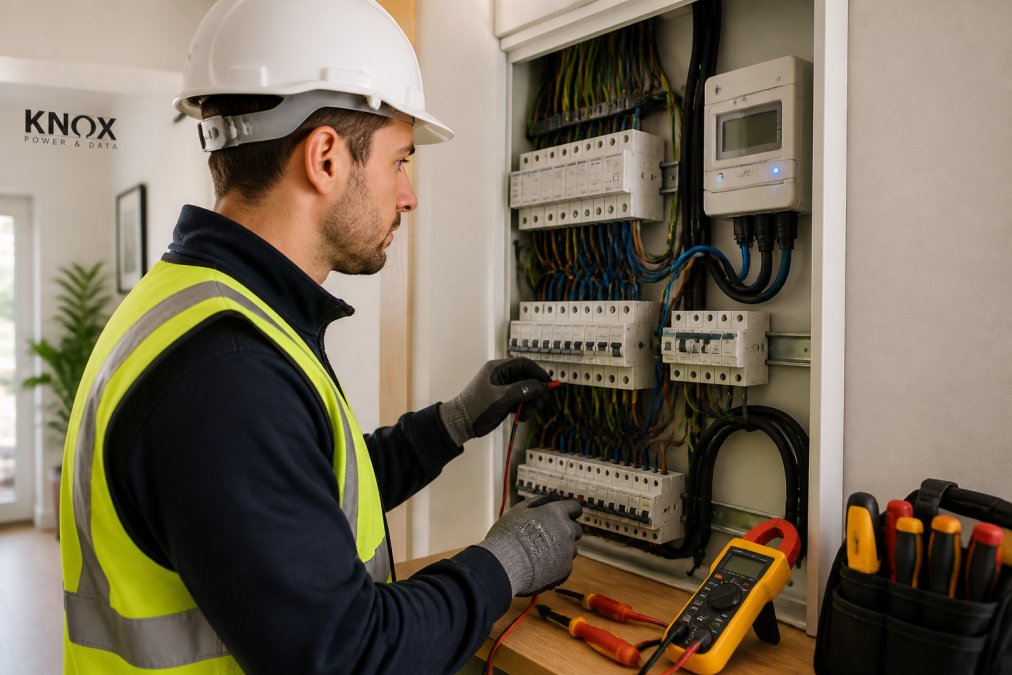
EV charger installation requirements cover supply capacity, earthing, protective devices, cable routing, and compliance with BS 7671, the wiring regulations. Getting these wrong is a safety and insurance issue, not a cosmetic one.
Electrical Upgrades, Earthing, and Compliance
1. Supply capacity and the DNO. Your distributor fuse and consumer unit need headroom. A 7kW single-phase charger draws roughly 30A continuously, a meaningful addition to a typical 60A or 80A supply. If the diversity calculation fails, the options are a load management device, a supply upgrade (requiring a Distribution Network Operator application), or three-phase where available. DNO applications can take several weeks, making this the biggest driver of project timeline.
- A Type A RCD with DC fault detection is the minimum for most modern units; some older or cheaper chargers require a Type B RCD, which is significantly more expensive.
- Where the supply is TN-C-S (PME), the installer must either fit a PEN fault protection device in the charger, install an earth electrode, or use a charger with integrated open-PEN detection. Not every unit has this built in.
- A dedicated circuit with its own protective device is required, you cannot spur an EV charger off a ring final circuit.
What This Means for Your Quote
A straightforward install, modern consumer unit, short cable run, TN-S earthing, spare way available, is typically a half-day job. An awkward one, older fuse board, long buried run, PME supply needing PEN protection, or a supply upgrade, can run to several days and a materially higher price. The difference is the electrical work around the charger, which is why a fixed quote after a survey beats a cheap estimate over the phone.
Smart Charging and Solar Integration: Maximising Renewable Energy
Solar integration lets your charger use surplus generation from your own panels instead of exporting it to the grid at a low rate. When your panels produce more than the house consumes, the charger absorbs the excess.
Data Privacy and Cybersecurity: What Your Charger Knows About You
A connected charger collects data: charging times, energy consumption, location, and sometimes vehicle identification. That data sits on the manufacturer's servers and is only as secure as their practices.
Before buying, check:
- Does the manufacturer publish a privacy policy covering charging data?
- Is data encrypted in transit and at rest?
- Can you use the charger without a cloud account, or does it require permanent connectivity?
- Has the manufacturer committed to security updates for the product's supported life?
Calculating Your ROI: When Do Smart Chargers Pay for Themselves?
The payback calculation needs four numbers: your annual mileage, your vehicle's efficiency in kWh per mile, the difference between your peak and off-peak rate, and the all-in cost of the charger plus installation.
A Worked Example
Here is a worked example using placeholder figures you can replace with your own; the rates reflect a typical time-of-use tariff structure, not any specific supplier.
| Input | Example figure |
|---|---|
| Annual mileage | 8,000 miles |
| Vehicle efficiency | 0.3 kWh per mile |
| Annual energy needed | 2,400 kWh |
| Peak rate | 30p per kWh |
| Off-peak rate | 10p per kWh |
| Annual cost at peak | £720 |
| Annual cost off-peak | £240 |
| Annual saving vs peak | £480 |
| Smart charger + standard install | £900 |
| Simple payback | ~1.9 years |
The Variables That Change the Answer
Mileage. The saving scales roughly linearly with miles driven. At 4,000 miles a year the annual saving halves to around £240 and payback stretches to nearly four years; at 12,000 miles it rises to around £720 and payback drops below 18 months. Below about 3,000 miles a year, a smart charger may never pay back on tariff arbitrage alone, the case then rests on solar, load management, or convenience.
A Quick Sensitivity View
| Scenario | Annual saving | Payback (at £900 install) |
|---|---|---|
| 4,000 miles, 20p spread | ~£240 | ~3.8 years |
| 8,000 miles, 20p spread | ~£480 | ~1.9 years |
| 12,000 miles, 20p spread | ~£720 | ~1.3 years |
| 8,000 miles, 10p spread | ~£240 | ~3.8 years |
| 8,000 miles, 20p spread + solar | ~£680-£1,080 | ~1-1.6 years |
Pricing depends on your supply, cable run, and whether an upgrade is needed. Knox Power & Data can survey your property and give a fixed quote rather than a guess.
Pros and Cons of Smart Home EV Chargers
Pros:
- Lower running costs through off-peak tariffs and dynamic pricing
- Load balancing protects your supply and prevents power overloads
- Solar integration makes better use of your own generation
- Remote monitoring and scheduling from your phone
- Supports grid stability and reduces peak-time demand
Cons:
- Higher upfront cost than a basic unit
- Depends on reliable Wi-Fi and manufacturer app support
- Adds a data privacy consideration you must manage
- Some features require a compatible tariff or solar setup to be useful
For most households charging regularly at home, the pros clearly outweigh the cons. The exception is a very low-mileage driver on a flat-rate tariff with no solar, where a simpler unit may suffice.
Frequently Asked Questions
Is it worth having a smart EV charger at home?
Yes, for most drivers. A smart home EV charger lets you schedule charging during off-peak electricity rates, which can cut running costs significantly compared to charging at peak times. It also supports load management so your home's supply isn't overloaded, and many models integrate with solar panels to use renewable energy. If you charge regularly at home and want lower bills plus better control, a smart charger is worth the investment.
What is the difference between a standard and a smart EV charger?
A standard charger simply delivers power once plugged in, with no connectivity or scheduling. A smart charger connects to your home Wi-Fi and is controlled through an app. This gives you remote monitoring, charging schedules, off-peak tariff optimisation, load balancing, and sometimes solar integration. Smart chargers also support over-the-air updates and can report charging session data, which helps you track energy use and costs over time.
Do I need a smart charger to use off-peak energy tariffs?
Not strictly, but it makes a big difference. Off-peak EV charging tariffs give cheaper rates during set hours, usually overnight. Without a smart charger you'd have to remember to plug in at the right time manually. A smart charger automates this by scheduling charging sessions to start and stop within the cheap window, so you get the savings without changing your routine. It also helps avoid peak-time demand charges.
Can smart EV chargers help with grid balancing?
Yes. Smart chargers can respond to signals from the grid, pausing or reducing charging during periods of high demand and resuming when pressure eases. This is often called grid optimisation or demand-side response. For homeowners, the practical benefit is that load management prevents your own supply from being overloaded when other appliances are running. At scale, millions of smart chargers working together help stabilise the network and support renewable energy integration.
Charging at home should be simple, safe, and cheap. The complication is that supply capacity, earthing, load management, and tariff setup all have to be right before any of that is true. Knox Power & Data handles the whole job: NAPIT-registered installation under BS 7671, load management assessment, certification, and guidance on tariffs and solar integration. Get a quote from Knox Power & Data and get your charger installed properly the first time.