 how-to
What Happens During an EICR Inspection
Table of Contents
- What an EICR Is and Why It's Carried Out
- How to Prepare for an EICR
- The Visual Inspection: What the Electrician Checks
- Electrical Tests Performed During the Inspection
- How Long Does an EICR Take
- What Will Fail an EICR
- EICR Inspection Checklist
- What Happens After the Inspection
- Frequently Asked Questions
Last Updated: October 7, 2026
What an EICR Is and Why It's Carried Out
An electrical installation condition report (EICR) is a professional assessment of the safety of your fixed electrical wiring and installations.
The EICR inspection is carried out to ensure your electrical installation meets current safety standards. Over time, electrical systems deteriorate. Wear, damage, and outdated wiring can create dangerous conditions.
You'll need an EICR if you're a landlord, property manager, or homeowner concerned about electrical safety. Landlords are legally required to have an EICR carried out every five years under the Electrical Safety Standards in the Private Rented Sector (England) Regulations 2020.
We carry out EICR inspections across West Yorkshire using qualified electricians who understand what the inspection involves and how to read the results. This guide walks you through exactly what happens during the process.
How to Prepare for an EICR
Preparing for an EICR inspection takes minimal effort, but a few simple steps make the process smoother and faster.
Clear access to your electrical installation. The electrician needs to reach your consumer unit, fixed wiring, and all circuits.
Provide access to all rooms. The electrician will need to inspect sockets, switches, and lighting in every room. Make sure doors are unlocked and accessible.
Turn off any alarm systems. Some alarm systems can trigger during electrical testing. Let your electrician know if you have one so they can avoid disrupting it.
Be available during the inspection. You don't need to follow the electrician around, but be home or nearby.
Gather documentation. If you have records of previous electrical work, certificates, or details about when the wiring was last updated, keep them handy.
The preparation checklist is simple:
- Clear access to the consumer unit or fuse board
- Unlock all rooms and cupboards
- Inform the electrician of any alarm systems
- Disable or disarm security systems if needed
- Have any previous electrical certificates ready
- Keep appliances off during testing if requested
The Visual Inspection: What the Electrician Checks
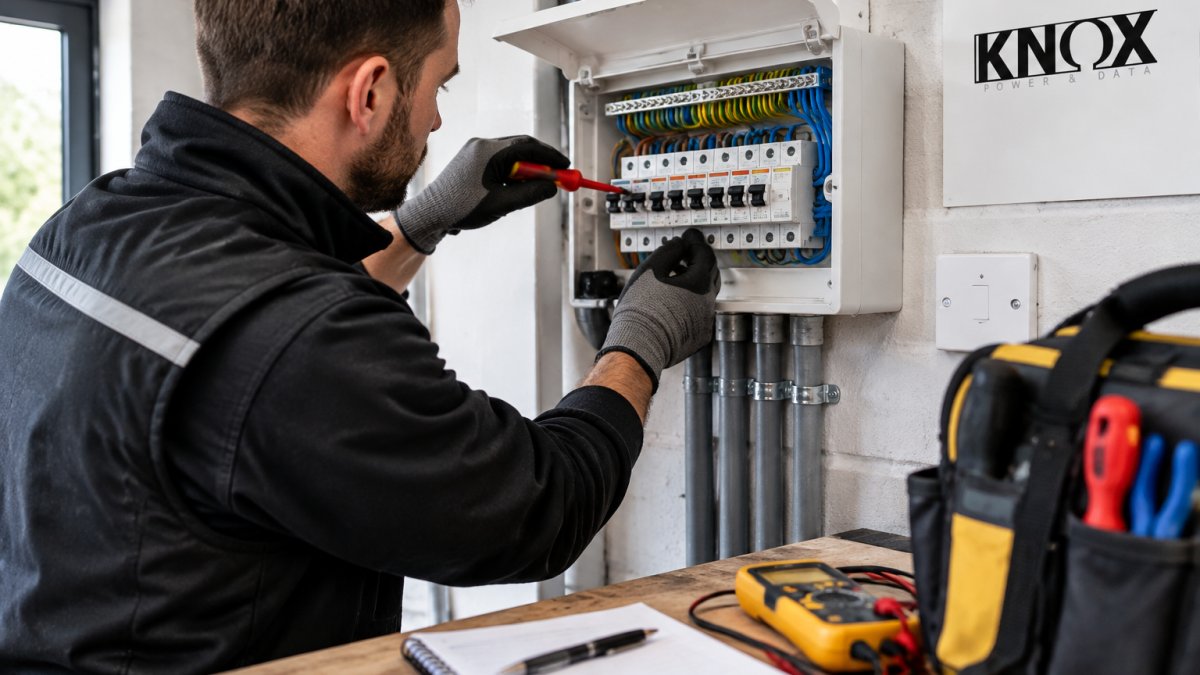
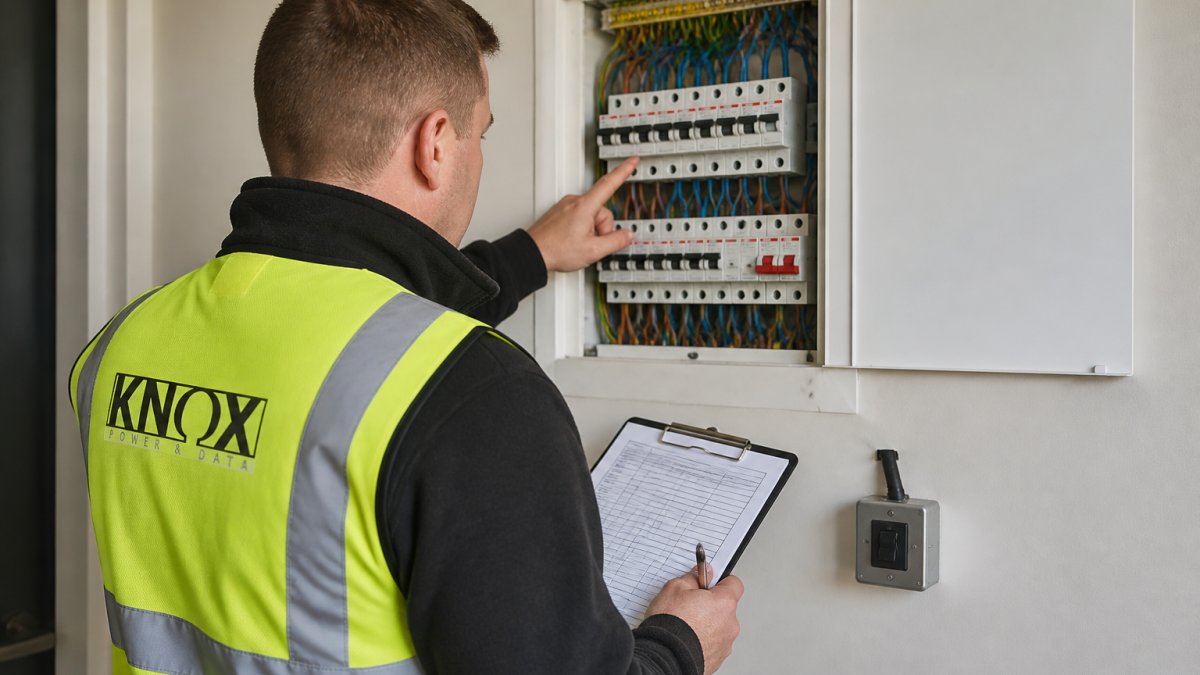
The visual inspection is the first stage of an EICR. The electrician examines your entire electrical installation without using test equipment. They're looking for obvious signs of damage, wear, overheating, or poor installation.
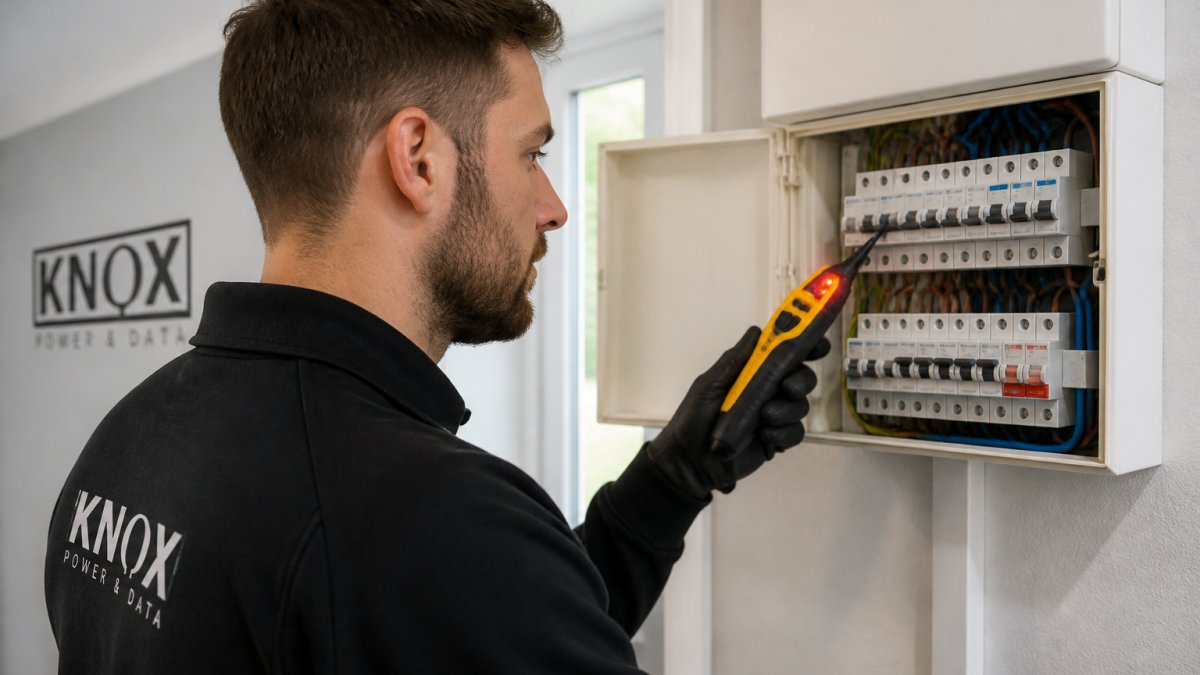
Consumer unit and protective devices
Your consumer unit (also called a fuse board) is the central hub of your electrical system. It houses circuit breakers or fuses that protect each circuit in your home.
The electrician checks the consumer unit for:
- Correct installation and secure mounting
- Signs of damage, corrosion, or burn marks
- Proper labelling of circuits
- Correct type and rating of protective devices
- Evidence of water ingress or moisture
- Overheating or discolouration around breakers
They'll also inspect the main switch and earthing and bonding arrangements. A well-maintained consumer unit should show no signs of burning, rust, or loose connections.
Sockets, switches, and lighting circuits
The electrician inspects every socket outlet and light switch in your property. They check for:
- Loose or damaged socket covers
- Burn marks or scorch marks around outlets
- Missing blanking plates on unused sockets
- Correctly installed switches and dimmer switches
- Proper earthing of metal switch plates
- Signs of water damage or corrosion
Damaged sockets and switches are common findings. They're often caused by loose plugs, overloaded circuits, or age-related wear. The electrician will note any that need replacing.
Fixed wiring and electrical circuits
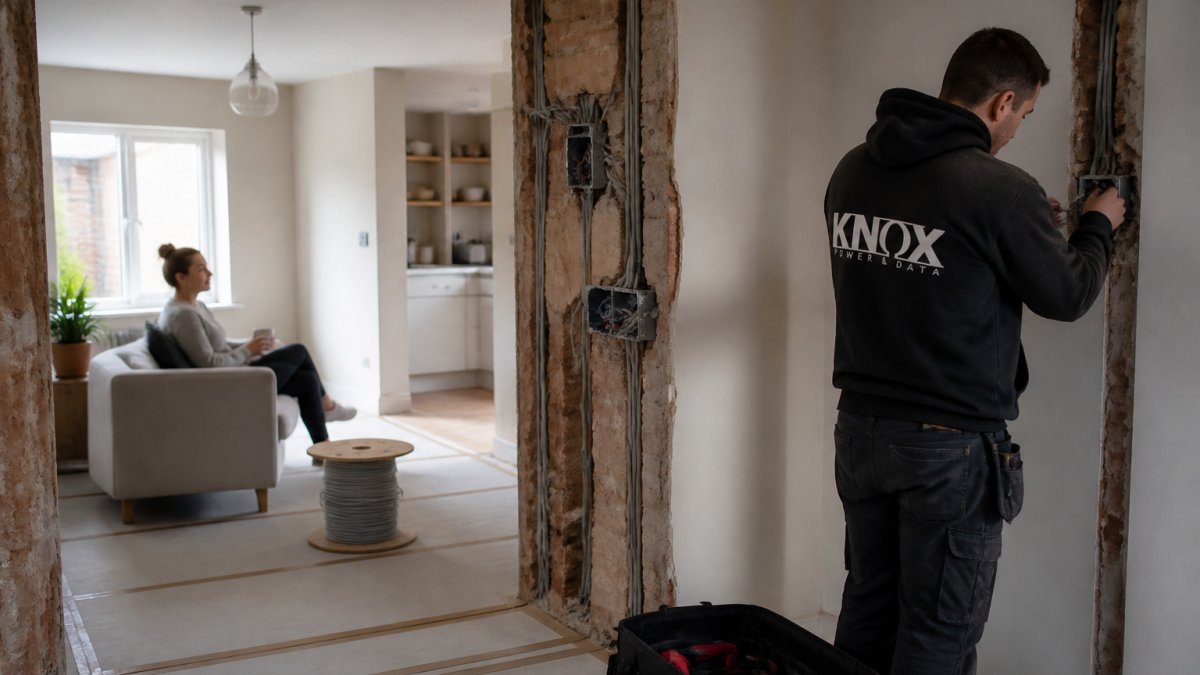
Your fixed wiring includes all the cables running through your walls, under floorboards, and in ceiling voids. The electrician inspects visible sections for damage.
They check for:
- Exposed or damaged cable sheathing
- Cables pinched or crushed by pipes or fixtures
- Cables routed too close to water pipes
- Evidence of rodent damage or chewing
- Cables running through damp areas without protection
- Correct cable types for their location
Hidden wiring can't be fully inspected without opening walls, but the electrician will examine all accessible sections. If they find evidence of damage, they'll recommend further investigation.
Signs of damage, wear, and overheating
The electrician looks for physical evidence that something is wrong. Overheating is a serious warning sign.
Common signs they'll identify:
- Discolouration or burn marks on cables or terminals
- Melted plastic around sockets or switches
- Loose terminals or corroded connections
- Damaged insulation or exposed copper
- Cracks in socket or switch plates
- Rust or corrosion on metal components
- Evidence of water ingress or dampness
Overheating usually means the circuit is overloaded or there's a poor electrical connection. Both are fire hazards. If the electrician finds evidence of overheating, they'll flag it as a serious defect.
Electrical Tests Performed During the Inspection
After the visual inspection, the electrician performs a series of electrical tests. These tests measure how well your installation is working and whether it meets safety standards.
Dead testing and live testing
Dead testing is performed with the power switched off. The electrician uses a multimeter to measure voltage and check that circuits are properly isolated. This test confirms that the main switch can actually disconnect the power.
Live testing is performed with the power on. The electrician uses specialist equipment to measure current, voltage, and earth fault loop impedance. Live testing confirms that protective devices work correctly and will trip if there's a fault.
Both types of testing are essential. Dead testing checks the installation itself. Live testing checks how the installation behaves under real conditions.
Insulation resistance and continuity checks
Insulation resistance testing measures how well the insulation around cables is working. Poor insulation can allow current to leak, creating a fire or shock hazard.
The electrician applies a test voltage to each circuit and measures how much current leaks. If insulation is damaged or degraded, the leakage current will be high. The test takes seconds per circuit.
Continuity testing checks that protective earth conductors (the green and yellow wires) are properly connected throughout the installation. A broken earth connection means protective devices won't work if there's a fault.
RCD and earth fault loop impedance testing
An RCD (residual current device) is a safety device that cuts power instantly if it detects a current leak. It protects against electric shock.
The electrician tests that the RCD:
- Trips within 30 milliseconds when triggered
- Trips at the correct current level
- Can be manually tested using the test button
Earth fault loop impedance measures how quickly a protective device will trip if there's a fault. A low impedance means the device trips quickly. A high impedance means it might not trip fast enough.
The electrician measures this by injecting a test current into the circuit and measuring the voltage drop. The results must fall within safe limits set by BS 7671 (the Wiring Regulations).
How Long Does an EICR Take
The time an EICR inspection takes depends on the size and age of your property. A typical domestic EICR takes between two and four hours.
Smaller properties (flats, bungalows) may take closer to two hours. Larger homes or properties with complex wiring can take four hours or longer.
Several factors affect duration:
- Number of circuits and sockets
- Age of the installation
- Accessibility of the consumer unit
- Condition of the wiring
- Whether any faults are found that need investigation
If the electrician finds problems, they may need extra time to investigate further. This is time well spent, a thorough investigation prevents missed hazards.
What Will Fail an EICR
An EICR inspection results in one of three outcomes: satisfactory, satisfactory with observations, or unsatisfactory.
Satisfactory means your installation is safe and meets current standards. No work is needed.
Satisfactory with observations means your installation is generally safe, but the electrician has noted minor issues. These are usually cosmetic (loose covers, outdated labelling) or low-risk (a socket that could be relocated). You can address these at your convenience.
Unsatisfactory means your installation has serious defects that pose a fire risk or shock hazard. These must be fixed before the property is considered safe.
Common reasons for unsatisfactory results:
- Overheated terminals or cables
- Damaged or missing insulation
- Poor earthing or bonding
- RCD not working correctly
- Insulation resistance below safe limits
- Evidence of water ingress in the consumer unit
- Loose or corroded connections
- Outdated or unsuitable protective devices
An unsatisfactory result doesn't mean your property is unsafe to live in immediately. It means you need to arrange remedial work.
EICR Inspection Checklist
Use this checklist to prepare and understand what the electrician will assess:
Before the inspection:
- Clear access to the consumer unit
- Unlock all rooms and cupboards
- Turn off or disarm alarm systems
- Have previous electrical certificates ready
- Inform the electrician of any restricted areas
Visual inspection areas:
- Consumer unit condition and labelling
- All socket outlets for damage or loose covers
- All light switches for damage or burn marks
- Visible fixed wiring for damage or crushing
- Signs of overheating or discolouration
- Earthing and bonding arrangements
Tests the electrician will perform:
- Dead testing with power off
- Live testing with power on
- Insulation resistance on each circuit
- Continuity of earth conductors
- RCD function and trip time
- Earth fault loop impedance
After the inspection:
- Receive a detailed report
- Understand the observation codes
- Know what remedial work is needed (if any)
- Schedule follow-up work if required
What Happens After the Inspection
Once the EICR inspection is complete, you'll receive a detailed report.
The report includes:
- A summary of the inspection date and electrician details
- Details of the installation tested
- Results of all visual checks and electrical tests
- Any observations or defects found
- Recommendations for remedial work
- Observation codes that classify the severity of any issues
Understanding observation codes:
The report uses codes to classify findings. Common codes include:
- C1, Danger present. Immediate remedial action required.
- C2, Potentially dangerous. Remedial action required.
- C3, Minor issue. Remedial action recommended.
- C4, Improvement recommended. No immediate action needed.
A C1 or C2 code means you need to arrange repairs. C3 and C4 are less urgent but should still be addressed.
If remedial work is needed:
Contact a qualified electrician to carry out the repairs. Knox Power & Data offers remedial work following EICR inspections.
Keeping your report:
Store your EICR report safely. You'll need it if you sell the property, let it to tenants, or arrange insurance.
An EICR inspection gives you peace of mind that your electrical installation is safe.
If your property hasn't had an EICR in the past five years, or if you're concerned about electrical safety, get one done soon.
Frequently Asked Questions
What will fail an EICR?
An EICR fails when the electrician identifies defects that pose a fire risk or electric shock hazard. Common failures include damaged or worn fixed wiring, missing or defective protective devices, overheating at sockets or switches, poor earthing and bonding, and faulty RCD devices. Unsatisfactory results require remedial work before the installation can be certified as safe. The inspection report will detail each observation code and specify which defects must be addressed.
How long does an EICR take?
An EICR typically takes between 2 and 4 hours, depending on the size and complexity of the electrical installation. A small flat may take 2 hours, while a larger house with multiple circuits and older wiring can take 3-4 hours or longer. The duration also depends on access to the installation, if parts are hidden or inaccessible, the inspection may take additional time. The electrician will provide an estimate before work begins.
How do I prepare for an EICR?
Clear access to your consumer unit, fusebox, and all electrical circuits. Ensure the electrician can reach sockets, switches, and lighting fixtures throughout the property. If parts of your installation are hidden behind furniture or in locked cupboards, move or unlock them beforehand. Make sure someone is home during the inspection, and inform the electrician of any known electrical faults or areas of concern. Have your property details and previous inspection reports available if you have them.
What happens if an EICR is unsatisfactory?
If the inspection is unsatisfactory, the report will list observations with codes indicating the severity of each defect. You must arrange remedial work with a qualified electrician to correct the issues. Once remedial work is complete, a follow-up inspection is carried out to verify the defects have been resolved. Only when all defects are corrected can the installation be certified as satisfactory. For landlords, an unsatisfactory result means the property does not meet legal safety requirements and cannot be let until repairs are made.