 how-to
Commercial Electrical Upgrade Services 2026: What to Expect
Table of Contents
- Why Commercial Electrical Upgrade Services Matter in 2026
- How to Plan a Commercial Electrical Panel Upgrade
- Commercial Lighting Upgrades: LED, Controls and Payback
- Commercial EV Charger Installation for Fleets and Staff
- What Drives Commercial Electrical Upgrade Cost
- Choosing a Contractor and Keeping Your Business Open
- Certification, Testing and Your 2026 Timeline
- Frequently Asked Questions
Last Updated: October 8, 2026
Why Commercial Electrical Upgrade Services Matter in 2026
Commercial electrical upgrade services matter more in 2026 because buildings are being asked to do more with the same supply. EV chargers, heat pumps, LED lighting and denser IT loads all pull on a system that was sized for a different decade.
The rules have tightened too. BS 7671, the IET Wiring Regulations is the standard every UK installation is measured against, and the 18th Edition sets clear requirements for protection, earthing and testing. An upgrade is how you meet them.
Here is what most guides get wrong: they treat an upgrade as a single event. It is not. It is a sequence of decisions, and getting the order right saves money.
Below, we break down each stage so you can plan a 2026 upgrade with confidence.
How to Plan a Commercial Electrical Panel Upgrade
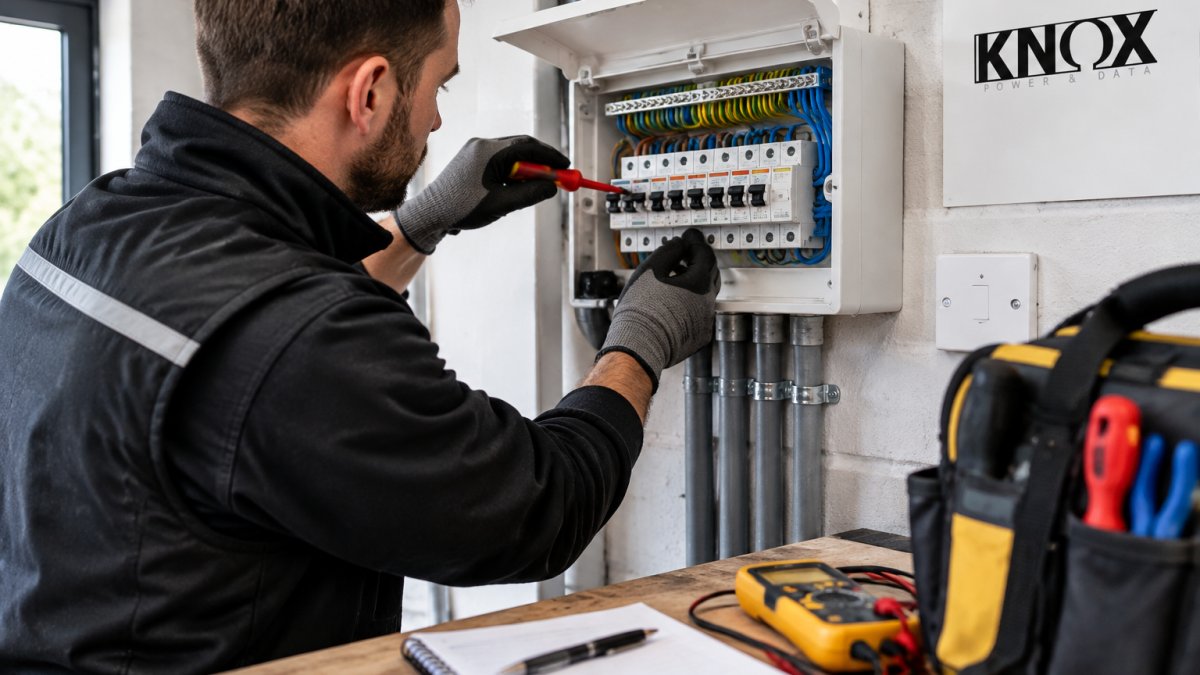
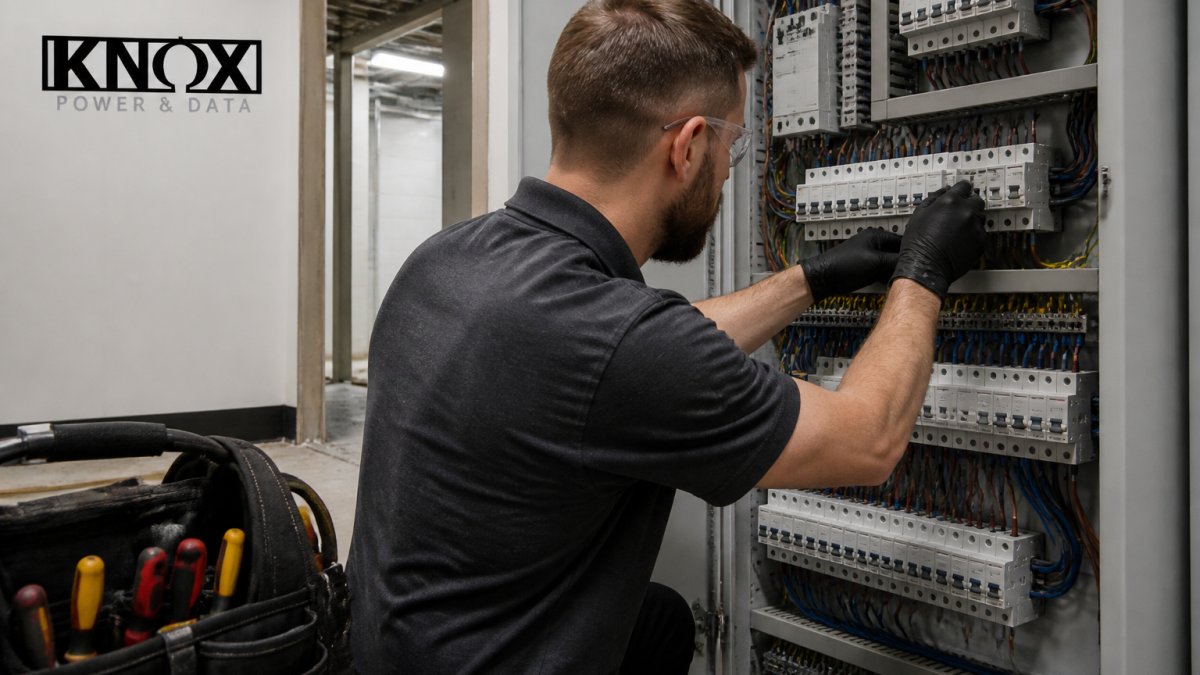
Planning a commercial electrical panel upgrade starts with two questions: is the existing board safe, and does it have spare capacity? Answer those before you request any quotes, or you will be pricing the wrong job.
A commercial electrical panel upgrade is the replacement or expansion of the main distribution board and its protective devices to handle current and future demand. It is the backbone of any wider electrical upgrade.
Signs Your Panel Needs Replacing
Watch for these signals. Any one of them warrants a proper inspection.
- The board is a legacy type with no RCD protection on socket circuits
- Breakers trip repeatedly under normal load
- You have no spare ways for new circuits
- There is discolouration, heat damage or a burning smell
- Adding EV chargers or a new machine would exceed the supply
- The last inspection report flagged C1 or C2 observations
A common mistake is treating a warm board as normal. It is not. Heat means resistance, and resistance means risk.
Load Assessments and Capacity Planning
A load assessment measures what you actually draw, not what the old paperwork claims. Load assessments measure what you actually draw, not what the old paperwork claims. Circuits can be clamp-metered over a working week to see real peaks.
Capacity planning then asks what comes next. If you plan to add chargers, a server rack or a production line, the board must be sized for that now, not later.
Commercial Lighting Upgrades: LED, Controls and Payback
Commercial lighting upgrades pay back faster than almost any other electrical work. LEDs use far less power than the fluorescent and halogen fittings they replace, and they last far longer.
The bigger saving often comes from controls. Occupancy sensors, daylight dimming and time scheduling cut wasted hours when a space is empty.
Pair lighting with your panel plan. New circuits and controls need spare ways and correct protection, so doing both together avoids a second round of disruption.
| Upgrade | Typical Disruption | Main Benefit |
|---|---|---|
| LED lamp retrofit | Minimal, out of hours | Lower running cost |
| Full LED fitting swap | One to two nights | Bigger savings, better light |
| Occupancy and daylight controls | One to two days | Cuts wasted use |
| Emergency lighting upgrade | Phased by zone | Compliance and safety |
Emergency lighting is not optional. It must meet HM Government fire safety guidance for premises, and it needs testing on a set schedule.
Commercial EV Charger Installation for Fleets and Staff
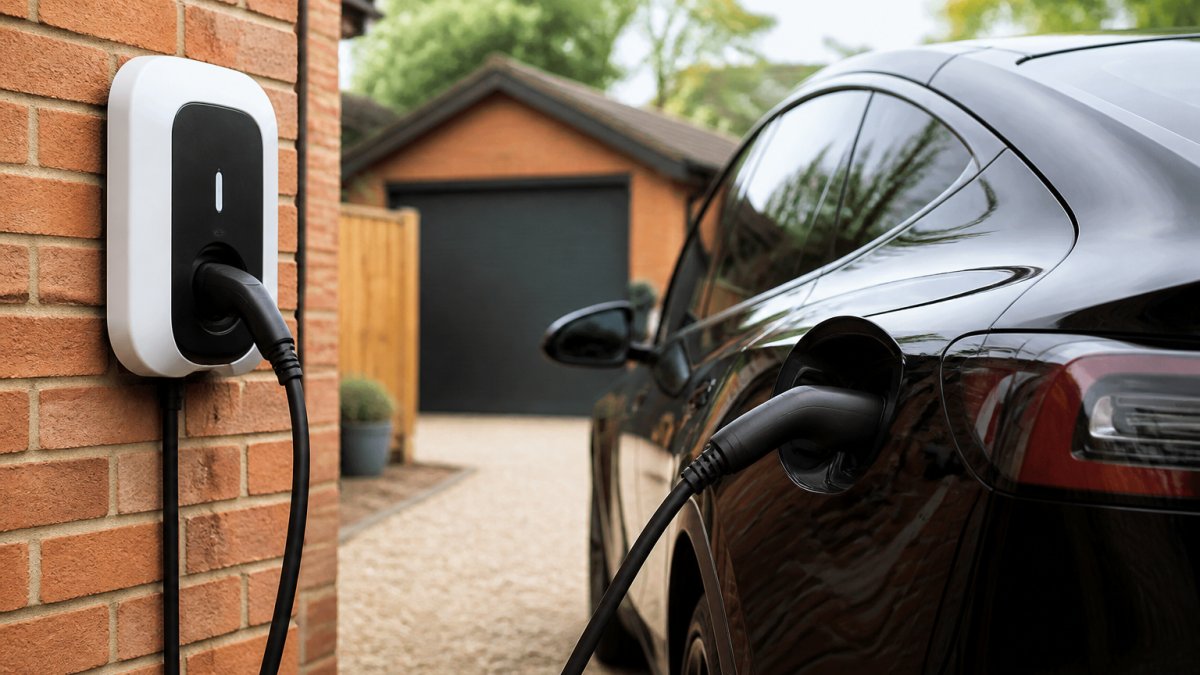
Commercial EV charger installation is now a standard part of an upgrade, not an add-on. Fleet vans, pool cars and staff vehicles all need charging, and the site supply often cannot take it without work.
The first step is a supply check. A cluster of chargers draws hard, and the board, cabling and earthing must cope. Load management spreads charging across the night so you avoid a costly supply upgrade.
Decide on the mix early:
- Destination chargers for staff and visitors, slower and cheaper to run
- Faster units for fleet vehicles that turn around quickly
- Load balancing across the site to protect your supply
What Drives Commercial Electrical Upgrade Cost
Commercial electrical upgrade cost depends on scope, access and downtime, not on a single rate. Two sites with the same board can differ hugely in price.
The main cost drivers are:
- Whether the supply needs upgrading, not just the board
- How much new cabling and containment is needed
- Access, such as working at height or in tight plant rooms
- How much work must happen out of hours to keep you open
- Testing, certification and any remedial work found on the way
We do not publish fixed prices because every site is different. We survey first, then provide a quote.
Choosing a Contractor and Keeping Your Business Open
Choosing a contractor comes down to proof, not price. Ask for registration, insurance and evidence of testing before you let anyone near your board.
Check these before you appoint:
- Current registration with a competent person scheme
- Public liability and employer's insurance
- BS 7671 18th Edition and inspection qualifications
- Sample certificates from similar commercial jobs
- A clear method statement and programme
Knox Power & Data is NAPIT registered (Member No. 69848) and BS 7671 18th Edition and Inspection qualified, so the paperwork is in order from day one.
Keeping open is a planning job. Phased works, night shifts and temporary supplies let you trade through the upgrade. Agree the sequence in writing.
Certification, Testing and Your 2026 Timeline
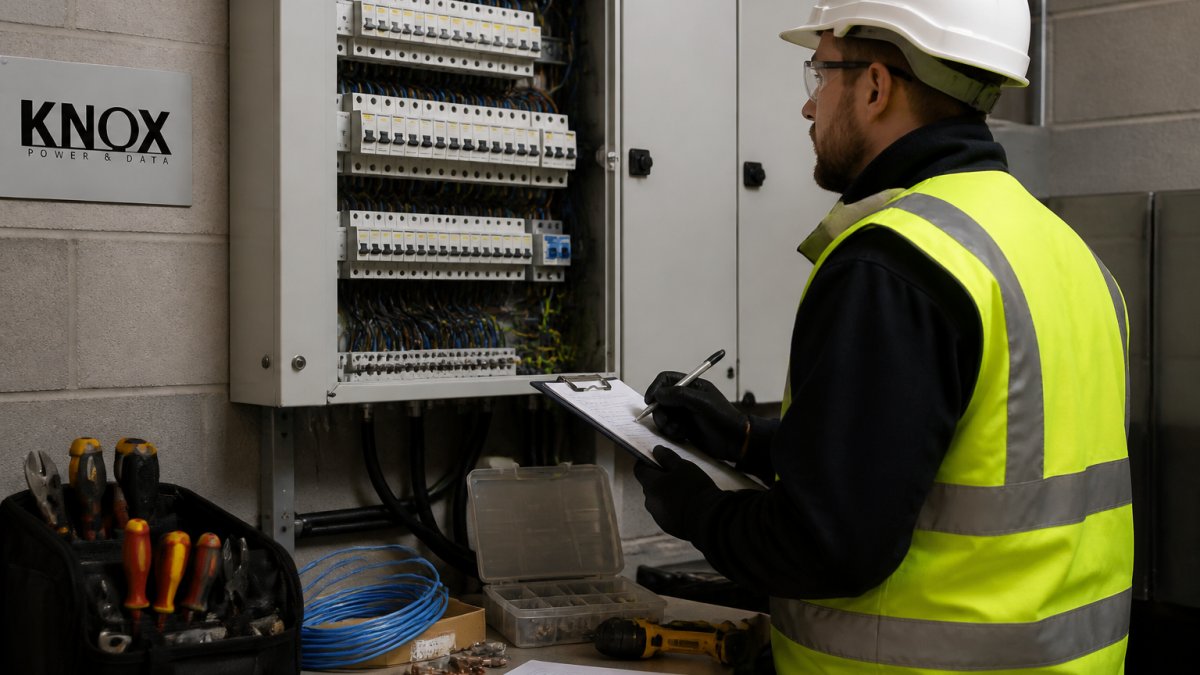
Every upgrade ends with testing and certification. No certificate means no proof the work is safe, and that matters for insurance and for any future sale or lease.
The sequence runs: initial verification, then an Electrical Installation Certificate, then a schedule of test results. For existing installations, an EICR records condition and any observations.
A typical 2026 timeline:
| Phase | What Happens | Rough Duration |
|---|---|---|
| Survey and load study | Site visit, metering, report | 1 to 2 weeks |
| Design and quote | Board spec, programme, cost | 1 to 2 weeks |
| Materials and scheduling | Order kit, book downtime | 2 to 4 weeks |
| Installation | Phased works on site | 1 to 3 weeks |
| Testing and handover | Certificates and records | 1 to 3 days |
Timelines shift with supply lead times and access, so build in slack. Book early for a 2026 upgrade, as demand for compliant work keeps rising.
Frequently Asked Questions
What electrical upgrades might a commercial building need in 2026?
Most commercial electrical upgrade services in 2026 cover a few core areas: replacing ageing distribution boards and panel upgrades to handle higher loads, switching to LED lighting with occupancy or daylight controls, adding commercial EV charger installation for staff and fleet vehicles, and installing structured data cabling. The right scope depends on your building's age, current capacity and how your operations are changing. A site survey is the only way to confirm what's genuinely needed.
Can electrical upgrades be completed while my business stays open?
Often, yes. Phased programmes let contractors work zone by zone or outside trading hours, so production and customer access continue. Panel changeovers usually need a planned shutdown, which is best scheduled for evenings, weekends or a quiet period. Ask your contractor for a written phasing plan before work starts, and confirm what temporary power arrangements are available during any isolation.
What checks and certification should follow commercial electrical work?
Every commercial installation should be tested and certified against BS 7671, the 18th Edition Wiring Regulations. Expect an Electrical Installation Certificate for new work, or a Minor Electrical Installation Works Certificate for smaller alterations, plus an Electrical Installation Condition Report (EICR) if the whole installation is being assessed. Ask for the test results and certificate before final payment, and keep them for insurance and compliance records.
How much does a commercial electrical upgrade cost?
Commercial electrical upgrade cost depends on the size of your supply, how many circuits and boards are involved, cable runs, access and whether work happens out of hours. Lighting, EV charging and data cabling are usually priced separately from panel work. Because no two sites are the same, ask for an itemised quote after a survey rather than relying on a per-square-metre figure.
An ageing board, a growing load and tighter rules will not wait. If your site needs a compliant, fully tested electrical upgrade, Knox Power & Data can survey, plan and deliver it. Our NAPIT-registered team combines electrical and structured data cabling expertise, with same-day availability for emergencies. Get a Quote and upgrade with confidence.