 how-to
Can You Install CCTV on a Listed Building? UK Rules
Table of Contents
- Can You Install CCTV Cameras on a Listed Building?
- Listed Building Consent for CCTV: The Application Process
- Discreet CCTV Camera Mounting Options for Heritage Properties
- CCTV Recording Public Areas and Neighbours: Legal Boundaries
- CCTV Installation on Heritage Properties: Practical Considerations
- What to Do If Consent Is Refused or Work Is Already Installed
- Conclusion
- Frequently Asked Questions
Last Updated: October 13, 2026
Can You Install CCTV Cameras on a Listed Building?
Listed building consent for CCTV is formal written permission from your local planning authority before any alteration.
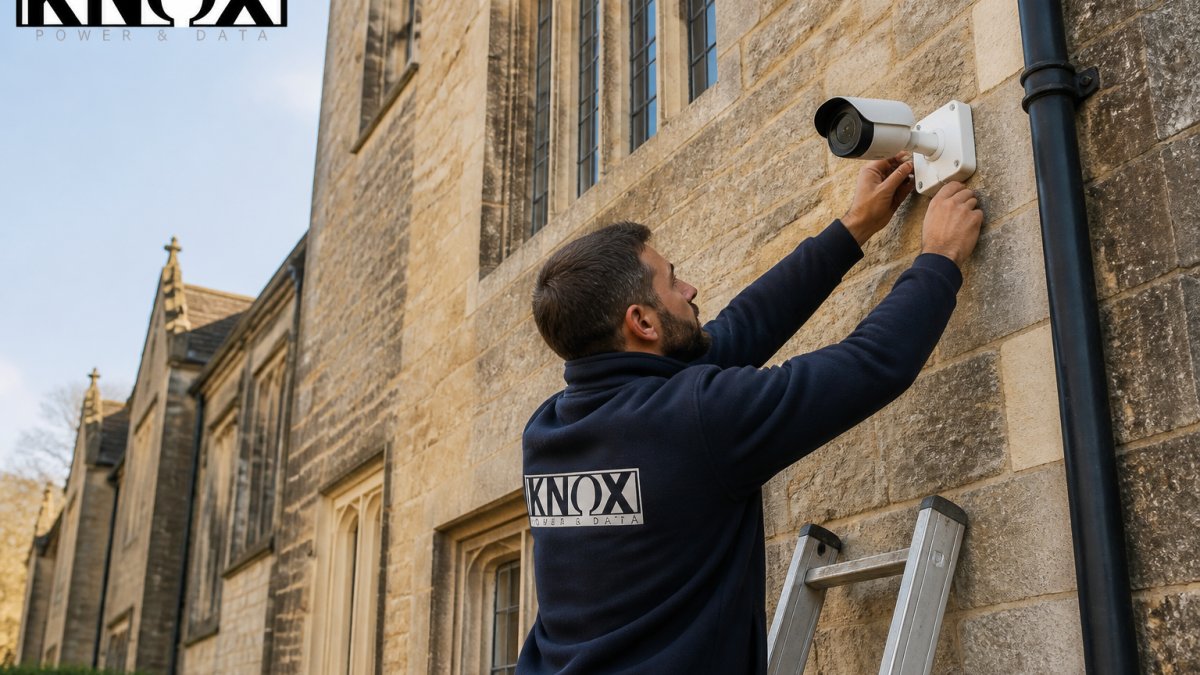
That definition matters. A camera bracket drilled into 18th-century stone is an alteration. A cable clipped along original brickwork is an alteration.
Below, we break down when consent is needed, how to apply, where to mount cameras discreetly, and what to do if consent is refused.
Listed Building Consent for CCTV: When It Is Required
Listed building consent is required for any works that affect a listed building's character as a building of special architectural or historic interest.
Here is when consent is almost always needed:
- Drilling into original stone, brick, timber, or render
- Running cables across or through historic fabric
- Fixing brackets to the principal elevation
- Adding equipment visible from public view
Some small works may not need consent. A camera mounted on a freestanding post in the garden, clear of the listed structure, often sits outside the consent regime.
The safest approach is to ask your local planning authority before you buy anything. Conservation officers would rather answer a question early than pursue enforcement later.
Listed Building Consent for CCTV: The Application Process
The application process has six clear steps. Follow them in order and you avoid the most common delays.
- Check the listing description. Find your building's entry on the National Heritage List for England or the equivalent register for your nation. Note what is listed and why.
- Contact the conservation officer. Ask for an informal view before you apply. This is free and saves weeks.
- Prepare your documents. You will need location and block plans, existing and proposed elevation drawings, and a heritage statement.
- Submit the application. Apply through the Planning Portal or your local authority's own system.
- Wait for the decision. Most applications are decided within eight weeks, though complex cases take longer.
- Start work only after approval. Keep the decision notice on file.
A heritage statement is the document most owners underestimate. It explains what your proposal does to the building's significance and why the design is the least harmful option.
Documents, Costs, and Timelines for Consent Applications
A complete application usually includes:
- Completed application form
- Location plan
- Block plan
- Existing elevation drawings
Application fees are set nationally and are often waived for listed building consent, but you should confirm the current position with your local planning authority. Timelines typically run to eight weeks for a decision, with pre-application advice adding a few weeks before that.
Get written confirmation before you order equipment. We have seen owners buy cameras, then discover the mounting position was never going to be approved.
Discreet CCTV Camera Mounting Options for Heritage Properties
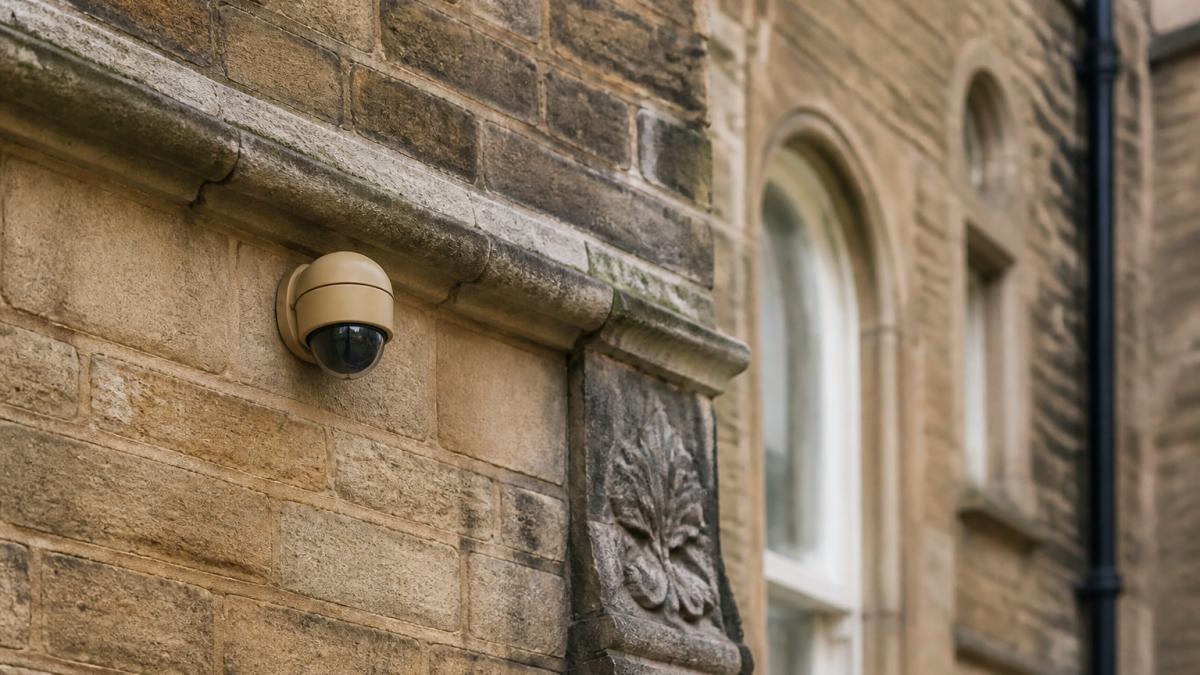
Discreet placement is not just good manners. It is often the difference between approval and refusal.
The best options for heritage properties:
- Dome cameras on modern outbuildings, painted to match the surface
- Wall-mounted cameras on secondary elevations, away from principal facades
- Freestanding posts in the grounds, clear of the listed structure
- Internal cameras behind glass, where the view allows
Avoid mounting cameras on decorative features, carved stonework, or original joinery. Conservation officers look for harm to the building's character, and a bracket bolted through a carved lintel is exactly the kind of harm they refuse.
Mounting Methods That Protect Historic Fabric
The mounting method matters as much as the position. Here is how we approach it.
- Use existing fixing points where possible, such as modern service entries
- Avoid drilling into historic fabric; fix to modern additions instead
- Route cables through existing voids rather than chasing new channels
- Use non-penetrative mounts on freestanding posts or ground spikes
A common mistake is chasing cables into lime render or historic brick. That damage is hard to reverse and it weakens the case for any future application.
CCTV Recording Public Areas and Neighbours: Legal Boundaries
Domestic CCTV that captures public areas or a neighbour's property brings data protection law into play. If your system records beyond your own boundary, you are processing personal data.
Under data protection rules, you must:
- Tell people they are being recorded, usually with a sign
- Keep recordings only as long as needed
- Store footage securely
- Respond to requests from people whose data you hold
A camera aimed at a neighbour's window or garden is a common source of complaints.
The practical fix is to use privacy masking. Most modern systems let you blank out neighbouring property, public footpaths, and shared access routes.
CCTV Installation on Heritage Properties: Practical Considerations
Heritage installations need more planning than a standard domestic job. The building fabric is older, the fixings are different, and the tolerance for error is lower. The most useful way to plan is to work through the four installation scenarios below, because each one changes what the conservation officer will expect to see in your application.
Scenario 1: Camera fixed to historic masonry
This is the highest-risk option and the one most likely to attract a refusal if handled carelessly.
- What consent looks like: Listed building consent is almost always required. The heritage statement must justify why the camera cannot go elsewhere and how the fixing will be reversed without harm.
- What officers look for: The smallest possible penetration, a fixing that matches the surrounding material, and a cable route that does not chase new channels into historic brick or lime render.
- Practical approach: Use a single stainless-steel screw into a pre-existing hole where one exists. Avoid rawl plugs in soft historic brick. Seal every penetration to prevent water ingress and frost damage.
Scenario 2: Camera attached to a modern extension
A modern extension that is not itself listed is often outside the consent regime, but the listed building's curtilage still matters.
- What consent looks like: Consent may not be needed if the extension is genuinely modern and the camera does not affect the listed building's character. Confirm this in writing with the conservation officer before you drill.
- What officers look for: Evidence that the extension is not part of the listed structure and that the camera is not visible against the historic elevation.
- Practical approach: Fix to the modern fabric, route cables through the modern wall, and keep the camera off any elevation that reads as historic from public view.
Scenario 3: Internal camera behind glass
Internal cameras are often the easiest to justify because they do not touch the external fabric.
- What consent looks like: Consent is usually not required for equipment that does not alter the building's character. A camera on a shelf or a modern internal fitting is typically outside the regime.
- What officers look for: No new fixings into historic joinery, panelling, or decorative plaster. No visible cabling across historic surfaces.
- Practical approach: Use freestanding mounts, route cables behind modern furniture, and avoid drilling into original skirting or door frames.
Scenario 4: Reversible fixing on a freestanding post
A camera on a freestanding post in the grounds, clear of the listed structure, is often the cleanest route.
- What consent looks like: Consent may not be needed if the post is not attached to the listed building and does not affect its setting. Setting is still a consideration, so a post directly in front of the principal elevation can still attract comment.
- What officers look for: That the post is genuinely freestanding, that it does not obscure or compete with the historic elevation, and that it can be removed without leaving a mark.
- Practical approach: Site the post to the side or rear, use a ground spike or a bolted base that can be lifted, and keep the cable run underground rather than clipped to the building.
Cross-cutting practical points
Whichever scenario applies, the same disciplines hold:
- Survey before you specify. Check wall construction, cable routes, and power availability.
- Match the equipment to the setting. Smaller, lower-profile cameras suit heritage facades.
- Plan the power and data routes first. Retrofitting cables later risks new damage.
- Use a qualified installer who understands both security systems and older buildings.
For owners in West Yorkshire, we survey the property, advise on consent needs, and install systems that respect the building. That combination of electrical and data expertise under one roof saves you coordinating multiple trades.
What to Do If Consent Is Refused or Work Is Already Installed
A refusal is not the end of the road. There are clear next steps, and they differ depending on whether you have installed anything yet.
If consent is refused:
- Read the decision notice. It sets out the reasons and what would make the proposal acceptable.
- Talk to the conservation officer. Ask what changes would win approval.
- Revise and reapply. A smaller camera, a different position, or a colour-matched housing often solves the problem.
- Consider an appeal. You can appeal to the relevant body within the set period.
- Do not install anyway. Proceeding without consent risks prosecution.
If work is already installed without consent, act quickly. Options include applying for retrospective consent, removing the equipment voluntarily, or negotiating with the authority.
We have helped owners through both routes. The earlier you involve a qualified installer and the planning authority, the more options you keep.
Conclusion
Installing CCTV on a listed building is possible, but it demands consent, careful design, and respect for historic fabric.
Knox Power & Data handles this end to end. Our NAPIT-registered team (Member No. 69848) combines electrical and data cabling expertise, so we can survey, advise on placement, and install a compliant system under one roof.
Get a quote from Knox Power & Data and secure your heritage property without risking a enforcement headache.
Frequently Asked Questions
Do you need listed building consent to install CCTV cameras?
Yes, in most cases. Installing CCTV on a listed building usually requires listed building consent because the cameras and cabling count as alterations affecting the building's character. Even small cameras can have a visual impact. You should apply to your local planning authority before any work begins. Unauthorised works can lead to enforcement action, fines, or a requirement to remove the equipment and restore the historic fabric.
Can you install CCTV on a Grade II listed building without permission?
No. Grade II listed buildings have the same legal protection as Grade I and Grade II* structures. Any alteration that affects the building's special interest needs listed building consent. Installing cameras without consent is a criminal offence under the Planning (Listed Buildings and Conservation Areas) Act 1990. You must submit an application with details of the camera placement, fixings, and cabling before starting work.
Can CCTV cameras record a public pavement or a neighbour's property?
Domestic CCTV that captures images beyond your property boundary, such as a public pavement or a neighbour's garden, is subject to UK GDPR and the Data Protection Act 2018. You must have a lawful basis for processing, inform people via signage, and keep recordings only as long as necessary. If your cameras overlook a neighbour's property, you should discuss it with them and consider repositioning the camera to avoid unnecessary intrusion.
What should you ask your local planning authority before installing CCTV?
Ask whether listed building consent is required, what documents you need to submit, and whether the conservation officer has preferences for camera placement or fixings. You should also confirm if the building is in a conservation area, as additional restrictions may apply. Getting written advice early can save time and prevent enforcement action later. Each local planning authority may have its own validation requirements.