 how-to
Does Your Home Wiring Need an Upgrade?
Last Updated: October 25, 2026
Quick Summary
To determine if your home wiring needs an upgrade, walk your house room by room and record symptoms such as warm or discoloured sockets, crackling switches, burning smells, frequent breaker trips and tingling shocks. Two or more symptoms, or any heat, smell or tingle, means booking an inspection promptly, while scorching or a shock means calling an electrician the same day.
- Switch off and unplug anything you inspect closely, keep both hands free, and use a torch rather than the room light.
- Swap the suspect appliance and move it to a different circuit to separate wiring faults from appliance issues.
- Most homes need rewiring every 25 to 30 years, or sooner if inspections flag problems.
- Choose a partial rewire when the consumer unit is modern and only one circuit or extension is faulty.
- In the UK, look for registration with a competent person scheme such as NAPIT, NICEIC, ELECSA or Stroma.
Table of Contents
- How to Tell If Your Home Wiring Is Safe: A Step-by-Step Check
- Signs a House Needs Rewiring: What to Look and Listen For
- How to Identify Old Electrical Wiring by Age and Material
- How Often Should a House Be Rewired?
- Full House Rewire vs Partial Rewire: Choosing the Right Scope
- Panel Upgrade or Rewire? How to Decide
- What an Inspection Involves, and How to Book One
- Frequently Asked Questions
How to Tell If Your Home Wiring Is Safe: A Step-by-Step Check
Learning how to determine if your home wiring needs an upgrade starts with knowing what a healthy electrical system looks, sounds and even smells like.

Step 1: Prepare and Walk the House Room by Room
Before you start, switch off and unplug anything you intend to inspect closely, keep both hands free, and use a torch rather than relying on the room light. Work methodically from room to room with a notepad or phone notes app.
For each room, record:
- Sockets: warm or discoloured faceplates, scorch marks, brown staining, cracks, loose or wobbly fittings, sockets that only work intermittently.
- Switches: crackling when operated, warm to the touch, buzzing, or a tingle you can feel.
- Light fittings: flickering or dimming when appliances start, bulbs that fail repeatedly, discoloured ceiling roses.
- Consumer unit (from a distance): frequent trips, a buzzing sound, a wooden backboard, rewireable fuses rather than MCBs or RCBOs.
Write down what you find and where. A clear list speeds up any electrician's visit and helps them prioritise.
Step 2: Separate Wiring Faults from Appliance and Supply Issues
Not every flicker means bad home wiring. Rule out the easy causes first, this is the step most homeowners skip, and it can save you an unnecessary call-out.
Try this order:
- Swap the appliance. Unplug the suspect appliance and test the socket with something else. If the fault disappears, the appliance is the likely culprit.
- Move the appliance. Plug it into a socket on a different circuit. If the fault follows the appliance, the appliance is at fault. If it stays with the original socket or circuit, suspect the wiring.
- Check the timing. Does the fault only happen when one specific device runs (for example, the fridge compressor kicking in)? That points to that appliance or to a shared circuit under load.
- Ask a neighbour. If their lights flicker at the same moment, the issue may be on the supply side. Contact your distribution network operator (DNO), you can find yours via the Energy Networks Association.
- Check the consumer unit. If a breaker trips only when a particular appliance is used, the appliance or its plug is the first suspect. If it trips with nothing plugged in, the circuit itself needs investigation.
Step 3: Record What You Find and Decide the Next Step
A simple written record makes the difference between a vague worry and a useful inspection. Note the room, the fitting, the symptom, and when it happens.
Use your notes to decide:
- One minor symptom, no heat or smell: monitor it and book a routine inspection.
- Two or more symptoms, or any heat, smell or tingle: book an inspection promptly.
- Scorching, burning smell, or a shock: stop using the affected circuit and call an electrician the same day.
This record also helps the electrician target their testing, which can reduce the time spent on site. For landlords, the same observations feed directly into the periodic inspection and EICR process covered later in this article.
Signs a House Needs Rewiring: What to Look and Listen For
Buzzing or humming. A faint hum from a dimmer can be normal.
Mild shocks or tingling. A tingle when you touch a switch points to an earth fault.
Frequent breaker trips or blown fuses. Occasional trips happen.
Flickering or dimming lights. Lights that pulse when the fridge kicks in suggest electrical capacity is stretched.
Round-pin sockets or black rubber cables. These are outdated wiring, plain and simple.
How to Identify Old Electrical Wiring by Age and Material
The age of your home tells you a lot about the electrical wiring inside it. Here's how to identify old electrical wiring by era.
| Era | Typical wiring | What it means |
|---|---|---|
| Pre-1950s | Rubber-insulated cable, round-pin sockets | High risk, likely needs full rewire |
| 1950s-1960s | Early PVC cable, no earth in lighting | Check earthing urgently |
| 1970s-1980s | PVC cable, older fuse box | Consumer unit likely outdated |
| 1990s onward | Modern PVC, RCD protection | Usually sound, check the board |
Look for the cable colour too. Old rubber cable cracks when you bend it. Modern cable is grey or white PVC and stays flexible.
Green gunk around brass terminals is another giveaway of ageing cable. So is a fuse box with a wooden backboard.
How Often Should a House Be Rewired?
Most homes need rewiring every 25 to 30 years, or sooner if inspections flag problems. A well-installed modern system can last longer. An older one with rubber cable may need replacing well before that.
Several things shorten that lifespan:
- Age and material of the existing cable
- How heavily the system is used
- Damage from damp, rodents or DIY alterations
- Extra appliances and electrical demand added over time
- EV chargers or heat pumps loading the circuits
If your property is approaching the 25-year mark, book an inspection rather than waiting for a fault.
Full House Rewire vs Partial Rewire: Choosing the Right Scope
The choice between a full house rewire and a partial rewire comes down to how much of the system is failing. A partial rewire replaces specific circuits or areas. A full rewire replaces everything, including the consumer unit and all cabling.
Choose a partial rewire when:
- The consumer unit is modern and compliant
- Only one circuit or extension is faulty
- Most cabling is recent PVC
Choose a full rewire when:
- Cabling is rubber or fabric
- Multiple circuits show faults
- The property has no earthing or RCD protection
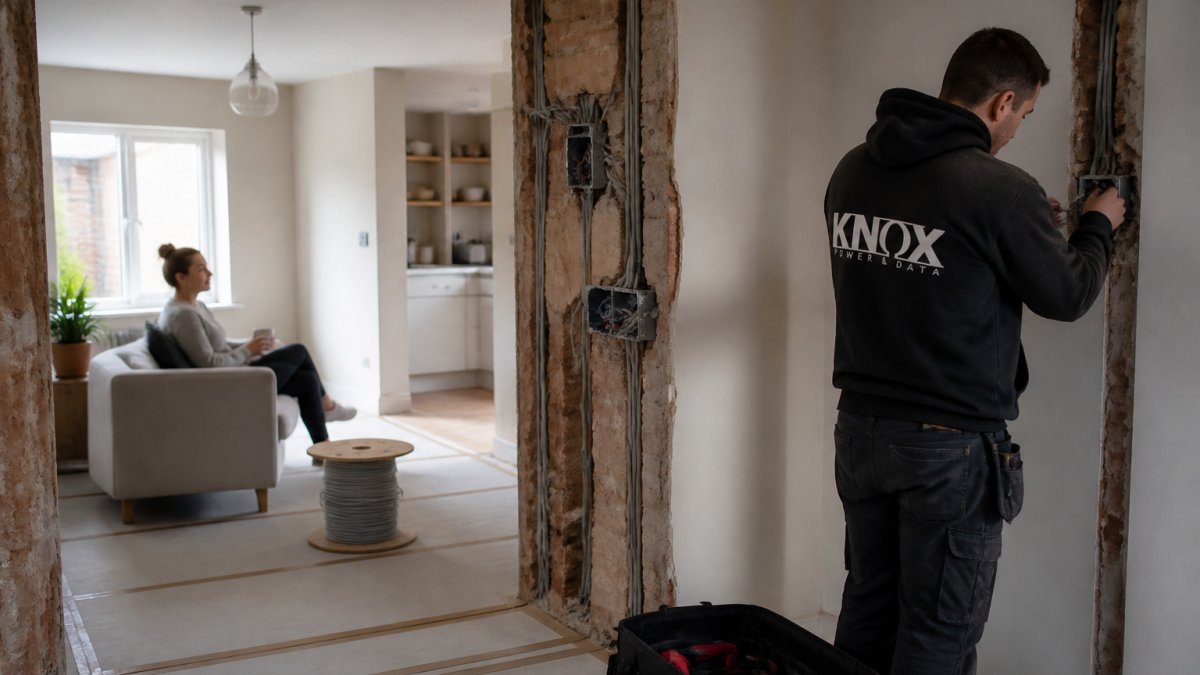
- You're renovating and walls are already open
Panel Upgrade or Rewire? How to Decide
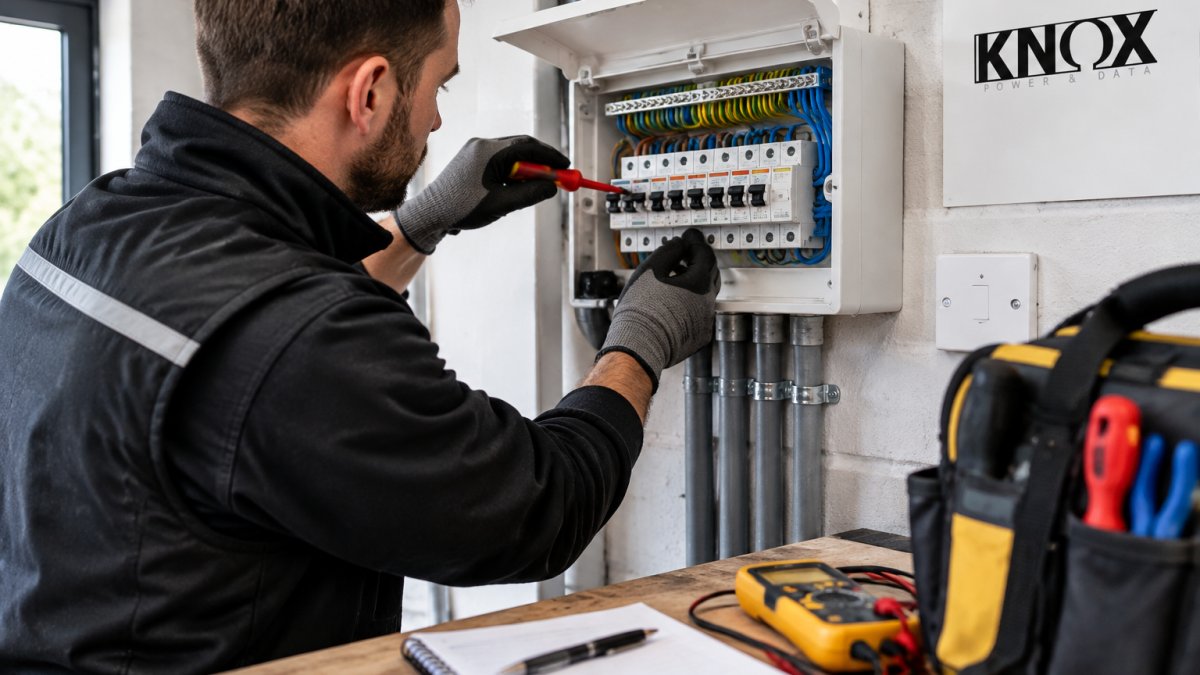
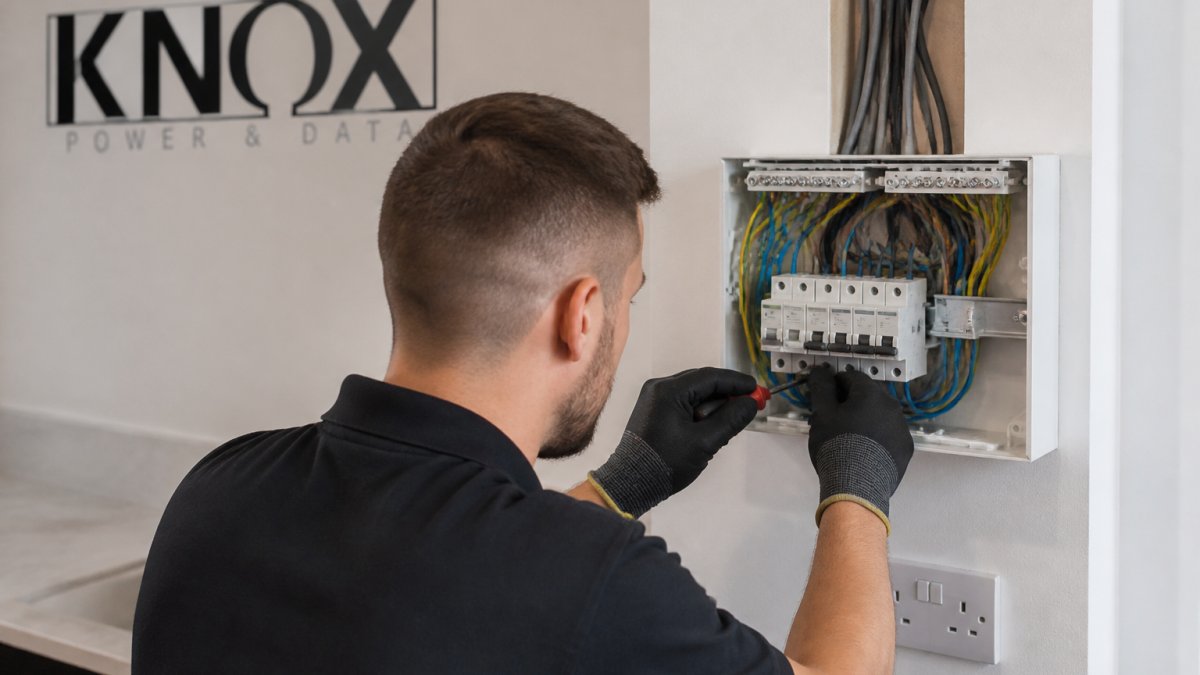
A panel upgrade, or consumer unit replacement, is the right call when the wiring is sound but the board is outdated. A rewire is the right call when the cabling itself is failing.
Upgrade the panel if:
- Cables are modern PVC
- The board lacks RCD protection
- You're adding an EV charger or extra circuits
- The existing unit has no spare ways
Rewire instead if:
- Cables are old or damaged
- Earthing is missing
- Sockets and switches are outdated throughout
- The board and cabling are both past their life
An old fuse box with rewireable fuses and no RCD is a safety concern regardless of cable age. For deeper guidance on whether your old consumer unit is safe or needs replacing, read Is My Old Consumer Unit Safe?.
What an Inspection Involves, and How to Book One
A proper inspection is more than a quick look. A qualified electrician will assess the condition of your home wiring, test the circuits, check earthing and RCD protection, and confirm the installation meets current standards, in the UK, that means BS 7671 (the IET Wiring Regulations, currently the 18th Edition).
What the Electrician Actually Tests
An inspection typically covers:
- Visual inspection of the consumer unit, cabling, accessories and earthing arrangements.
- Insulation resistance testing, checks whether cable insulation has degraded and could leak current.
- Earth loop impedance and RCD trip tests, confirms faults will disconnect safely and that residual current devices trip within the required time.
- Polarity and continuity checks, confirms switches and sockets are wired the right way round and circuits are continuous.
- Functional testing of switches, sockets and protective devices.
For landlords, an EICR (Electrical Installation Condition Report) is the formal version of this and is a legal requirement for rented property in England and Wales, typically every five years or at a change of tenancy. For homeowners, a periodic inspection gives the same clarity and is commonly recommended every ten years, or sooner if the installation is older or has been altered.
How to Choose and Book an Electrician
Choosing the right person matters as much as the inspection itself. Our guide on how to find a certified house rewiring electrician walks through the practical steps for finding and vetting one to book. In the UK, look for registration with a competent person scheme such as NAPIT, NICEIC, ELECSA or Stroma. Registration means the electrician can self-certify notifiable work and is subject to periodic assessment.
Before you book, ask:
- Are you registered with a competent person scheme, and what is your registration number?
- Will you provide a written report and certificate?
- Do you carry public liability insurance?
- What is the call-out and inspection fee, and is it fixed?
- Will you notify Building Control for any notifiable work?
Permits, Notification and Documentation
In the UK, most inspection and testing work does not require a permit, but notifiable electrical work (such as a consumer unit replacement or new circuit) must be notified to your local authority Building Control or self-certified through a competent person scheme. Ask your electrician which route applies before work starts, and keep all certificates, they are useful when selling or renting out the property.
Frequently Asked Questions
How often should a house be rewired?
There is no fixed legal interval, but most home wiring is designed to last around 25 to 40 years. If your property still has rubber-insulated cables, a fuse box with rewireable fuses, or no residual current device protection, it is likely overdue. An EICR (Electrical Installation Condition Report) by a registered electrician will give a documented condition rating and a recommended date for the next inspection, which is a more reliable guide than age alone.
Do flickering lights always mean my home wiring needs replacing?
No. A single flickering lamp is often a loose bulb, a failing dimmer switch or a faulty appliance. Flickering across several rooms at once, especially when a large appliance starts, points to a loose connection, an overloaded circuit or a failing consumer unit. Test by swapping the lamp and checking other circuits; if the problem follows the circuit rather than the fitting, get an electrician to inspect the wiring.
Can an electrician tell whether a house needs rewiring without pulling up floors?
Yes, in most cases. A visual inspection of the consumer unit, earthing and bonding, plus sampling at sockets and light switches, reveals cable type, age and condition. Insulation resistance and continuity tests give a numeric reading of cable health. Only where readings fail or damage is suspected will an electrician recommend opening up walls or floors for a closer look.
What should I do if my circuit breaker keeps tripping?
First, unplug appliances on the affected circuit and reset the breaker once. If it trips again with nothing connected, stop resetting it: a repeated trip usually means a fault in the fixed wiring or a failing breaker, not a nuisance. Book a registered electrician to test the circuit. Repeated tripping is one of the clearest signs a house needs rewiring attention, and it should never be ignored or bypassed.